
Struggling to find the right car cloth? Using the wrong one can leave scratches and lint, ruining your car’s perfect finish and wasting all your hard work.
The best cleaning cloth depends entirely on the task. A warp-knit towel is ideal for washing, while a high-GSM twist loop towel is best for drying1. For waxing, a dual-pile towel works great2. Choosing the right cloth for each job is key to a perfect finish.
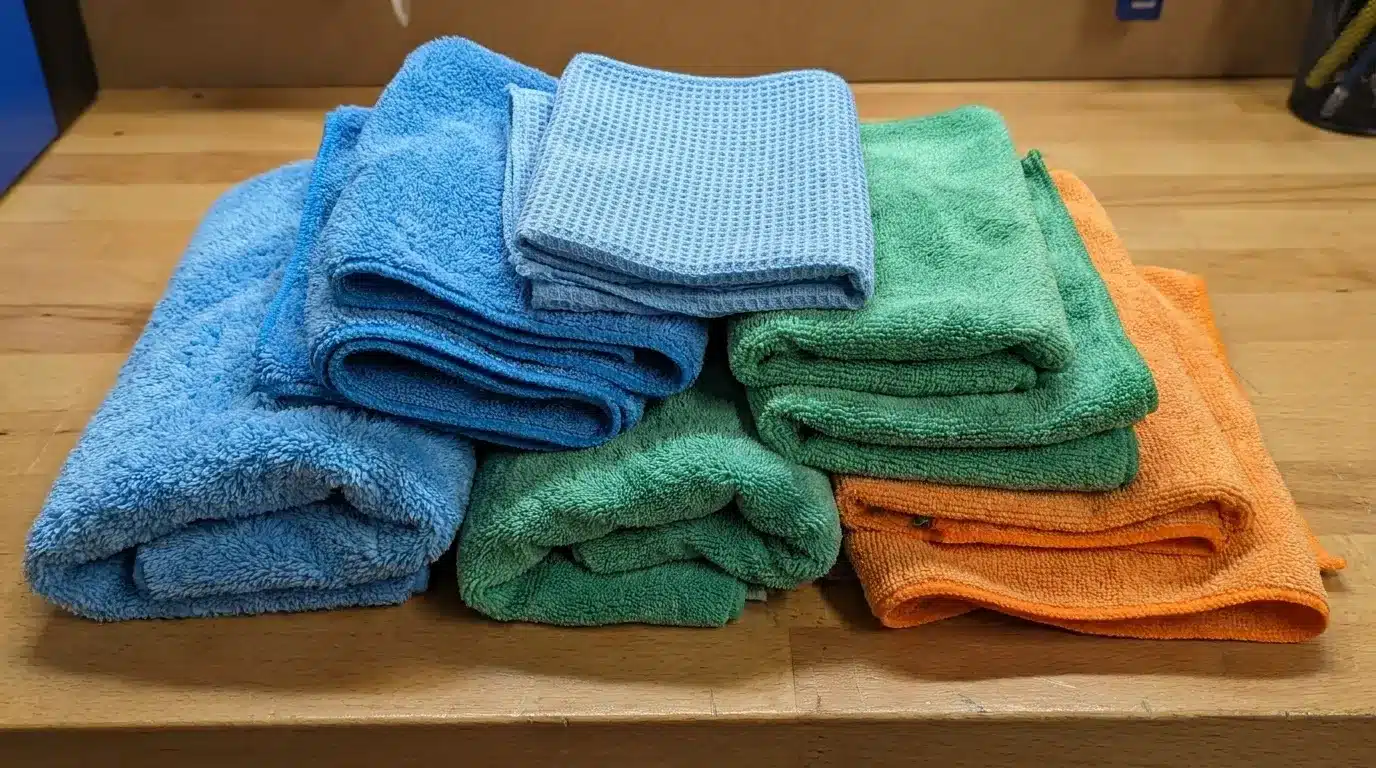
It seems complicated, but it’s actually simple once you understand the logic. As a manufacturer, I see clients make the same mistakes over and over. They often think one towel can do it all. Let’s break down exactly which cloth you need for each step, so you can avoid damaging your car and get professional results every time. This will help you source the right products for your customers.
What’s the best towel for washing your car?
Tired of towels that shed lint or trap grit during a wash? This can lead to swirl marks and a finish that looks worse, not better after you clean it.
For washing, I recommend a 300-350 GSM warp-knit microfiber towel with a short pile and an 80/20 blend. This construction is durable, has low friction, sheds less lint, and is less likely to trap sand and grit, protecting your car’s paint from scratches.
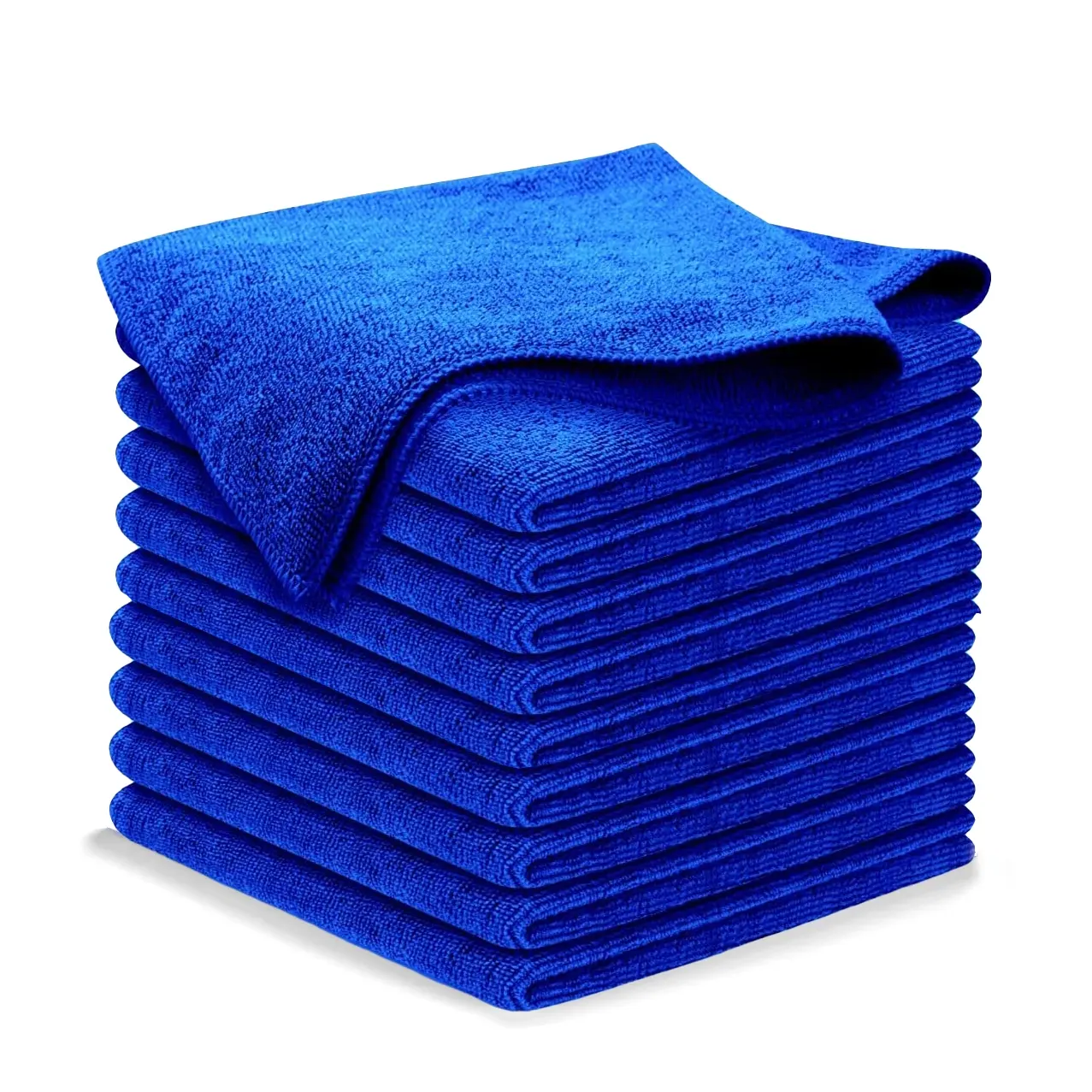
When you wash a car, you need a towel that is tough but safe. The biggest advantage of a warp-knit towel is its durability. It holds its shape better and resists stretching compared to weft-knit towels. This is why so many professional car washes in Europe and America prefer them for daily use. A short pile is also critical. Long, fluffy piles can hide small pieces of dirt and sand. When you wipe the car, that hidden grit gets dragged across the paint, causing fine scratches. A short pile towel makes it easier to feel and rinse out any contaminants. The 300-350 GSM range provides enough thickness to hold soapy water without becoming too heavy or difficult to handle.
| Feature | Why It Matters for Washing |
|---|---|
| Warp Knit | More durable and stable, less likely to stretch or deform. |
| Short Pile | Does not hide sand or grit, reducing the risk of scratches. |
| 300-350 GSM | Good balance of absorbency and handling, not too heavy. |
| 80/20 Blend | A cost-effective and durable blend for washing tasks. |
How do you choose the right towel for drying a car?
Are you just pushing water around with your drying towel? Many towels seem absorbent but fail to leave a streak-free, dry surface, which wastes your time and effort.
The best drying towel today is a twist loop microfiber, between 900-1400 GSM with a 70/30 blend. It absorbs a huge amount of water without just pushing it around, doesn’t lint, and is easy to wring out. It’s a major upgrade over older coral fleece towels.
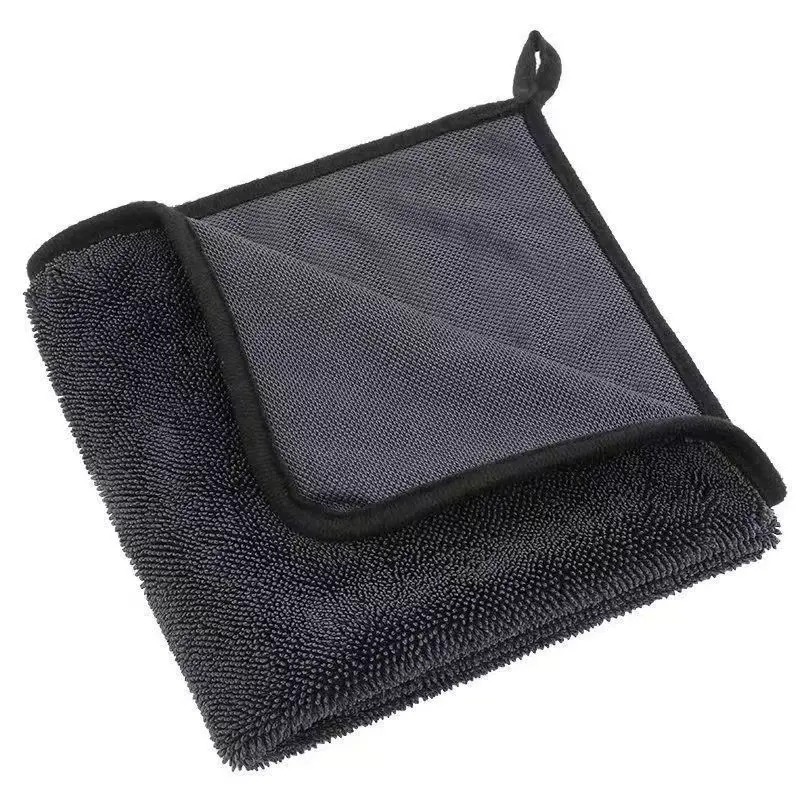
This is one of the biggest changes I’ve seen in the industry over the last few years. For a long time, thick coral fleece towels were the standard for drying. But now, more and more professional brands are switching to twist loop towels. The reason is simple: they perform better in almost every way. The unique "twisted" loops of yarn pull water off the surface instead of pushing it. They can hold an incredible amount of water, often enough to dry an entire car without being wrung out. They also glide over the paint with less friction and are far less likely to leave behind annoying lint. And when they are full, they are much easier to wring out than a soggy coral fleece towel. In my opinion, the twist loop towel is the most advanced and effective solution for drying a car right now.
| Towel Type | Pros | Cons |
|---|---|---|
| Twist Loop | Huge absorbency, low lint, low friction, easy to wring. | Can be more expensive. |
| Coral Fleece | Soft and absorbent. | Pushes water, can lint, hard to wring out when soaked. |
Which cloth should you use for waxing and polishing?
Applying and buffing off wax can be a struggle. The wrong cloth makes it hard to get an even coat and an even harder time buffing the paint to a high shine.
Use a dual-pile towel around 350-450 GSM. The long-pile side is perfect for gently removing the wax residue, while the short-pile side provides the bite needed to buff the surface to a high-gloss, streak-free shine. This design makes the process much easier.
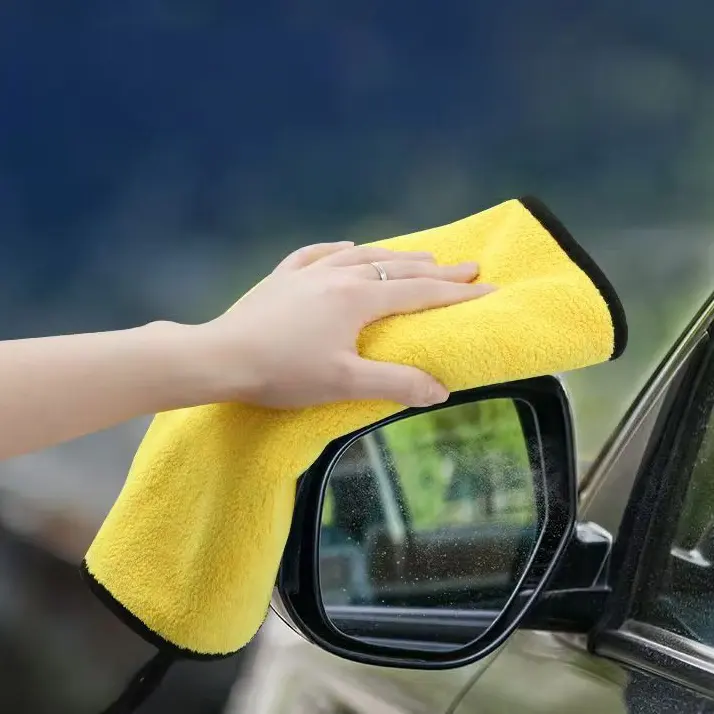
The dual-pile design is genius for waxing and polishing. After you apply wax and it hazes over, you need to remove the excess. The long, plush pile side of the towel is perfect for this first step. The long fibers gently lift the wax residue away from the paint without much pressure, trapping it within the towel. Then, you flip the towel over to the short-pile side. This side has more "bite" and a tighter weave. It’s used for the final buff. This step removes any remaining streaks and polishes the clear coat to a brilliant shine. A GSM of 350-450 is the sweet spot. It’s thick enough to be effective but not so thick that it feels clumsy in your hands. Using one towel with two distinct sides simplifies the process and gives you a much better final result.
Simple Waxing Process
- Apply Wax: Use a separate foam applicator pad to apply a thin, even layer of wax.
- Remove Haze: Once the wax has dried to a haze, gently wipe it away using the long-pile side of the towel.
- Final Buff: Flip the towel and use the short-pile side to buff the paint to a deep, glossy shine.
What about special jobs like coatings, glass, and interiors?
Detailing goes beyond washing and waxing. Using the wrong towel on glass, delicate interiors, or during a ceramic coating can lead to streaks, scratches, and wasted product.
For delicate tasks, use specialized towels. Edgeless, short-pile cloths (320-350 GSM) are best for ceramic coatings to prevent scratches. For glass, use a waffle weave. For sensitive interiors like piano black trim, use an ultra-soft, edgeless weft-knit towel around 300 GSM.
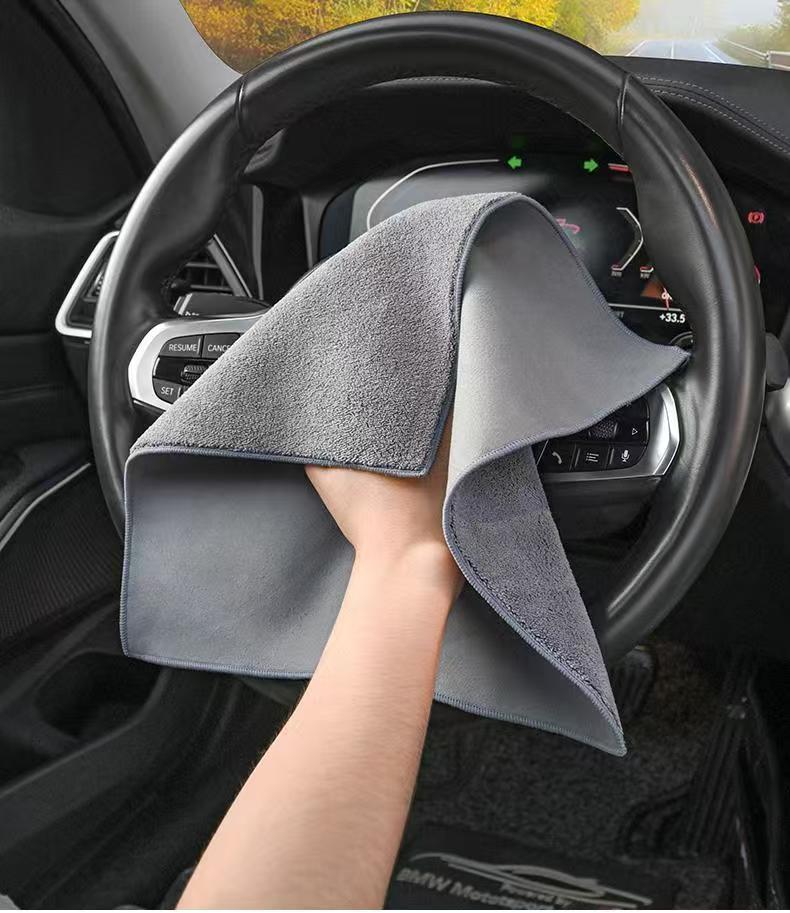
Different surfaces require different tools. This is especially true for detailing.
For Ceramic Coating
When applying a ceramic coating, the biggest fear is scratching the freshly coated surface. The stitched edge on a normal towel can be harder than the towel itself and cause fine scratches. That’s why edgeless towels are becoming so popular. They are cut with a laser or ultrasonic cutter, so there is no hard border. A pearl weave or a premium short pile towel around 320-350 GSM is ideal. These weaves are lint-free, which is critical for a flawless coating application.
For Glass
Never use a long-pile towel on glass. It will only leave behind lint and streaks. Glass needs a towel with a low pile and a bit of texture to scrub away dirt and oils. Weaves like waffle, diamond, or fish scale are perfect for this. They have high friction to clean effectively and absorb just enough water to wipe the surface dry quickly without leaving water spots.
For Interiors
Modern car interiors, especially those with piano black plastic trim, scratch very easily. For these surfaces, you need the softest towel possible. I recommend an edgeless, weft-knit towel around 300 GSM. Weft-knit towels are generally softer and plusher than warp-knit towels, and the edgeless design removes any risk of scratching from the border.
What really determines a car towel’s quality?
Many customers think a higher GSM number means a better towel. This common mistake leads them to buy the wrong product and get poor results for their specific detailing task.
The best towel isn’t the one with the highest GSM, but the one right for the job. True quality is determined by five factors: fiber quality (70/30 vs 80/20), weaving method3, edging technique (edgeless is best), water absorption performance, and durability over many washes.
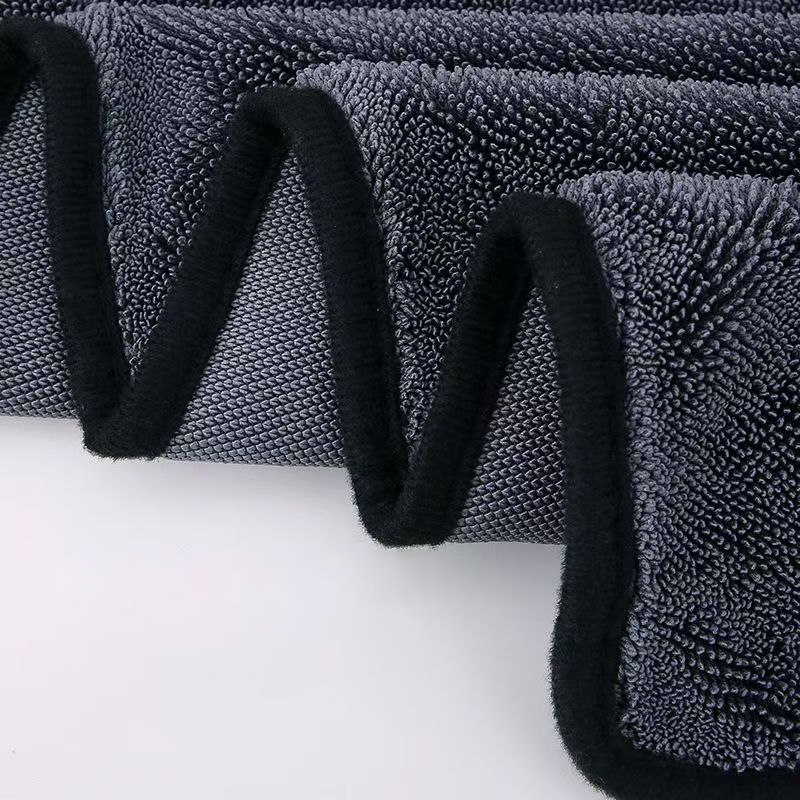
I always tell my clients: the right GSM is more important than the highest GSM. For example, a 1200 GSM towel is fantastic for drying, but it would be terrible for cleaning glass. A 300 GSM towel would be perfect for applying a coating or cleaning an interior but wouldn’t be very good for drying a whole car. Instead of focusing only on weight, you need to look at the factors that truly define performance and value.
Here are the five things I check for:
Fiber Quality: This is the most important factor. A 70/30 blend (polyester/polyamide) is typically softer and more absorbent than an 80/20 blend. However, this is only true if the manufacturer is honest about the blend ratio. Many cheaper towels don’t actually contain the stated amount of polyamide.
Weaving Method: This has a huge impact on the towel’s purpose. A twist loop, waffle weave, and warp knit are completely different fabrics for completely different jobs. The weave often matters more than the GSM.
Edging: High-end auto detailing towels are moving toward edgeless designs. Stitched edges can be abrasive and scratch paint. Laser-cut or ultrasonic-cut borders eliminate this risk entirely.
Water Absorption: A good drying towel doesn’t just absorb water fast. It needs to absorb a lot of water evenly and be easy to wring out. This is what professional users care about.
Durability (Wash Cycles): Many cheap towels become hard and useless after 20 washes. A professional-grade towel can remain soft and effective for over 100 wash cycles. For a car wash business, this durability is what truly lowers costs over time.
Conclusion
Choosing the right car cloth isn’t about finding one ‘best’ towel. It’s about building a small toolkit of specialized towels for washing, drying, waxing, and detailing.
"Twisted Loop Microfiber Drying Towel", https://www.amazon.com/twisted-loop-microfiber-drying-towel/s?k=twisted+loop+microfiber+drying+towel. Twist loop towels are noted for their high absorbency and low lint properties, making them effective for drying cars. Evidence role: expert_consensus; source type: education. Supports: High-GSM twist loop towels are the best option for drying cars due to their absorbency and lint-free performance.. ↩
"Which type of microfiber towel to buff off sealant/wax? Ideally from TRC.", https://www.reddit.com/r/AutoDetailing/comments/cjw25m/which_type_of_microfiber_towel_to_buff_off/. Dual-pile towels are recommended for waxing and polishing due to their ability to handle both residue removal and buffing tasks. Evidence role: expert_consensus; source type: education. Supports: Dual-pile towels are effective for waxing and polishing cars because they can remove residue and buff surfaces efficiently.. ↩
"Types of Microfiber Towels: Pile & Weave", https://www.autofiber.com/blogs/microfiber-university/what-is-pile-or-weave-about-microfiber-types?srsltid=AfmBOooP3E8xfO3phxfBTkxVqTIfH4X1tjqxZD2K9IOCalbMaYyZiKg4. The weaving method of microfiber towels determines their suitability for specific tasks, such as drying or cleaning. Evidence role: mechanism; source type: education. Supports: The weaving method impacts the functionality of microfiber towels for different car detailing tasks.. ↩