
Do your customers complain about dirty car glass and greasy kitchen counters? Bad cloths leave streaks. A fish scale microfiber towel easily removes heavy dirt and saves time.
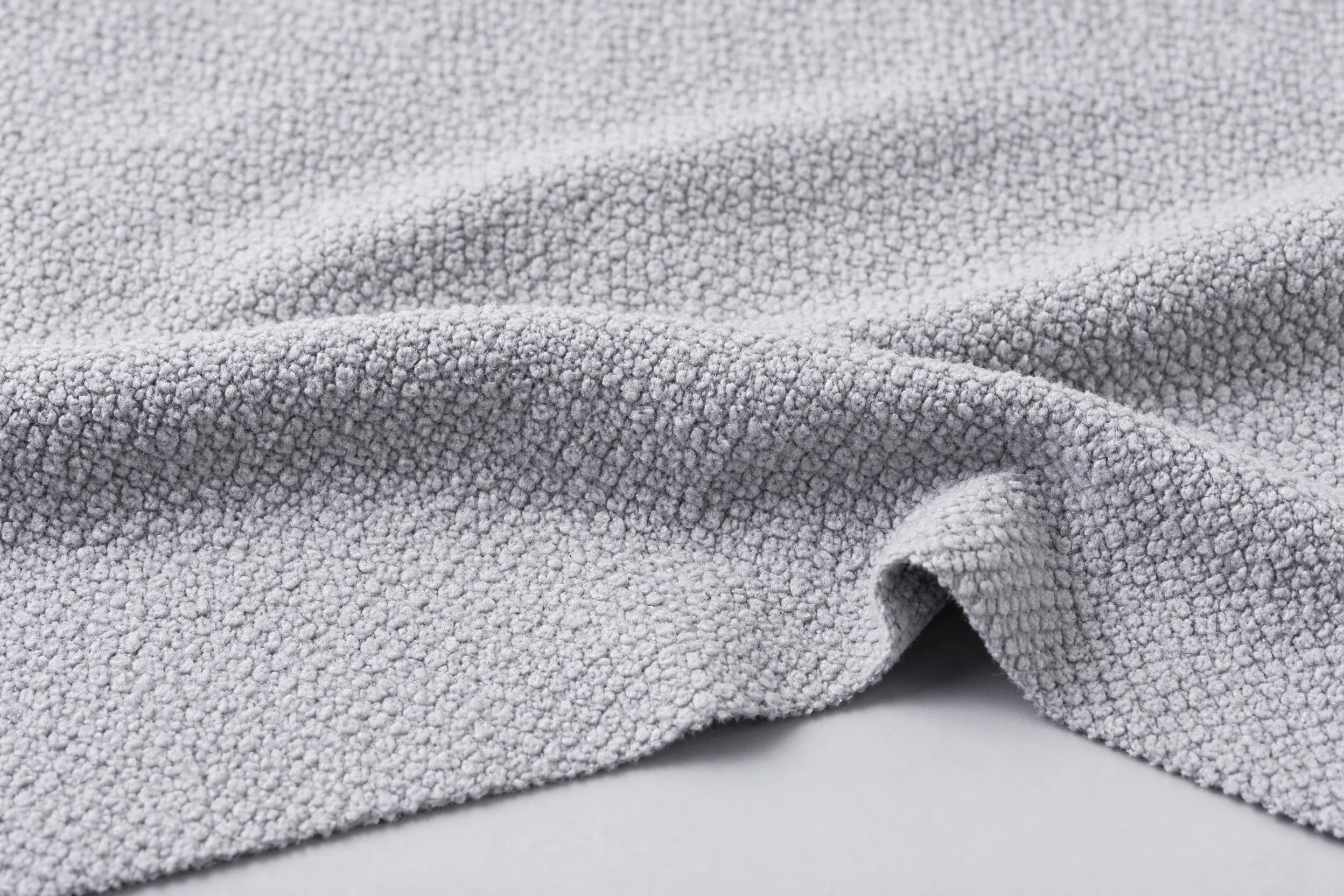
A fish scale microfiber cleaning towel is a knitted fabric with small, raised granules. It usually mixes 80% polyester and 20% polyamide. It absorbs water well, dries fast, and uses strong friction to remove heavy dirt, grease, and water spots without scratching surfaces.
I want to share my factory experience with you. I will show you why this towel is so special. I will also compare it to regular plain microfiber cloths. You will see exactly how to pick the right product for your business needs.
What makes the fish scale structure so effective for cleaning?
Many buyers struggle to find a cloth that handles tough stains. Normal flat cloths slip over dirt. The fish scale structure grabs dirt and holds it tight.
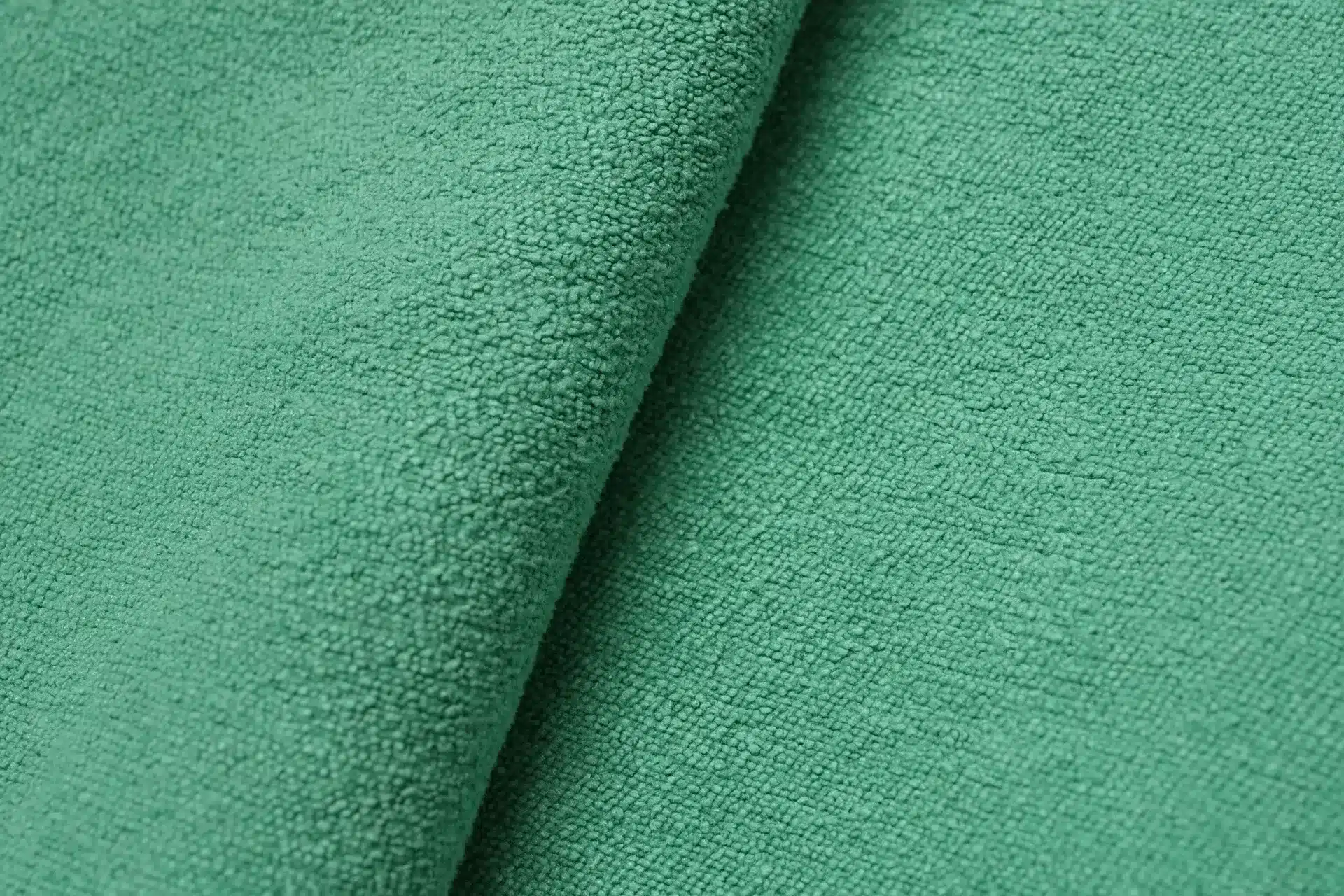
The fish scale cloth has a special weft-knitted surface. It is full of tiny, dense bumps. We call it ant cloth in China because it looks like gathered ants. These raised granules create extra friction to scrape away tough oil, dust, and grime easily.
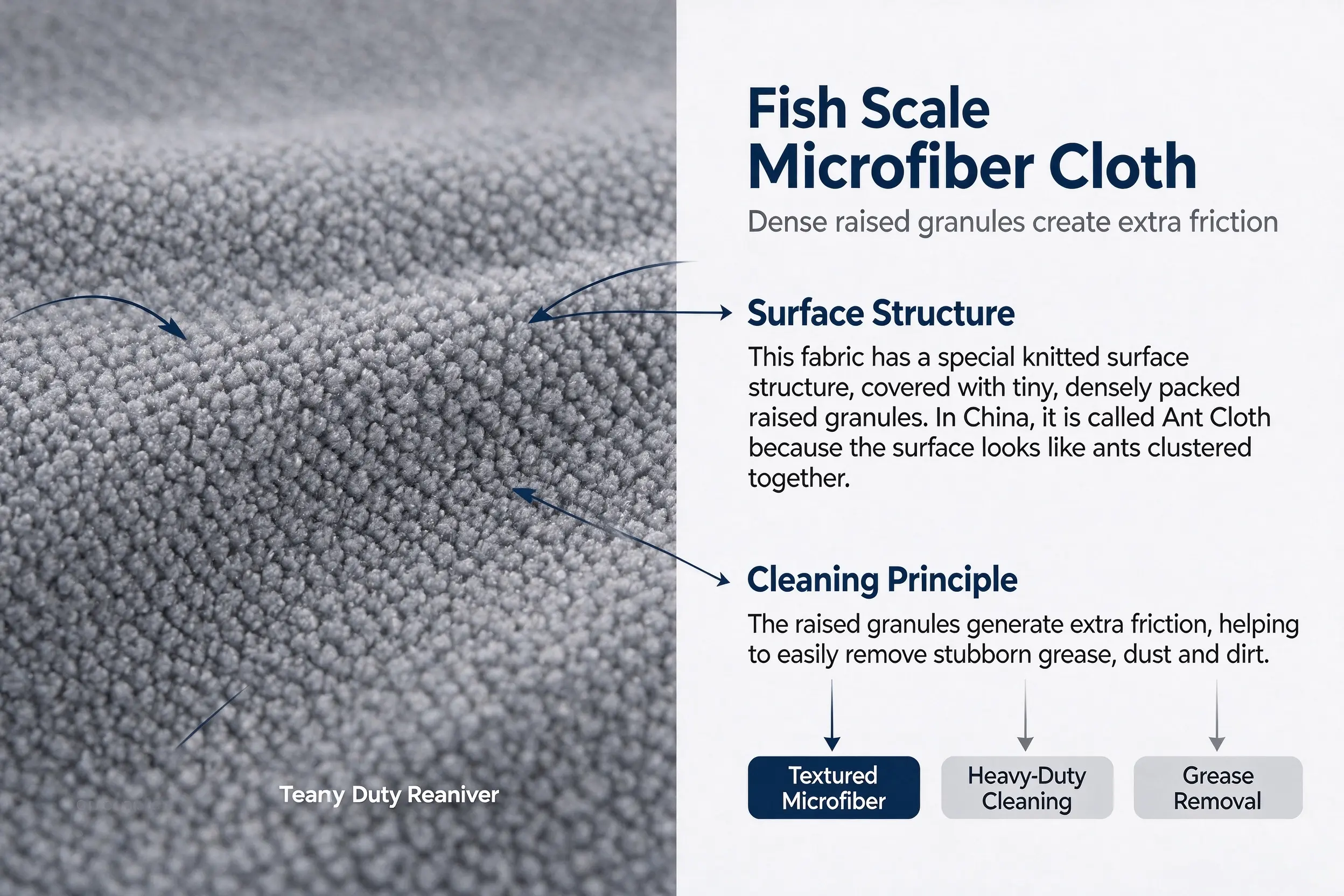
I remember a time when a European client named Tom visited our factory. He wanted a strong cloth for his automotive care brand. I showed him this fish scale fabric. I explained the core features to him.
Core Features of Fish Scale Cloth
First, it has strong water absorption. The microfiber structure can hold water up to 7 times its own weight. It dries much faster than cotton. It does not get hard after washing. Second, it has strong friction. The granular texture provides a natural grip. It works very well for anti-slip uses and deep cleaning. Third, it drops very little lint. It does not pill easily. It feels soft on the skin. Finally, you can use it wet or dry. You use it dry to catch dust. You use it wet to clean oil. It leaves no water marks. It does not damage car paint or glass.
Standard Specifications
Here are the standard details we use in our factory production:
| Feature | Specification |
|---|---|
| Material | 80% Polyester + 20% Polyamide (GRS recycled available) |
| Weight | 180 to 350 grams per square meter (g/㎡) |
| Weaving Method | Weft-knitted mainly |
Tom tested the cloth on a dirty window. He was very happy with the result. The fish scale design really makes a big difference for heavy-duty cleaning tasks.
How does surface friction differ between fish scale and plain microfiber?
Are your customers leaving bad reviews because cloths cannot remove dried wax or bugs? Low friction cloths fail here. You need a textured surface to solve this tough problem.
Fish scale cloth has high friction and strong dirt-grabbing power. The raised bumps easily scrape off heavy grease, bug bodies, and car wax residue. Plain microfiber is smooth and has low friction. It is good for light cleaning and polishing, but it struggles with stubborn dirt.
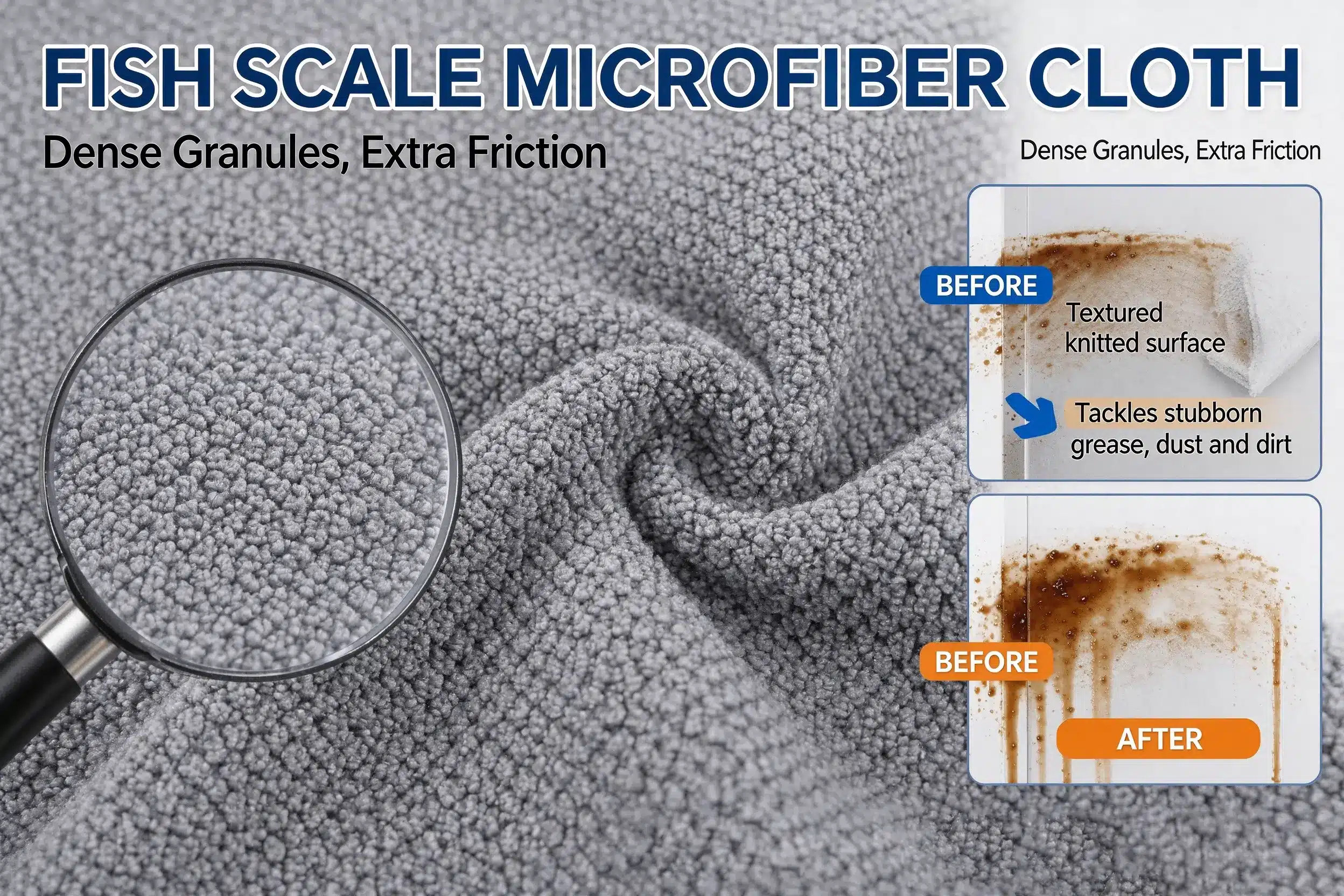
Let us look closer at the surface structure. Both towels use the same 80% polyester and 20% polyamide raw material. But the weaving method changes everything. I always tell my B2B buyers to match the fabric structure to the cleaning job.
Breaking Down the Surface Structure
The fish scale cloth uses a weft-knitted method. The surface is not flat. It has dense, small, raised granules. I like to think of these bumps as tiny fingers. They dig into the dirt and pull it away. The plain microfiber cloth uses a flat weaving method. The surface is smooth and even. It has no raised bumps. It is a flat structure.
Comparing the Cleaning Power
Here is a simple table to show the difference in friction and cleaning power:
| Feature | Fish Scale (Ant Cloth) | Plain Microfiber |
|---|---|---|
| Surface Type | Bumpy and textured | Smooth and flat |
| Friction Level | High | Low |
| Best Dirt Type | Heavy grease, wax, bugs | Light dust, fingerprints |
| Scratch Risk | Safe, but grabs hard particles | Very safe, glides easily |
If your brand sells kitchen degreasing cloths, the fish scale towel is the best choice. The high friction cuts through the oil fast. If you try to use a plain cloth for thick oil, it will just push the oil around.
Which towel absorbs water better and leaves fewer streaks?
Wet surfaces and water streaks frustrate many people. A cloth that pushes water instead of absorbing it is useless. The right fabric structure locks in water and prevents ugly streaks.
Fish scale cloth holds more water because the granular gaps lock moisture in. It does not dry out too fast during wet wiping. Plain microfiber dries faster because water moves quickly through flat fibers. High-quality plain microfiber leaves fewer streaks on glass and is better for final polishing.
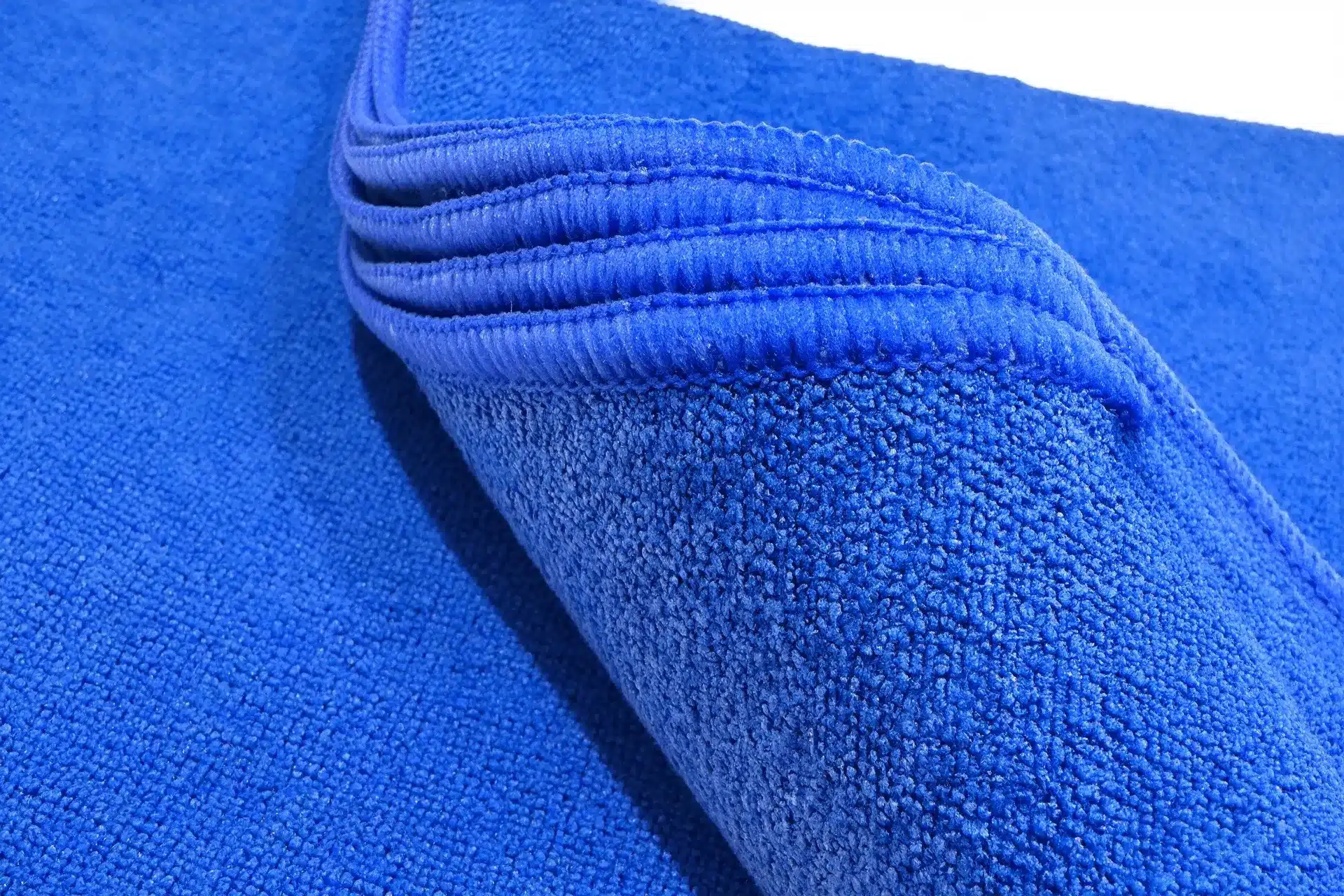
Water management is a very important topic in our factory. I test cloths every week. I see how they handle water and lint. Many buyers ask me about streaks on glass. This is a common problem in the car care industry.
Water Absorption and Storage
The fish scale cloth stores water very well. The gaps between the little bumps hold a lot of liquid. When you wipe a wet surface, the cloth stays wet and useful for a long time. You do not have to squeeze it out constantly. But, it dries a little slower than thin plain cloths. Plain microfiber holds water in the fiber gaps. A thin plain cloth moves water fast and dries very quickly. A thick plain cloth absorbs well, but it cannot hold hanging water drops as well as the fish scale cloth.
Lint and Water Marks
Lint is a big issue for quality control.
Quality Control Differences
| Fabric Type | Lint Risk | Water Streak Risk | Best Use for Shine |
|---|---|---|---|
| Fish Scale | Low (if good quality) | Medium (grabs dirt) | Heavy cleaning |
| Plain Microfiber | Very Low | Very Low | Final polishing |
Fish scale cloth has short, dense pile granules. A good quality cloth drops very little lint. But if the factory setting process is bad, the base of the bumps can drop small flakes. Also, because it has high friction, it can drag dirt and leave tiny water marks on glass. Plain microfiber fibers fit tightly together. It is much better for polishing. It does not leave marks on mirrors.
How should you choose the right towel for your product line?
Choosing the wrong cloth wastes your money and hurts your brand. Buyers often get confused by so many choices. You must match the fabric to the exact customer need.
Choose fish scale cloth for heavy-duty tasks like car washing, kitchen degreasing, and yoga mats. Choose plain microfiber for delicate tasks like cleaning glasses, screens, and light household dusting. Fish scale cloths cost a little more to make because the weaving process is more complex than plain cloths.
I always help my clients build their product lines. Different markets need different products. You need to look at the feel of the cloth, the use case, and the factory cost.
Touch and Feel
The two cloths feel very different in your hand. The fish scale cloth has a clear granular feel. It is not slippery. It feels tight and has good bounce. It provides a strong grip. The plain microfiber cloth feels smooth and soft. It is very gentle on the skin. We often use it to make small cloths for phone screens or eyeglasses.
Application Scenarios
Here is a guide to help you choose the right product for your purchasing plan:
| Scenario | Best Choice | Reason |
|---|---|---|
| Car Exterior Wash | Fish Scale | Scrapes off bugs and thick dirt |
| Kitchen Heavy Oil | Fish Scale | Bumps grab grease easily |
| Yoga Towel | Fish Scale | Good grip and anti-slip |
| Eyeglasses / Screens | Plain Microfiber | Smooth, no scratches |
| Car Final Polish | Plain Microfiber | No streaks, high shine |
| Corporate Gifts | Plain Microfiber | Soft feel, easy to print on |
Cost and Processing
Cost is always a big factor for buyers like Tom. For the same weight, the fish scale cloth has a slightly higher unit price than plain microfiber. The knitting process is more complex. Both fabrics can take printing. But the plain cloth shows printed designs better. The bumps on the fish scale cloth can hide small parts of the printed pattern. I always suggest plain cloth if the client wants a very clear, complex logo.
Conclusion
Fish scale and plain microfiber cloths serve different needs. Fish scale handles heavy dirt, while plain cloth is best for polishing. Choose wisely to build a strong product line.