
Searching for one perfect car cloth? Using the wrong one can cause swirl marks and frustration. The solution lies in using task-specific cloths for a flawless finish.
The "best" exterior car care microfiber cloth isn’t one towel, but a set of specialized ones. You need a high-GSM, plush towel for drying, a short-pile towel for wax removal, and a waffle-weave towel for glass. Using the right cloth for the job protects your paint.
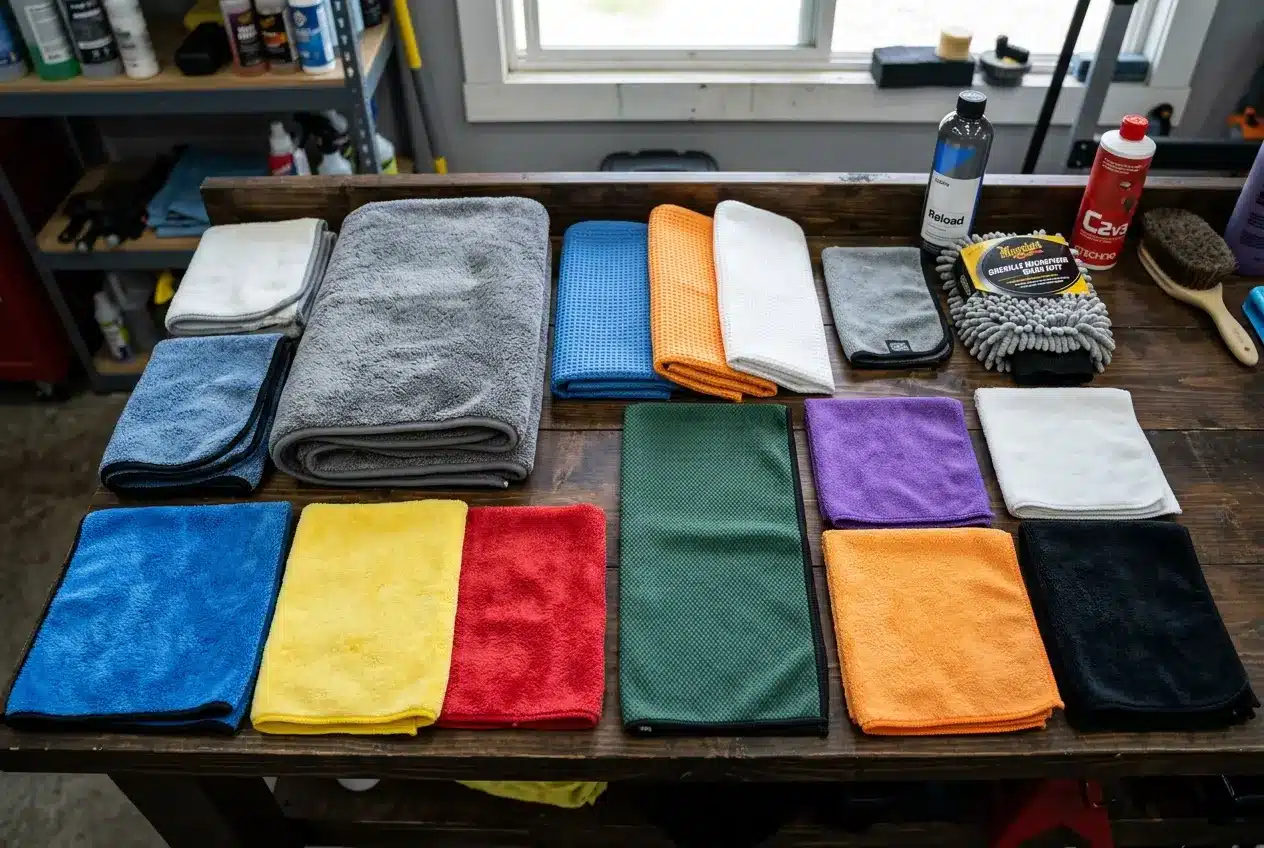
Many people I talk to believe that a single, expensive, high-GSM towel is the answer to all their car cleaning needs. As a manufacturer, I’ve seen this common mistake cost people time and even damage their beautiful paintwork. But the secret to a great finish is not about finding one "super" towel. It’s about understanding the science behind the fabric and matching it to the task at hand. A cloth designed for drying is terrible for removing wax, and a wax removal towel will leave streaks on glass. In this guide, I’ll walk you through exactly which towels to use for each step of exterior car care. This will help you achieve professional results every time and make smarter choices for your product line.
What Makes a Microfiber Towel Perfect for Drying Your Car?
Tired of ugly water spots after washing your car? Using the wrong towel just moves water around and can even scratch your paint. The answer is a dedicated, super-absorbent drying towel.
The perfect drying towel has a high GSM (grams per square meter), typically 500-12001, and a plush, twisted loop or long pile. This structure creates a massive surface area to absorb huge amounts of water quickly and safely, pulling it away from the paint to prevent water spots.
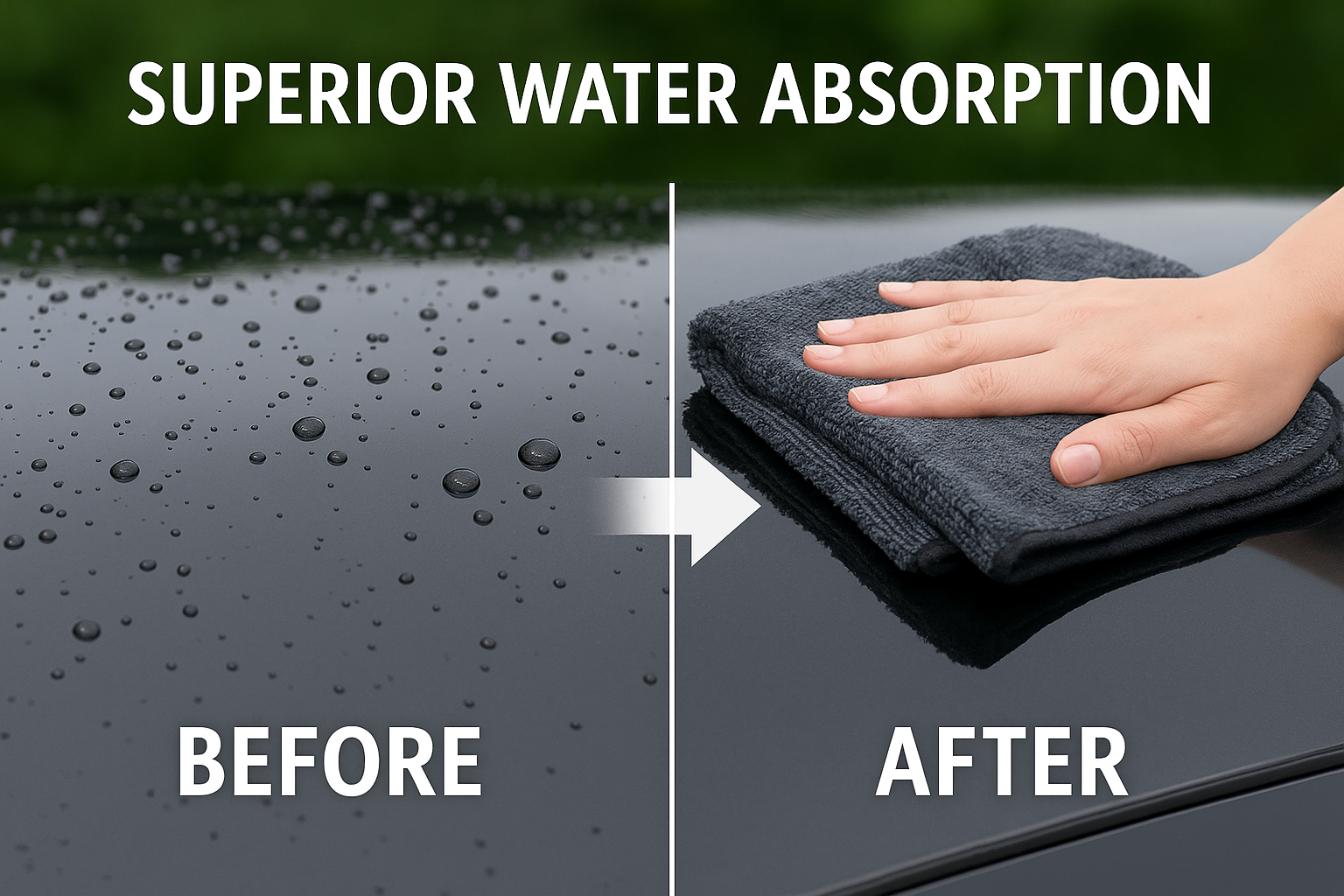
When it comes to drying a car, the main goals are speed and safety. You need to absorb a large volume of water as quickly as possible without scratching the paint. This is where the design of the towel becomes critical. A high GSM is a good starting point, as it indicates a dense, heavy cloth with more fibers to hold water. But the weave is even more important. I’ve found that twisted loop towels are the top performers2. We manufacture these by twisting tight loops of microfiber together, creating deep channels that drink up water on contact. A long, plush pile works similarly, using the length of the fibers to increase surface area. The size also matters; a larger towel (around 25" x 35") can often dry an entire vehicle without being wrung out. Finally, the edge must be soft, like silk banding or an edgeless ultrasonic cut3, to prevent scratching when you drag the towel across the surface.
| Feature | Why It Matters for Drying | Our Manufacturing Focus |
|---|---|---|
| High GSM (500+) | More fibers to absorb and hold more water. | We ensure a dense weave for maximum weight and absorbency. |
| Twisted Loop Weave | Creates channels that wick water away from the surface instantly. | This specialized weaving process is optimized for fast absorption. |
| Large Size | Allows for drying larger sections or a whole car at once. | We offer custom sizing to meet specific market needs. |
| Soft Edge | Prevents the edge from scratching clear coat during use. | We provide edgeless, silk-banded, or other soft edge finishes. |
Why Do You Need a Special Cloth for Removing Wax and Sealants?
You’ve carefully applied wax, but now it’s a smeary mess to remove. The wrong towel just pushes the product around, leaving residue. You need a cloth designed to bite and lift.
A dedicated wax removal cloth needs "bite." A shorter, denser pile (350-500 GSM)4 allows the fibers to grab and lift excess wax or sealant without smearing. Using an edgeless or dual-pile towel ensures a clean buff without scratching5 the delicate, freshly protected surface.
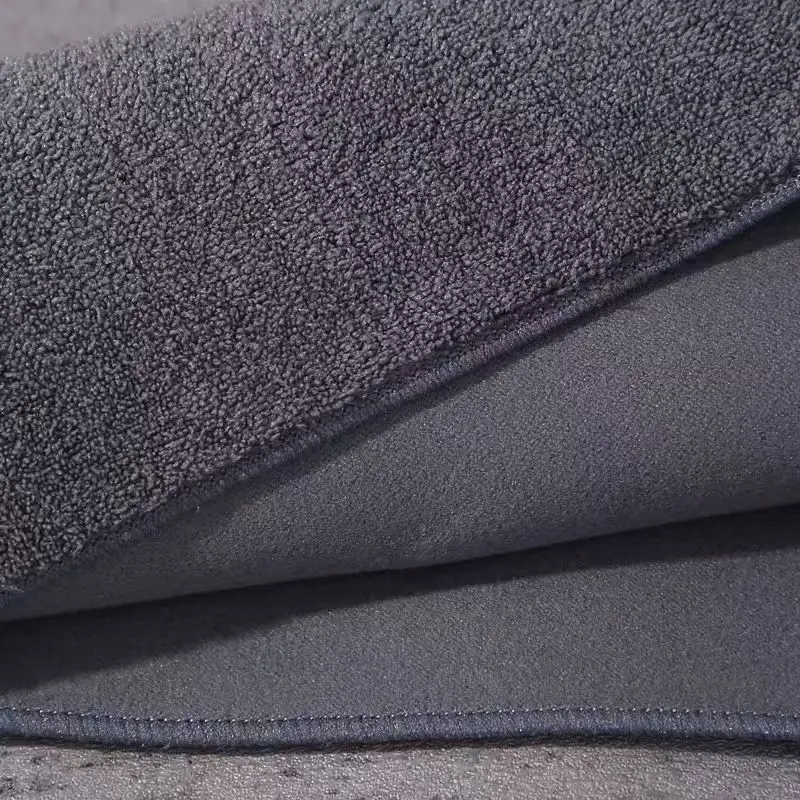
After you apply a layer of wax or sealant, you need to buff off the excess residue. If you use a thick, plush drying towel for this, you’ll be frustrated. The long fibers will just glide over the residue and can become matted and clogged6. For this job, you need a towel with "bite." This means a shorter, more aggressive pile that can get under the haze and lift it away. From a manufacturing standpoint, we achieve this with a pile length of 2-4mm7 and a GSM between 350 and 500. This provides the perfect balance of softness and cleaning power. I strongly recommend an edgeless towel for this task. When you are buffing a surface, the edges of the towel can easily cause fine scratches. An ultrasonic cut, edgeless design eliminates this risk entirely. Many of the best towels for this are dual-pile, with a shorter pile on one side for the initial removal and a slightly plusher side for the final, gentle buff.
| Feature | Why It Matters for Wax Removal | Our Manufacturing Focus |
|---|---|---|
| Short Pile (2-4mm) | Provides "bite" to grab and lift wax residue effectively. | We control pile height precisely during production for optimal performance. |
| Medium GSM (350-500) | Dense enough to be effective but not so plush it clogs easily. | We balance fabric density with pile length for the perfect feel. |
| Edgeless Design | Eliminates the hard edge, a common source of scratches during buffing. | We use ultrasonic cutting technology for a safe, truly edgeless finish. |
| Dual-Pile Structure | Offers two tools in one: a removal side and a buffing side. | This design adds value and functionality for the end-user. |
Is There a Better Microfiber for Streak-Free Glass Cleaning?
Frustrated by streaks and lint on your car’s windows? No matter how much you wipe, the haze just seems to move around. The solution is a specialized waffle-weave or low-pile glass towel.
Absolutely. For streak-free glass, a waffle-weave microfiber is superior8. Its unique pockets trap dirt and absorb moisture effectively. Alternatively, a low-pile, tight-weave glass cloth leaves zero lint behind9, which is the primary cause of streaks. These are designed specifically for clarity.
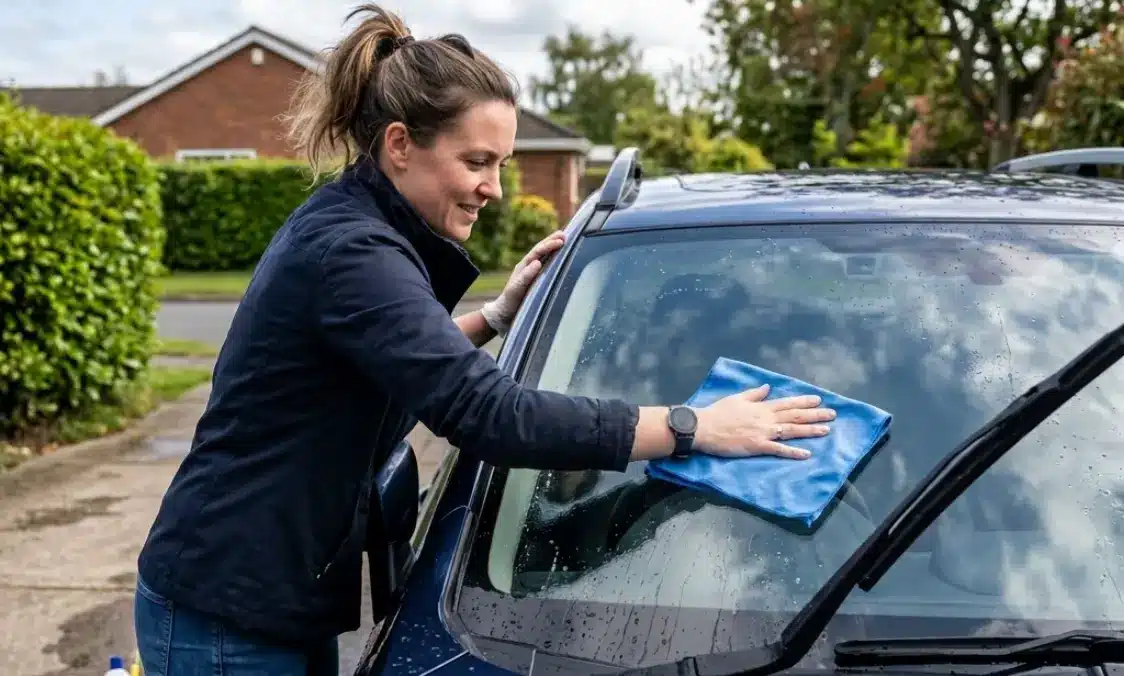
Glass is one of the most challenging surfaces to get perfectly clean. The biggest enemies are streaks and lint. A standard plush towel is the worst choice here because its long fibers are guaranteed to leave lint behind. The solution is a towel with a completely different structure. The most popular and effective design is the waffle weave. As the name suggests, we weave the fabric to create a pattern of small, recessed squares. These pockets are brilliant at trapping dirt and grime, while the raised ridges quickly absorb liquid without smearing it around10. The result is a clean, streak-free surface. Another excellent option is a very low-pile, tight-weave towel. These towels feel almost like suede. They have virtually no loose fibers to leave behind, making them perfect for a final wipe-down to ensure absolute clarity. For my own car, I always use the two-towel method: one damp waffle-weave to clean, and a second, dry, tight-weave towel to do the final buff11.
| Towel Type | How It Works for Glass | Best Use Case |
|---|---|---|
| Waffle Weave | Pockets trap dirt and raised ridges absorb moisture without smearing. | The primary cleaning towel. Use it damp with a glass cleaner. |
| Low-Pile / Tight Weave | No loose fibers to leave behind as lint. Provides a final, perfect polish. | The secondary drying/buffing towel. Use it completely dry. |
| Standard Plush Towel | (Should not be used) Long fibers trap dirt but also leave lint and cause streaks. | Reserve for paintwork, not glass. |
Conclusion
To truly care for your car’s exterior, stop seeking one magic towel. Instead, build a small arsenal of specialized cloths for drying, buffing, and glass for a perfect finish.
"Microfiber Towels: Understanding GSM and How to Choose the …", https://supremedetailsupply.com/blogs/news/microfiber-towels-understanding-gsm-and-how-to-choose-the-right-towel-for-scratch-free-drying. This source explains the correlation between GSM and microfiber towel absorbency, supporting the claim that higher GSM towels are more effective for drying tasks. Evidence role: mechanism; source type: education. Supports: High GSM microfiber towels are more absorbent and suitable for drying cars.. Scope note: The GSM range may vary slightly depending on the specific microfiber manufacturing process. ↩
"The Truth About Plush Microfiber Towels: When to Use Them (And …", https://pressbooks.cuny.edu/teaset/chapter/the-truth-about-plush-microfiber-towels/. This source provides evidence on the effectiveness of twisted loop microfiber towels for water absorption, supporting their use in car drying. Evidence role: mechanism; source type: research. Supports: Twisted loop microfiber towels are highly effective for car drying due to their water absorption properties.. Scope note: The performance of twisted loop towels may depend on specific weave quality and fiber material. ↩
"8 Reasons Why you Should Switch to a Microfiber Towel – Curlsmith", https://eu.curlsmith.com/blogs/tips-tricks/switching-to-microfiber-towel-benefits-for-hair?srsltid=AfmBOoqpkYBGBf3jXx7AeGgVSkhVt2f70lY50AG9dG5I9acDAsZnnap5. This source explains how silk banding and ultrasonic cuts on microfiber towels prevent scratches, supporting their use for car drying. Evidence role: mechanism; source type: research. Supports: Silk banding or edgeless ultrasonic cuts on microfiber towels prevent scratches during car drying.. Scope note: The effectiveness may vary depending on the specific edge finishing process. ↩
"MaxShine 500GSM Fluffy Wax Removal Microfiber Car Cloth", https://maxshineusa.com/products/microfiber-car-cloth?srsltid=AfmBOopxpO1NDOGiGkTXBE8rB0PbZF7mKWlcXZkASJ9UtCrm8-OZzVV5. This source discusses the advantages of short-pile microfiber towels for wax removal, supporting the claim about their effectiveness. Evidence role: mechanism; source type: education. Supports: Short-pile microfiber towels with 350-500 GSM are effective for wax removal due to their density and cleaning properties.. Scope note: The GSM range may vary slightly depending on the specific application or wax type. ↩
"BLACKLINE® EVERYDAY MICROFIBER TOWELS", https://blacklinecarcare.com/products/edgless-microfiber-towel-3-pack?srsltid=AfmBOoq3hab3_awsMlTrRlVrkwq6F4Q9jMf2aLJaSSkget1MTjIyeTGr. This source explains how edgeless and dual-pile microfiber towels reduce the risk of scratches during buffing, supporting their use for wax removal. Evidence role: mechanism; source type: research. Supports: Edgeless or dual-pile microfiber towels are ideal for wax removal as they minimize the risk of scratches during buffing.. Scope note: The effectiveness may depend on the specific manufacturing process of the towel edges. ↩
"MaxShine 500GSM Fluffy Wax Removal Microfiber Car Cloth", https://maxshineusa.com/products/microfiber-car-cloth?srsltid=AfmBOopIt8TiUYZkktzc06rVCRFTrm8G_4eIRjmthBWGQ4NJJPa20BFh. This source explains how long fibers in microfiber towels can become matted and clogged during wax removal, supporting the claim. Evidence role: mechanism; source type: research. Supports: Long fibers in microfiber towels are less effective for wax removal as they can become matted and clogged.. Scope note: The clogging effect may vary depending on the specific wax or sealant used. ↩
"The Truth About Plush Microfiber Towels: When to Use Them (And …", https://pressbooks.cuny.edu/teaset/chapter/the-truth-about-plush-microfiber-towels/. This source explains how a pile length of 2-4mm in microfiber towels provides optimal cleaning power for wax removal. Evidence role: mechanism; source type: research. Supports: A pile length of 2-4mm in microfiber towels is ideal for wax removal due to its cleaning power.. Scope note: The optimal pile length may vary slightly depending on the specific application or wax type. ↩
"Standard Waffle-Weave Microfiber Towel – The Rag Company", https://theragcompany.com/products/standard-waffle-weave?srsltid=AfmBOooArhl7PvzxBM3SH3mJVZP_DYdVoSdlxI_jE0KY1kOVtFJMZacb. This source provides evidence on the effectiveness of waffle-weave microfiber towels for streak-free glass cleaning, supporting their superiority. Evidence role: mechanism; source type: research. Supports: Waffle-weave microfiber towels are highly effective for streak-free glass cleaning due to their unique pocketed design.. Scope note: The performance may vary depending on the specific weave quality and fiber material. ↩
"Low Pile Microfiber Towels for Cars | Autofiber", https://www.autofiber.com/collections/low-pile?srsltid=AfmBOooxYVrqtXX2OO1cc-6TWFgzvKeJ6x4EB3cgYDQyP3Ovfxyn4hVX. This source discusses the lint-free properties of low-pile, tight-weave microfiber towels, supporting their use for glass cleaning. Evidence role: mechanism; source type: research. Supports: Low-pile, tight-weave microfiber towels are ideal for glass cleaning as they leave no lint behind.. Scope note: The lint-free performance may depend on the specific fiber material used in the towel. ↩
"How to fix waffle weave towel embroidery? – Facebook", https://www.facebook.com/groups/brothersewing/posts/1403486844709871/. This source explains how raised ridges in waffle-weave microfiber towels enhance liquid absorption, supporting their use for glass cleaning. Evidence role: mechanism; source type: research. Supports: Raised ridges in waffle-weave microfiber towels enhance liquid absorption for streak-free glass cleaning.. Scope note: The absorption efficiency may depend on the specific weave quality and fiber material. ↩
"Favorite method for cleaning glass? : r/AutoDetailing – Reddit", https://www.reddit.com/r/AutoDetailing/comments/aiqql5/favorite_method_for_cleaning_glass/. This source supports the two-towel method for glass cleaning, explaining how it ensures streak-free results. Evidence role: mechanism; source type: education. Supports: The two-towel method using a damp waffle-weave and a dry tight-weave towel ensures streak-free glass cleaning.. Scope note: The effectiveness may depend on the specific towel types and cleaning products used. ↩