
Choosing the right product specifications can be confusing. Making the wrong choice can impact sales and leave you with unwanted stock. Let’s look at the details to help you decide.
Yes, a 50x60cm microfiber mop cloth1 is a versatile and popular choice for professional cleaning lines. It balances a large coverage area2 with ease of use, making it suitable for both residential and commercial markets3. It is a solid, standard option for many brands to consider.
Now that we know the 50x60cm size is a strong contender, let’s explore the specifics. It’s a great starting point, but the details are what will make your product successful. What other sizes should you be aware of, and what customization options can set your brand apart from the competition? Understanding these factors is key to building a successful product line, so let’s dive deeper into the world of microfiber mop cloths.
How Do Different Mop Cloth Sizes Compare?
You see various mop cloth sizes but don’t know which to stock for your market. Picking a size that doesn’t match what your customers want can hurt your profits.
A 50x60cm cloth offers a great balance. Smaller sizes like 40x60cm are agile but cover less area. Larger custom sizes, like the 45x72cm I often produce for clients, are popular in specific markets needing more coverage. The 50x60cm size is a safe, effective middle ground.
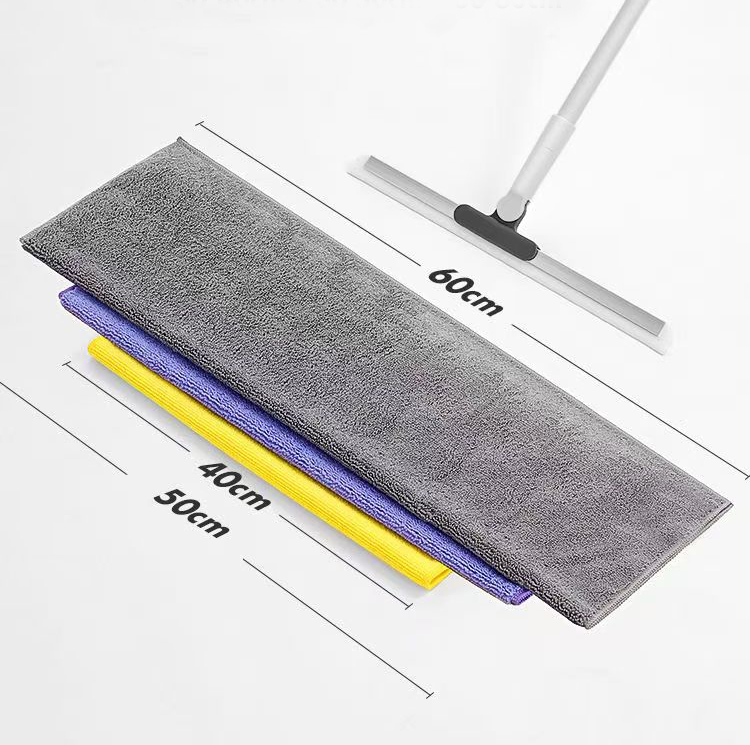
In my years of manufacturing, I’ve seen many different size requests come across my desk. The 50x60cm is a true workhorse. It’s a standard size that fits many common mop heads used in both homes and professional settings. It’s large enough to clean floors quickly but not so large that it becomes difficult to wring out or wash. However, it’s not the only option. Some of my clients prefer a smaller 40x60cm cloth. This size is great for smaller spaces or for businesses that want a more budget-friendly option. On the other hand, I have many clients, especially in Europe, who specifically request a custom 45x72cm size. This larger size provides maximum floor coverage, which is ideal for cleaning large commercial spaces like warehouses, schools, or hospitals. The choice really depends on the target end-user4.
Sizing Up Your Options
To make it clearer, let’s break down the common sizes and their best uses. This can help you decide which product to develop for your brand.
| Size (cm) | Best Use Case | Pros | Cons |
|---|---|---|---|
| 40×60 | Home Use, Small Spaces | Cost-effective, easy to handle | Less floor coverage, more passes |
| 50×60 | General Purpose | Good balance of size and handling | Standard, less unique |
| 45×72 | Commercial Cleaning | Maximum coverage, very efficient | Heavier when wet, higher cost |
From a manufacturing standpoint, we can produce any of these sizes. My advice to new buyers is to start with the 50x60cm if you are unsure. It’s the safest bet for most markets. But if you have specific knowledge of your market and know that a larger or smaller size is preferred, we can easily accommodate that.
What Customization Options Can Make Your Mop Cloth Stand Out?
A standard mop cloth looks like every other cloth on the shelf. You need your product to look different. Without some unique features, your product competes only on price, which hurts your margins.
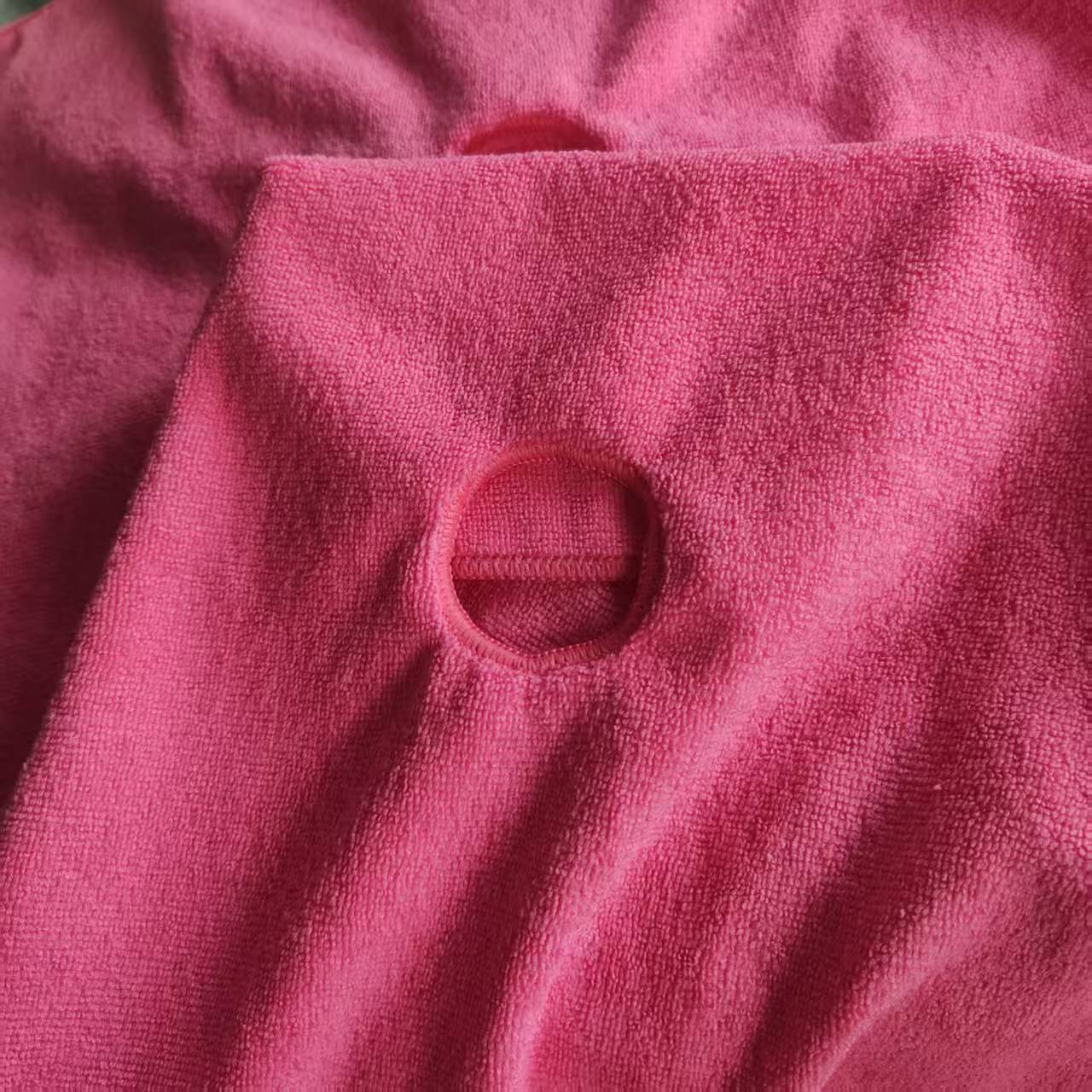
Key customizations include overlocking the inner circle for a finished look or adding a non-woven fabric insert for more structure. While these mainly affect appearance, they can match market preferences and elevate your brand’s perceived value. A plain design is also a very cost-effective option.
When you are developing your own brand, small details matter. Based on my experience, the function of the mop cloth doesn’t change much with these small additions, but the customer’s perception can. It’s all about matching the style that is popular in your region or sales channel. Some markets see a finished edge5 as a sign of higher quality, while others prioritize the lowest possible cost.
Finishing Touches for Your Brand
Let’s look at the three most common styles I produce for my clients.
1. Inner Circle Overlocking6
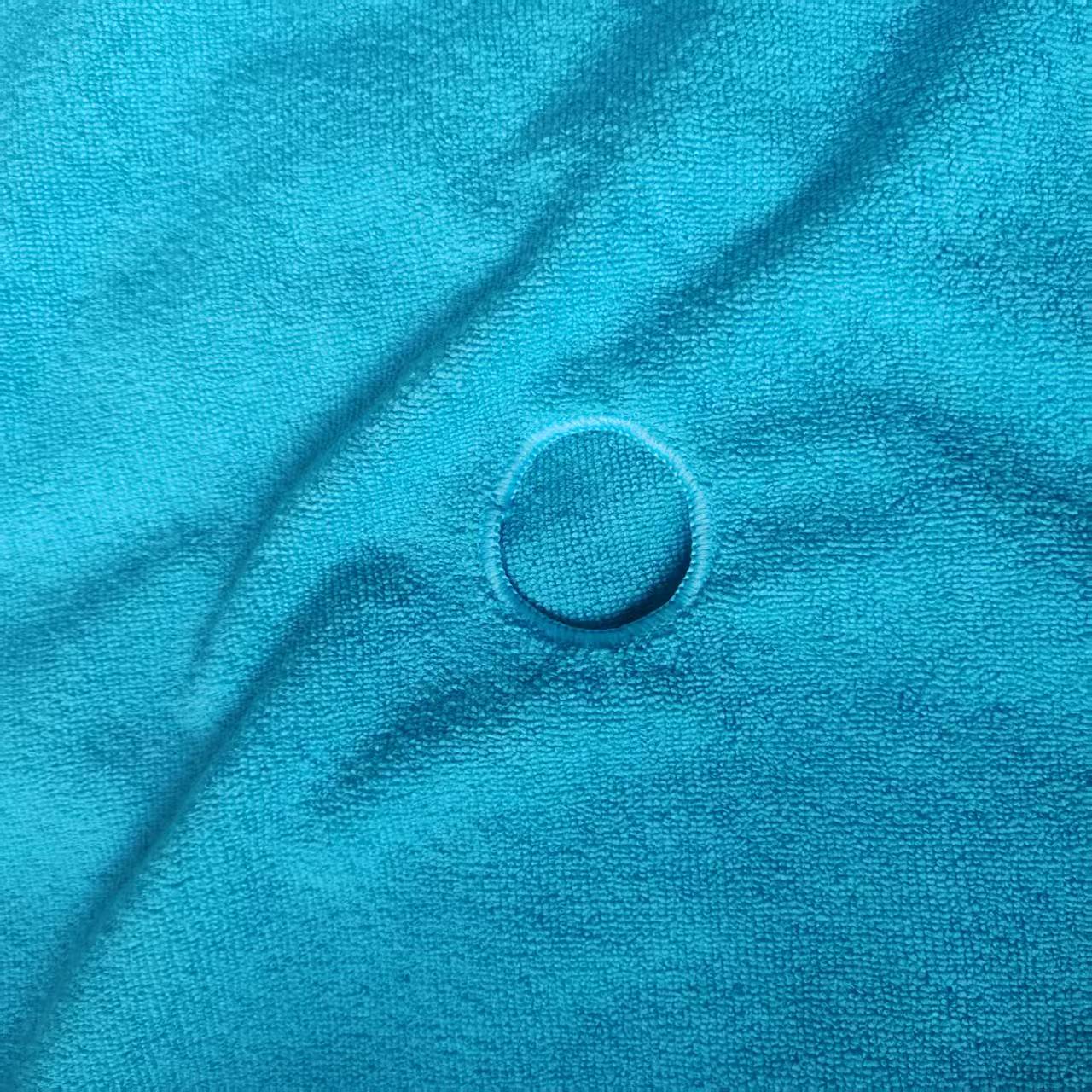
Some clients ask us to add an overlock stitch around the inner circle of the mop cloth. This gives the product a very clean and finished look. It prevents any potential fraying at the edge of the center hole. Does it make the mop cloth last longer? In my opinion, the difference in lifespan is very small. However, it makes the product look more premium. If your brand is positioned as a high-quality option, this small detail can reinforce that message to the consumer.
2. Non-Woven Fabric Insert7
Another popular request is to sew a piece of non-woven fabric into the center of the mop cloth, where it attaches to the mop head. This adds a bit of stiffness and structure. It doesn’t change the cleaning performance of the microfiber itself. But, some consumers feel that it makes the mop cloth more durable or easier to attach to the mop. It’s an aesthetic choice that can make your product feel more substantial compared to competitors.
3. The Standard, Plain Option8
The most common and cost-effective option is to order the mop cloth with no additions. The center hole is simply cut from the fabric. For most applications, this is perfectly fine. The microfiber fabric is durable and won’t fall apart. This option gives you the same great cleaning performance at the best possible price, allowing you to be more competitive.
We can produce all three styles. The choice is yours, and it should be based on your brand identity and what your target customers value.
How Does Manufacturing Technology Affect Your Mop Cloths?
You need high-quality mop cloths produced quickly and at a good price. Slow, inconsistent, or manual production methods can lead to shipping delays and serious quality control issues for your brand.
We use fully automatic machines9 to produce our mop cloths. This process ensures every piece has a consistent, clean finish. It’s much faster and more cost-effective than manual methods, giving our clients a competitive advantage in both quality and price, which is essential for large orders.

The end-user wants a mop cloth that is easy to use and easy to clean. They just want to slip it onto their mop, clean the floor, and then toss it in the washing machine. Our job as a manufacturer is to make sure the product not only works well but is built to last through many wash cycles. The only way to do that consistently for large orders is with modern technology. All of the mop cloths we produce are made on fully automated production lines. The fabric is cut, and the edges are sewn by machines. This process is incredibly fast and precise.
The Benefits of Automated Production
For my clients, who are brand owners and purchasing managers, our automated process provides several key advantages.
- Speed and Scalability10: We can produce very large quantities of mop cloths in a short amount of time. This means shorter lead times for you and the ability to scale up quickly when you get a large order.
- Consistency: Every single mop cloth that comes off our line is identical. The dimensions are exact, and the stitching is perfect. This level of consistency is impossible to achieve with manual labor. It reduces defect rates and ensures your customers receive a high-quality product every time.
- Cost-Effectiveness11: Machines work faster and more efficiently than people, which lowers the cost of production. We pass these savings on to our clients. This allows you to offer a high-quality product at a competitive price point, which improves your profit margin.
- Aesthetics: Machine-finished products simply look better. The lines are cleaner, and the overall appearance is more professional. This enhances your brand’s image on the retail shelf.
When you’re sourcing products, the capability of your supplier’s factory is just as important as the product itself. Our investment in automation is an investment in our clients’ success.
Conclusion
A 50x60cm microfiber mop cloth1 is a strong, reliable choice. With the right manufacturing partner, you can customize it with features that will fit your brand and market perfectly.
Explore why this size is versatile and suitable for both residential and commercial cleaning needs. ↩ ↩
Understand how larger cloths improve cleaning efficiency in bigger spaces. ↩
Explore the features that make these cloths versatile for different cleaning needs. ↩
Learn why tailoring mop cloth sizes and features to the end-user is essential for success. ↩
Find out how this detail enhances the perceived quality and durability of the product. ↩
Understand how this customization adds a premium look and prevents fraying. ↩
Find out how this addition adds structure and enhances the perceived durability of the product. ↩
Learn why this cost-effective choice is popular for most applications without compromising cleaning performance. ↩
Explore how automation ensures consistent quality, faster production, and cost-effectiveness. ↩
Understand how quick production and scalability benefit large orders and reduce lead times. ↩
Discover how automation reduces production costs and improves profit margins. ↩