
Are your stainless steel appliances covered in smudges and fingerprints? You clean them, but the streaks just get worse. The secret isn’t an expensive chemical, but the right tool.
The best way to clean stainless steel without streaks is to use a specialized microfiber cloth1. Dampen one section with a little water and wipe down the appliance. Then, use a dry section of the same cloth to buff and polish the surface for a perfect, streak-free shine2.
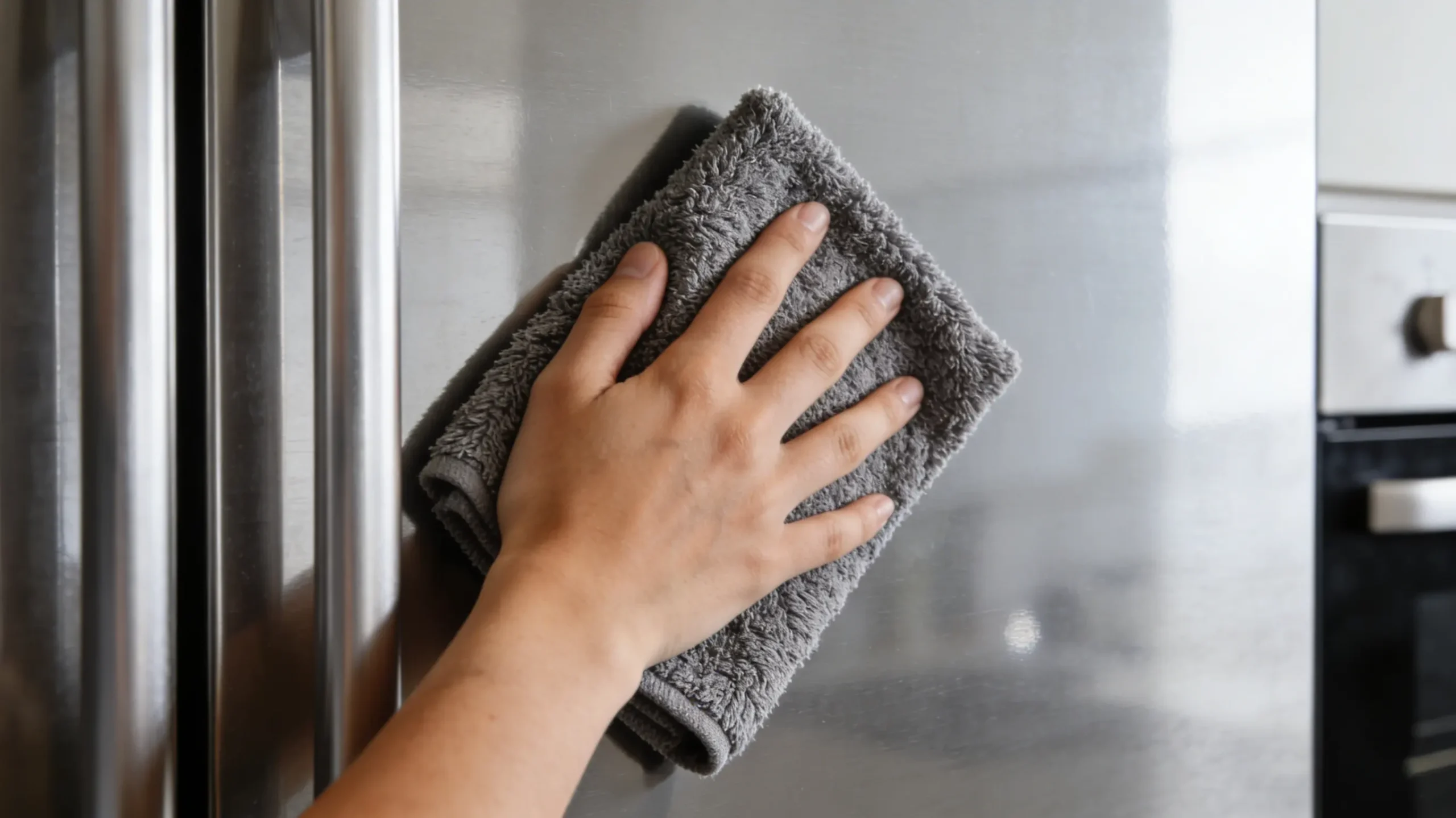
Now you know the basic secret to a perfect shine. But to get consistent, professional results, it’s important to understand why some common tools fail and what makes certain cloths so much better. This knowledge is key, especially if you’re developing your own line of cleaning products. Let’s dig a little deeper so you can avoid common mistakes and choose the best materials for the job.
Why do common cleaning cloths fail on stainless steel?
Are you frustrated that your cleaning efforts leave new scratches or just seem to move the grime around? You are likely using the wrong tools. The right material makes all the difference.
Steel wool will permanently scratch the surface. Paper towels fall apart and leave behind lint. Cotton cloths lack the texture for tough stains and absorb poorly, which is a direct cause of streaks. Glass cloths are for light polishing, not deep cleaning grime on appliances.
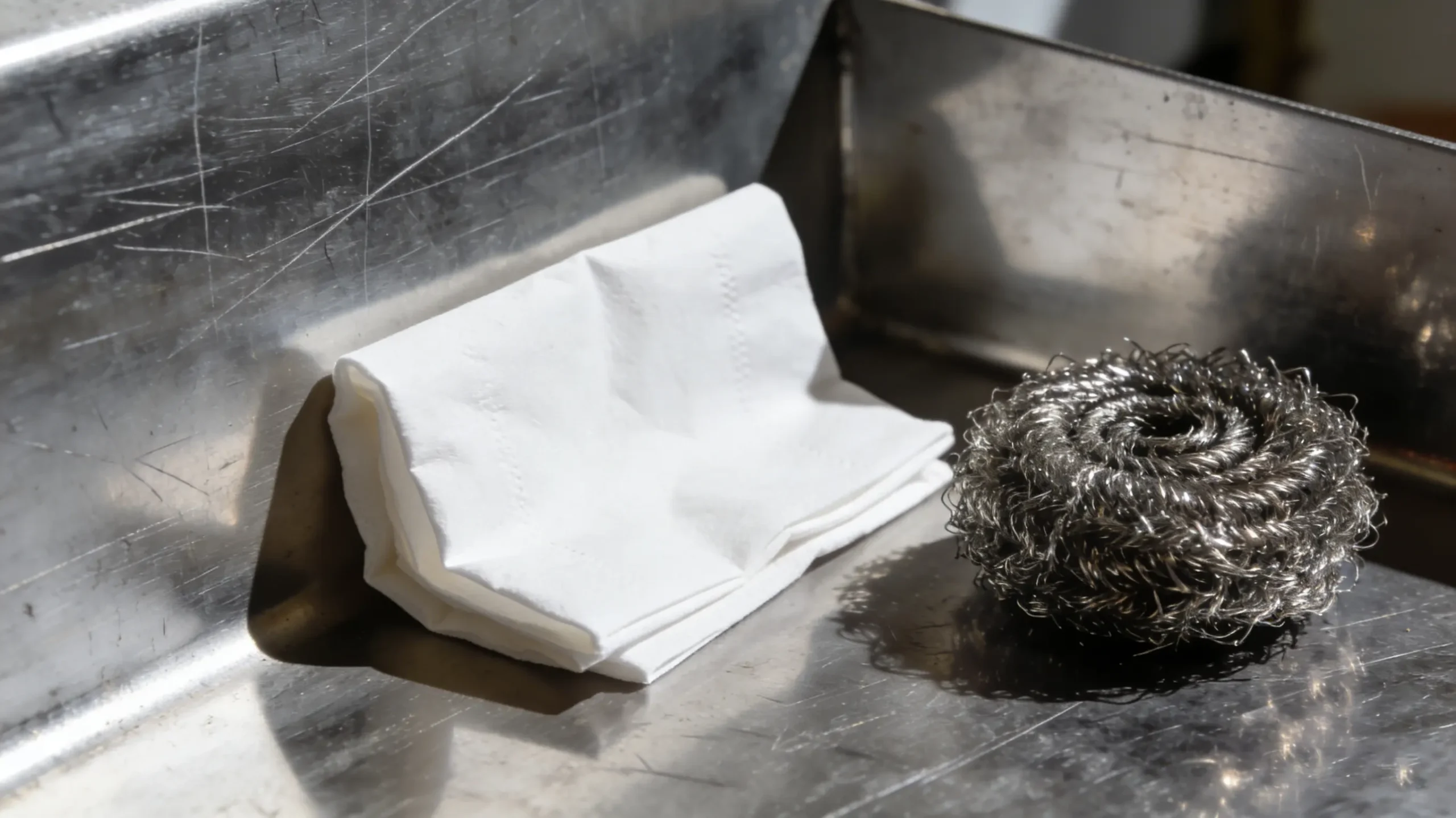
I’ve seen this issue firsthand many times. A new client once came to me because their kitchen cleaning kits were getting poor reviews. Their customers complained that the included cotton cloths3 left their new stainless steel refrigerators looking worse than before. This is a common problem, but it has a simple solution. The issue isn’t the cleaning technique; it’s the tool itself. Let’s break down why these common items are the wrong choice for stainless steel.
The Problem with Abrasives and Low-Quality Materials
Stainless steel has a "grain," which are very fine lines in the metal from the finishing process. When you use an abrasive tool4 like steel wool5, you are cutting across that grain, creating very noticeable and permanent scratches. On the other hand, materials that are too soft, like paper towels6 and basic cotton, can’t create enough friction to lift off stuck-on grime and oils. They just smear them around.
Here is a simple comparison:
| Tool | Abrasiveness | Absorbency | Lint | Effectiveness on Grease |
|---|---|---|---|---|
| Steel Wool | Very High (Damaging) | Poor | None | Poor |
| Paper Towel | Low | Moderate | High | Poor (Smears) |
| Cotton Cloth | Low | Moderate | Moderate | Low |
| Glass Cloth | Very Low | Good | Low | Low (For polishing only) |
As you can see, none of these common options are right for the job. You need a tool that has enough texture to clean effectively but is soft enough not to scratch the surface. That is where specialized microfiber comes in.
What is the best type of cloth for a streak-free shine?
Are you tired of buying special, expensive cleaners for your stainless steel? The real solution isn’t in the bottle, it’s in the cloth. A high-quality microfiber cloth can do the job with just water.
The best cloths for stainless steel are specialized microfibers. For example, a jacquard weave cloth has a textured, raised surface perfect for scrubbing away grime. Another great option is a "silver" cloth made of polyester and nylon, which uses a special weave for non-scratch friction.

In my factory, we produce many types of microfiber cloths, and I’ve tested hundreds of variations on all kinds of surfaces. For stainless steel, two specific designs consistently perform the best. They provide the perfect balance of scrubbing power and softness. Best of all, they work so well that they often eliminate the need for any chemical cleaners, which is a huge selling point for health-conscious and eco-conscious consumers. Let’s look at what makes these two cloths so effective.
The Power of Purpose-Built Microfiber
The magic is in the weave. Not all microfiber is created equal.
First, let’s talk about the Jacquard Weave Cleaning Cloth7. This cloth has a pattern woven directly into the fabric, creating raised areas. This texture significantly increases friction on the surface, making it much easier to scrub off stubborn spots and fingerprints without a lot of effort. You can use one side with a little water for cleaning, and then flip it over to the softer, flatter side to absorb any remaining moisture and polish the surface.
The second type is what we call a "Silver" Cleaning Cloth in China. It’s important to know this cloth does not contain any metal or silver. It gets its name from its shiny, silver-like color. It is made from a unique blend of polyester and nylon. The special weaving process creates a slightly rough texture that is amazing for removing stuck-on food and grease, but it is still gentle enough that it won’t scratch appliance surfaces. It’s a real workhorse in the kitchen.
How can I develop a custom cleaning cloth8 for my brand?
Do you want your products to stand out in the crowded cleaning market? Generic, off-the-shelf products won’t build a strong brand. A custom-designed cloth can become your signature item and build real customer loyalty.
Developing a custom cloth means you can choose the right material, weave, size, and weight for a specific task. Partnering with an OEM/ODM manufacturer9 lets you control every detail, from the fabric blend to the branded packaging, to create a truly unique product for your customers.
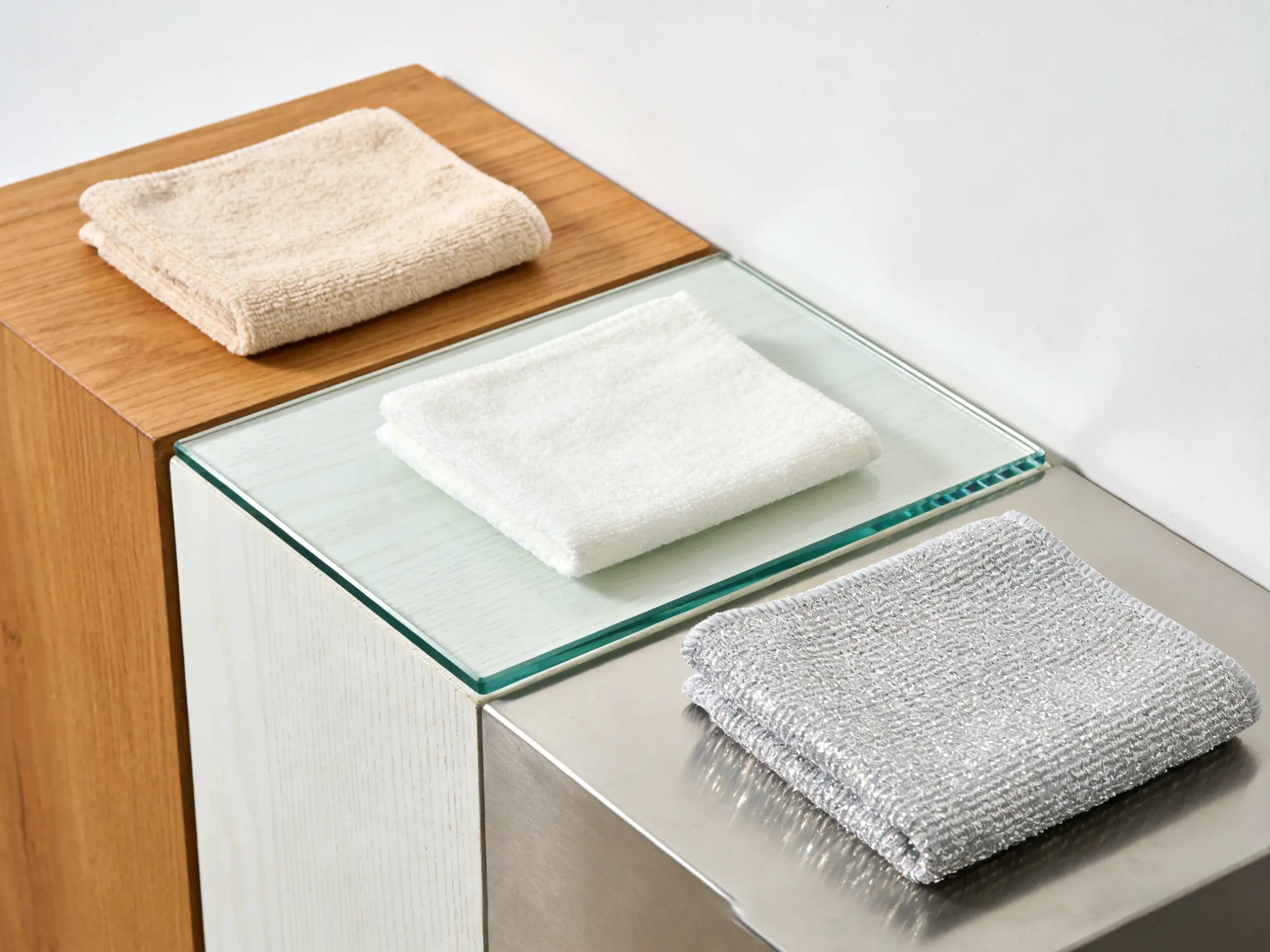
This is what I do every day. I work with brand owners and purchasing managers, just like you, to turn their ideas into market-ready products. A client might come to me and say, "I need a premium cloth for cleaning stainless steel." From there, we work together to build the perfect product from the ground up. It’s a straightforward process, but it allows for a product that is perfectly matched to your brand and your customers’ needs.
From Idea to Market-Ready Product
The customization process gives you complete control. For my European partners, a major concern is always compliance. We make sure that all materials meet strict standards like REACH and OEKO-TEX, so you can import and sell your products with complete confidence. This process is how we help brands become market leaders.
Here are the key elements you can customize:
| Customization Option | Description | Why It Matters for Stainless Steel |
|---|---|---|
| Material Blend | The ratio of polyester to polyamide. | A higher polyamide content (like 80/20) increases softness and absorbency, which is great for polishing. |
| Weave Type | The pattern of the fabric (jacquard, silver, waffle). | This is the most important factor. A jacquard or silver weave provides scrubbing power without scratching. |
| GSM (Weight)10 | Grams per Square Meter; the cloth’s thickness. | A higher GSM (300+) feels more premium and is more durable and absorbent, reducing streaks. |
| Color & Size | Custom colors (Pantone matched) and dimensions. | Match the cloth to your brand’s colors and create sizes specific to appliances or kitchens. |
| Branding | Woven labels, printed logos, custom packaging. | This turns a simple cloth into your product, building brand recognition11 and trust. |
Conclusion
To get a perfect, streak-free shine on stainless steel, stop using the wrong tools. Switch to a purpose-built microfiber cloth, like a jacquard or silver weave, for superior results.
Discover why specialized microfiber cloths are the best choice for cleaning stainless steel without streaks. ↩
Learn the techniques to achieve a perfect, streak-free shine on your stainless steel surfaces. ↩
Explore the reasons why cotton cloths are ineffective for cleaning stainless steel and what to use instead. ↩
Discover the negative impact of abrasive tools on stainless steel surfaces and how to avoid damage. ↩
Understand why using steel wool on stainless steel can cause permanent damage and scratches. ↩
Find out why paper towels are not recommended for cleaning stainless steel and what alternatives to use. ↩
Find out how a Jacquard Weave Cleaning Cloth can effectively clean stainless steel without scratching. ↩
Explore the process of creating a custom cleaning cloth to enhance brand recognition and customer loyalty. ↩
Understand how partnering with an OEM/ODM manufacturer can help create unique cleaning products. ↩
Understand the significance of GSM in microfiber cloths and how it influences cleaning results. ↩
Explore how custom-designed cleaning products can build brand recognition and customer trust. ↩