
Tired of your microfiber cloths becoming useless after a few washes? You’re not alone. It’s frustrating when they stop cleaning well, leaving you to wonder what went wrong.
Yes, you can and should wash microfiber. The best method is to machine wash them alone in cold or warm water using a gentle, neutral detergent. Always avoid fabric softeners, bleach, and high-heat drying, as these will ruin the fibers and their cleaning ability.
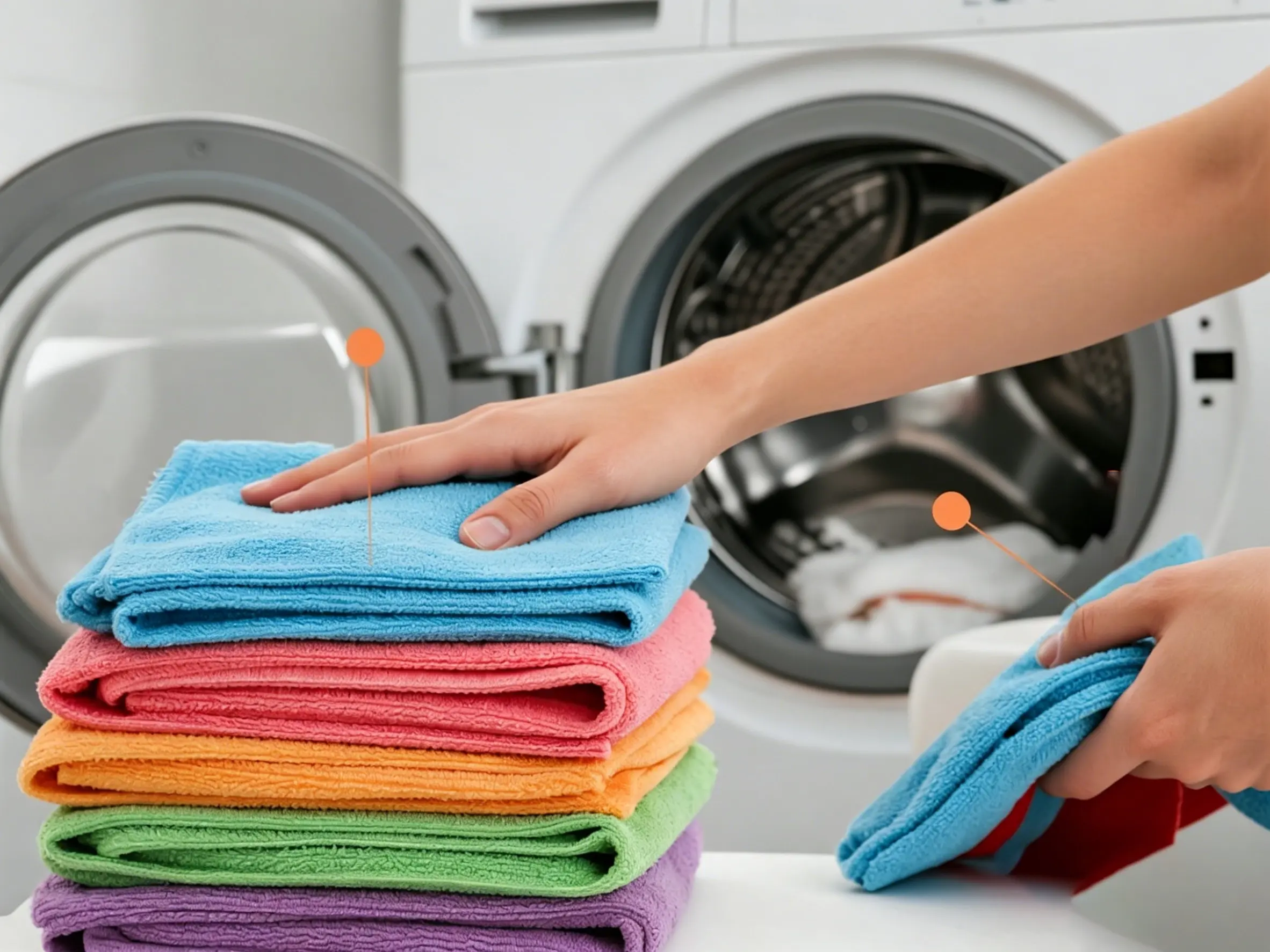
As someone who has been manufacturing microfiber for years, I get this question a lot. The truth is, how you wash your cloths is important. But what’s even more important is the quality of the cloth you start with. Knowing how to choose a good product is the first step. Let’s dive into what really makes a microfiber cloth last and how to care for it properly.
Why do my microfiber cloths get ruined after washing?
Are your cloths getting hard, shedding, or losing their grip? You might think it’s your washing machine, but the real problem often starts long before you even use the cloth.
From my experience in the factory, about 80% of a cloth’s durability comes from its manufacturing process1, not just the fiber itself. A well-made cloth can be machine-washed hundreds of times. A cheap one will fail quickly, no matter how carefully you wash it.
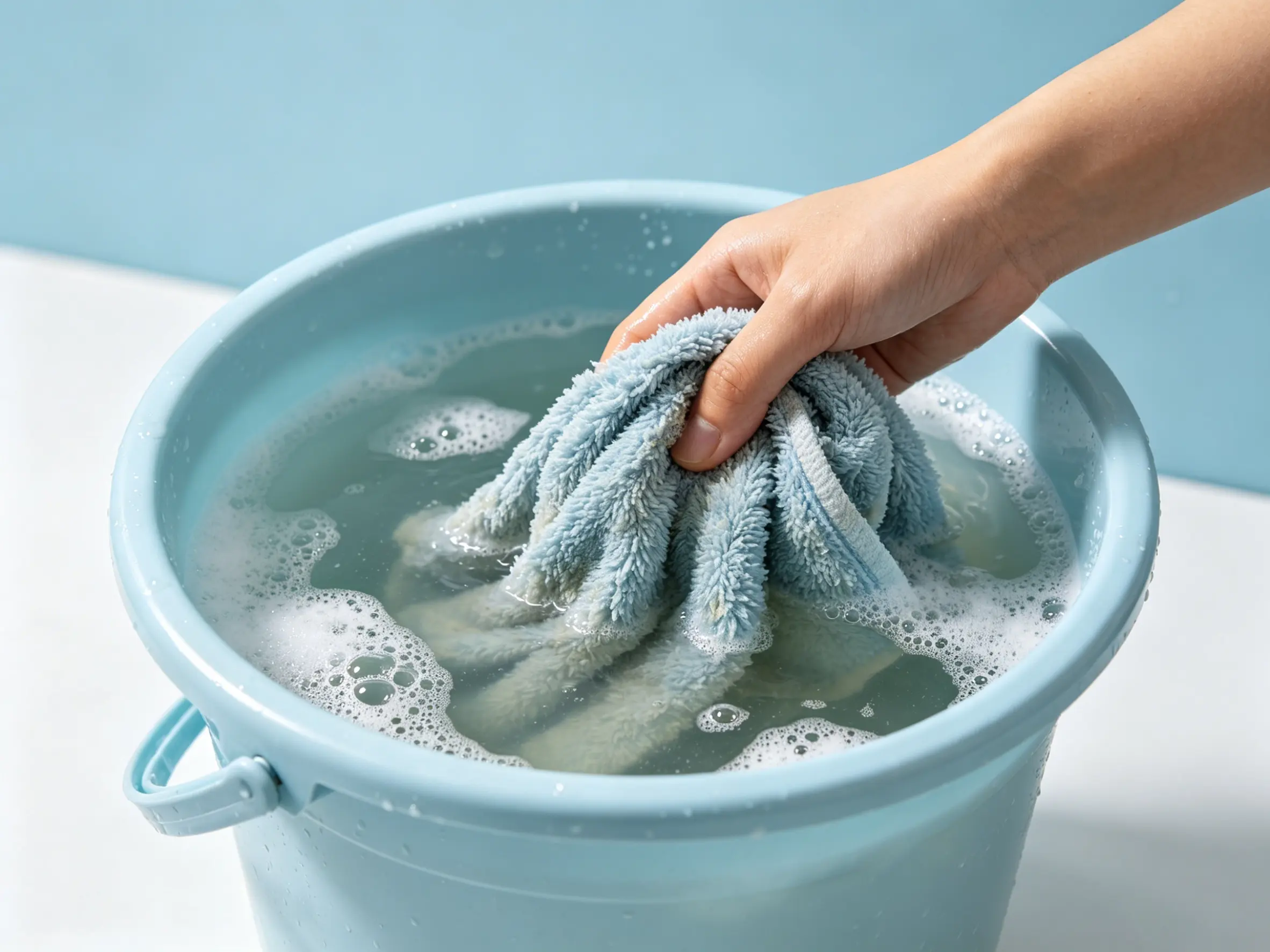
The ability to withstand washing is the true test of a factory’s skill. The biggest mistakes I see customers make are using fabric softener, strong laundry powders, and high-heat drying. Many people tell me their cloths "stopped working," but the reality is they were damaged during washing. Let’s look at why this happens. The wrong weave and the wrong washing habits are a recipe for disaster.
Weave Quality and GSM
The first factor is how the cloth is made. A cheap cloth has a loose weave and a low weight, often measured in "grams per square meter" (GSM). These fall apart easily. A quality product has a dense weave and a GSM of 220 or higher2. This structure is what allows it to survive repeated washing.
Common Washing Mistakes
The second factor is how you wash it. Microfiber works because it has millions of tiny "hooks" that grab dirt and oil. Certain cleaning agents destroy these hooks.
Here are the three things my factory always tells clients to avoid:
| Mistake | Why It’s Bad | The Result |
|---|---|---|
| Fabric Softener | It coats the fibers with an oily film. | The cloth can no longer absorb water or grab dirt. It’s essentially useless. |
| Strong Detergents | Highly alkaline powders or bleach corrode the delicate fibers. | The cloth becomes hard, brittle, and starts to shed lint everywhere. |
| High-Heat Drying | Microfiber is a synthetic material (plastic). High heat melts or deforms it. | The fibers shrink and lose their soft, effective shape. |
Does a softer cloth mean better quality?
Many people think the softest, smoothest cloth is the best one. This is a common mistake. A cloth that feels too silky is often a sign of a problem waiting to happen.
The truth is, a great microfiber cloth isn’t just soft; it should feel fluffy and have some structure or "body" to it. This balance is key for effective cleaning without causing damage or falling apart. It’s what we look for on the production line.
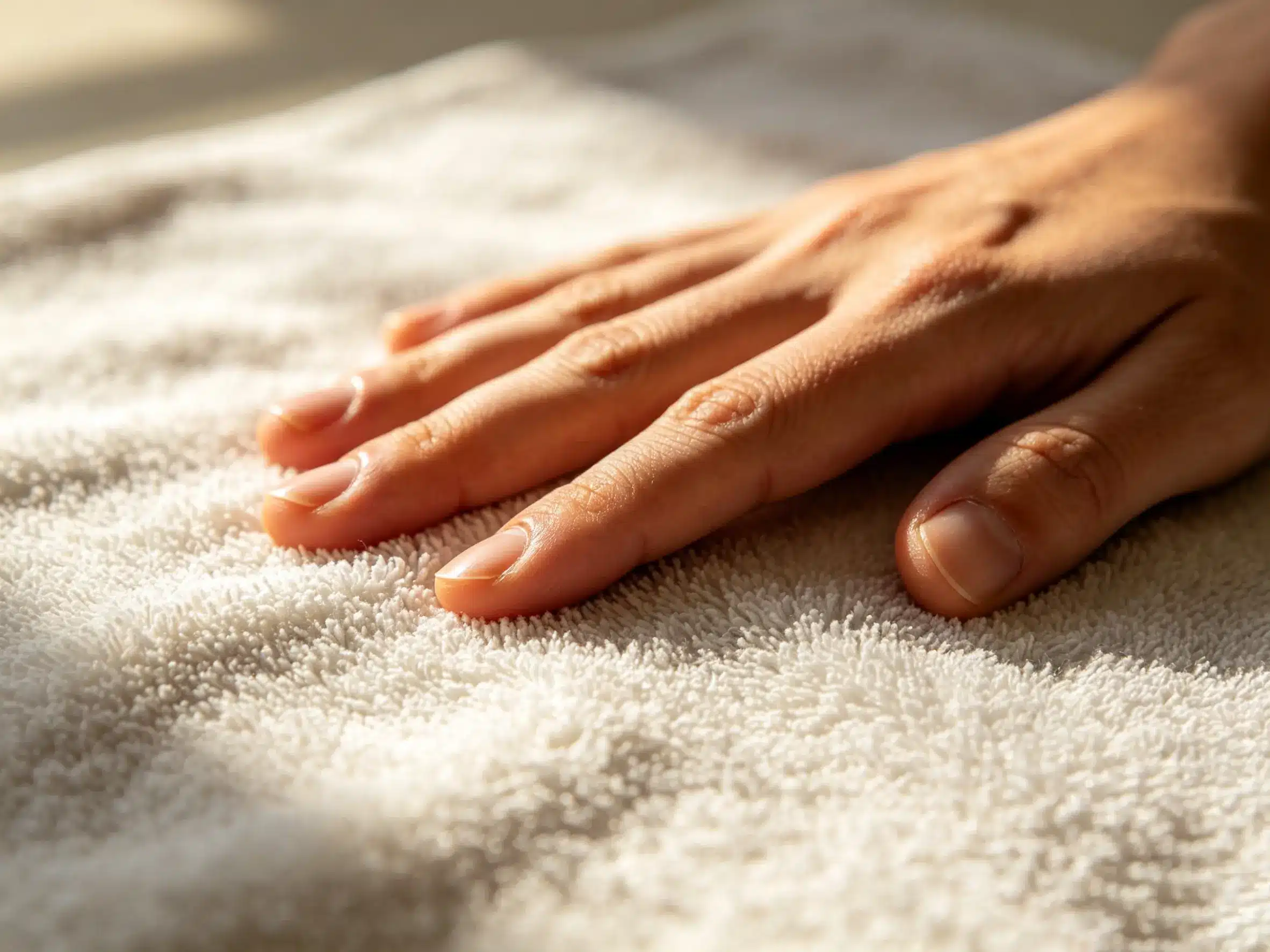
From an insider’s perspective, the feel of a cloth tells a story about its construction. An overly soft cloth often uses fibers that are too thin3, making them weak and prone to breaking. On the other hand, a cloth that feels too hard or stiff won’t absorb water well and might even scratch delicate surfaces. The ideal cloth is fluffy, resilient, and stays soft even when it’s wet. This is what allows it to pick up dust and grime without shedding fibers all over the place.
The Feel vs. The Function
An expert can tell a lot just by touching a cloth. Here is what we look for in the factory, which is often the opposite of what a typical shopper might think.
| Feel | What It Means for Quality | Performance Issue |
|---|---|---|
| Too Soft / Silky | The individual fibers are too fine and weak. The weave might be loose. | Prone to tearing and shedding. Lacks the "grip" needed for tough cleaning. |
| Too Hard / Stiff | The fibers may not have been split correctly, or it’s a low-quality polyester blend. | Poor absorbency. It will just push water and dirt around instead of lifting it. Can scratch glass or paint. |
| Fluffy & Resilient | A balanced weave with strong, properly split fibers. It has a slight "spring" when you squeeze it. | Excellent absorption and dirt-trapping ability. Durable enough for many washes without losing shape. |
This "fluffy with structure" quality is the secret to a cloth that cleans effectively and lasts a long time. It’s a sign of good raw materials and a proper manufacturing process.
Should I use one microfiber cloth for everything?
You see "all-purpose" cloths advertised everywhere. But as a manufacturer, I can tell you we don’t make a "one-cloth-for-all-jobs" product. Different tasks require completely different cloth structures.
Using the wrong type of cloth for a job is like using a dinner fork to eat soup4. It might work a little, but it’s not effective. The weave structure is specifically designed for a certain purpose, whether it’s for absorbing, polishing, or scrubbing.
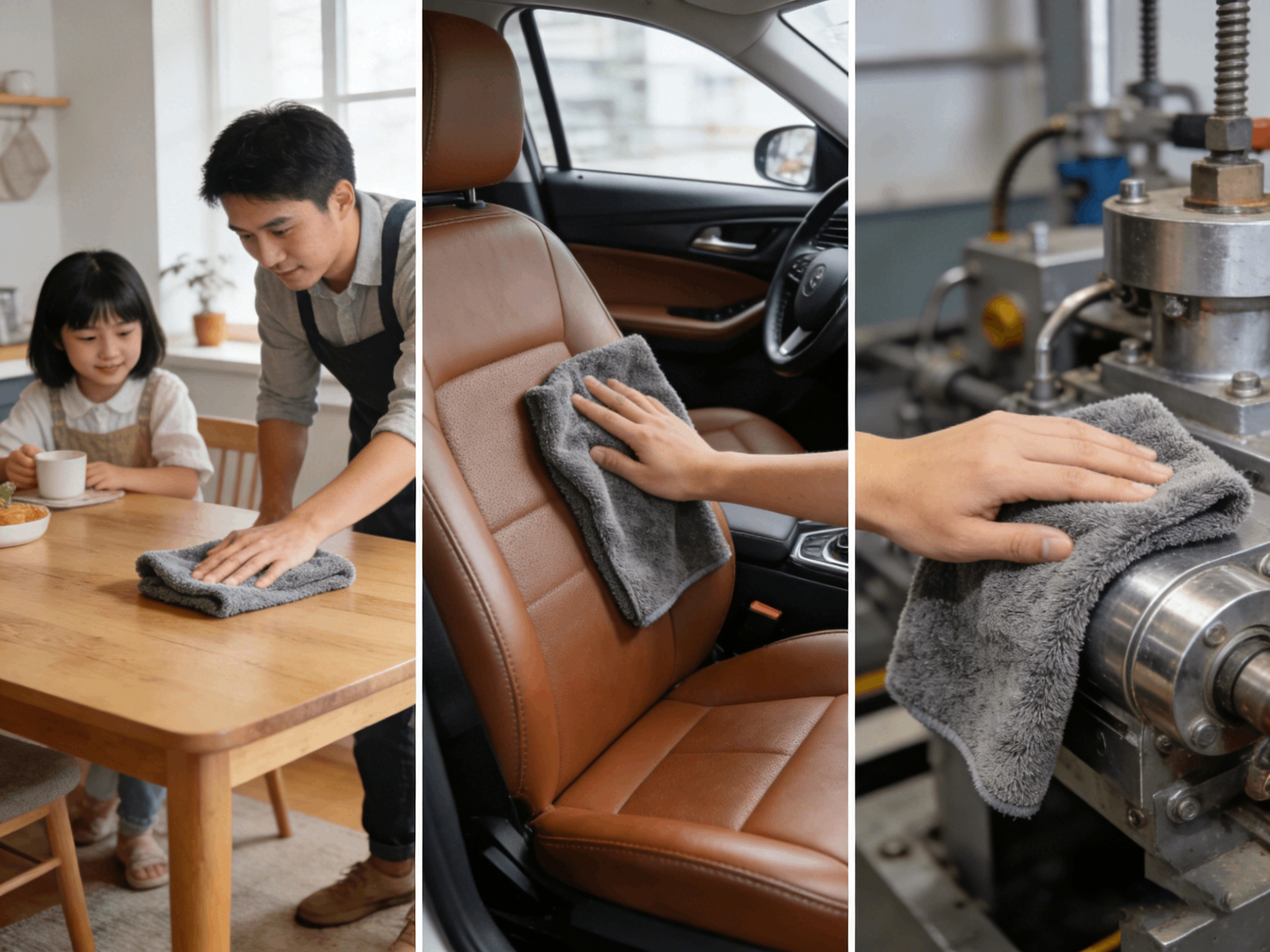
Any brand that promotes a single cloth as a universal solution is likely selling a low-end, generic product. In our factory, we produce specific weaves for specific markets. For example, the cloth we make for cleaning glass is completely different from the one we make for automotive clients who need to remove heavy grease. Using a glass cloth on an oily engine would ruin it, and using a thick, plush towel on a window would leave lint and streaks. Understanding this helps you get better results and makes your cloths last longer.
Matching the Cloth to the Task
The effectiveness of a microfiber cloth comes from its weave. Different weaves are engineered to perform specific jobs. Here’s a simple breakdown of the common types we manufacture and what they are best for.
| Cloth Type / Weave | Best Use Case | Why It Works |
|---|---|---|
| Plain / Flat Weave | Glass, Mirrors, Screens | The tight, dense weave has no loops, so it cleans without leaving streaks or lint. |
| Terry Loop / Coral Fleece | Kitchen Grease, Spills, Car Washing | The high loops create a large surface area for absorbing lots of liquid and trapping oily grime. |
| Low-Twist / Ultra-Plush | Dusting Furniture, Polishing Cars | The long, soft fibers are gentle and create a static charge that attracts dust without scratching surfaces. |
When you buy for a specific purpose, you are buying a product that has been engineered to do that job well. This is why specialized cloths always outperform a generic "all-purpose" towel.
What are the real signs of a high-quality microfiber cloth?
How can you tell if a cloth is good without knowing all the technical details? You don’t need to understand fiber ratios. Instead, look for performance. There are simple tests you can do.
A good cloth should perform well from day one and hold up over time. But shedding and color bleeding are immediate red flags5. These issues happen 99% of the time because the factory skipped important steps in the production process.
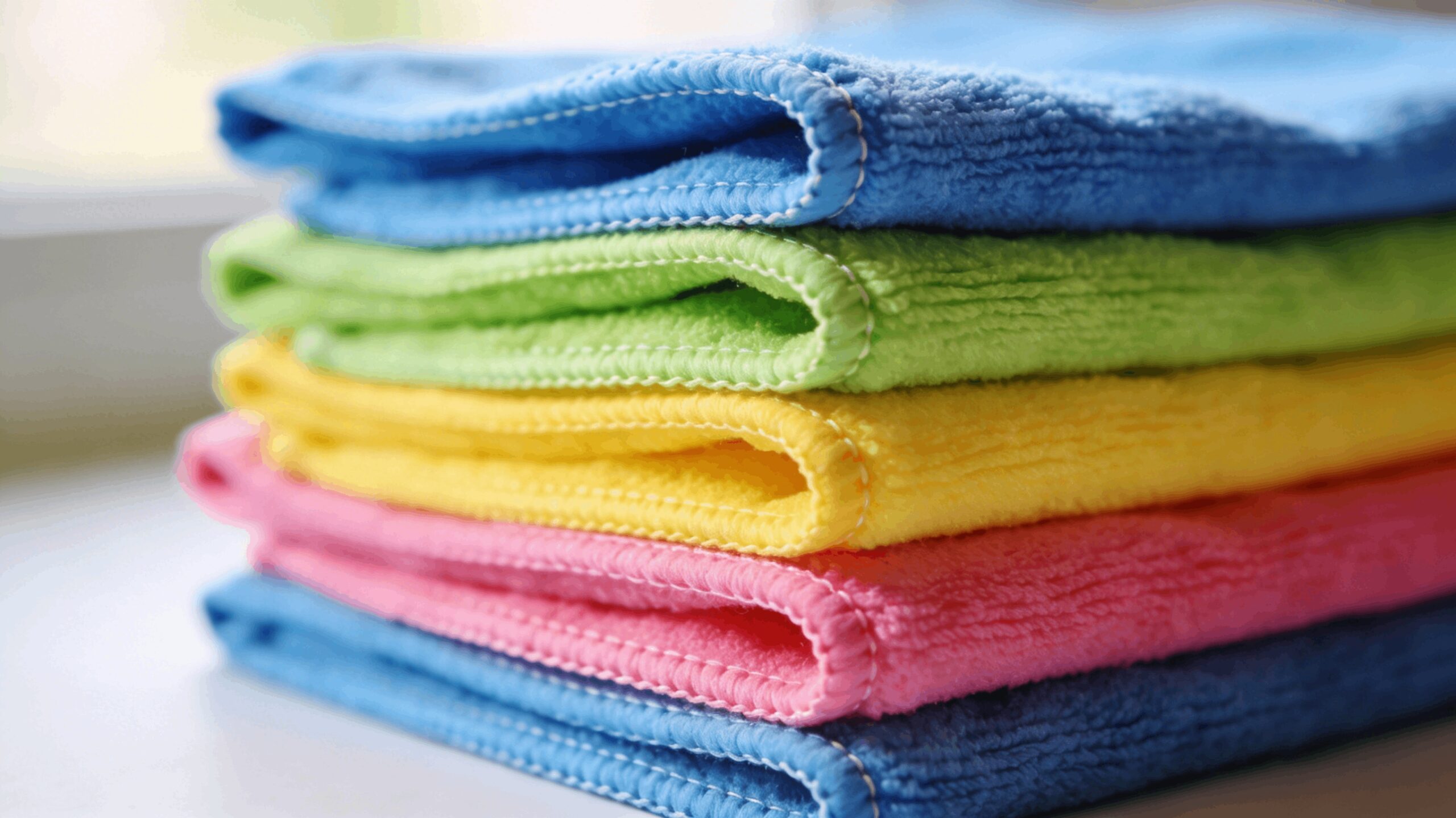
A proper manufacturing process is complex. It includes fiber splitting, dyeing, washing, heat-setting, brushing, and pre-shrinking6. If a factory cuts corners, the problems show up right away. The cloth will bleed color in the first wash, shed fibers during use, or get harder over time. At our facility, every batch of fabric goes through multiple simulated washing tests before it’s even cut and sewn. This ensures our clients receive a stable, reliable product. Also, remember to wash microfiber separately. Its "hooked" fibers will grab lint from cotton and other materials, which will clog them and make them ineffective.
The Four pillars of Quality
In our factory, every cloth is judged on four simple performance metrics. If it fails any of these, it’s considered a defect. As a buyer, you can use these same standards.
- No Shedding7: Rub the cloth on a dark surface. If it leaves behind fibers, it’s a low-quality product made with weak fibers or an improper finish.
- No Fading: A quality cloth is properly dyed and set. It should not bleed color, especially after the first wash. This indicates the factory completed all production steps.
- Fast Absorption8: Sprinkle some water on a flat surface. A good cloth should absorb it instantly, not push it around. This proves the fibers are correctly split.
- No Streaks9: When used damp on a smooth surface like glass or a mirror, it should wipe clean without leaving streaks or water spots behind.
The lifespan also depends on what you clean. A cloth for light dusting might last a year or two. One used for heavy kitchen grease may only last 3-6 months before the fibers become permanently clogged. This isn’t a quality flaw; it’s just the physical limit of the material.
Conclusion
In the end, learning how to choose a high-quality microfiber cloth from a reliable manufacturer is far more important than just learning the perfect washing technique. Good products are made to last.
"[PDF] What You Should Know About Microfiber Pollution – US EPA", https://19january2021snapshot.epa.gov/sites/static/files/2020-07/documents/article_2_microfibers.pdf. This source supports the claim that manufacturing processes significantly influence microfiber cloth durability, with emphasis on fiber quality and weave density. Evidence role: mechanism; source type: research. Supports: The durability of microfiber cloths is primarily determined by their manufacturing process.. Scope note: The percentage cited may vary across different studies or manufacturing standards. ↩
"Microfiber towel specifications and their best usecases? – Reddit", https://www.reddit.com/r/AutoDetailing/comments/1klte3y/microfiber_towel_specifications_and_their_best/. This source supports the claim that GSM values above 220 correlate with higher durability and performance in microfiber cloths. Evidence role: statistic; source type: education. Supports: Dense weaves and GSM values above 220 contribute to microfiber cloth durability.. Scope note: The GSM threshold may vary depending on the intended use of the cloth. ↩
"[PDF] What’s so great about microfiber? – UCSF", https://wspehsu.ucsf.edu/wp-content/uploads/2015/10/FactSheet_Microfiber.pdf. This source supports the claim that overly soft microfiber cloths may use thinner fibers, which are prone to breaking and less durable. Evidence role: mechanism; source type: research. Supports: Overly soft microfiber cloths often use thin fibers that compromise durability.. Scope note: The softness of a cloth may also depend on other factors like fiber treatment or weave type. ↩
"Microfiber – Wikipedia", https://en.wikipedia.org/wiki/Microfiber. This source supports the analogy that different microfiber weaves are optimized for specific tasks, emphasizing the importance of task-specific cloths. Evidence role: general_support; source type: education. Supports: Different microfiber cloths are designed for specific tasks, and using the wrong type reduces effectiveness.. Scope note: The analogy is illustrative but may oversimplify the technical differences between microfiber types. ↩
"[PDF] What You Should Know About Microfiber Pollution – US EPA", https://19january2021snapshot.epa.gov/sites/static/files/2020-07/documents/article_2_microfibers.pdf. This source supports the claim that shedding and color bleeding indicate poor manufacturing practices in microfiber cloths. Evidence role: expert_consensus; source type: institution. Supports: Shedding and color bleeding are signs of poor manufacturing quality in microfiber cloths.. Scope note: Shedding and color bleeding may also occur due to improper washing techniques by the user. ↩
"[PDF] What’s so great about microfiber? – UCSF", https://wspehsu.ucsf.edu/wp-content/uploads/2015/10/FactSheet_Microfiber.pdf. This source supports the claim that these manufacturing steps are critical for producing high-quality microfiber cloths. Evidence role: mechanism; source type: education. Supports: Fiber splitting, dyeing, washing, heat-setting, brushing, and pre-shrinking are essential steps in microfiber manufacturing.. Scope note: The importance of each step may vary depending on the specific type of microfiber cloth being produced. ↩
"[PDF] What You Should Know About Microfiber Pollution – US EPA", https://19january2021snapshot.epa.gov/sites/static/files/2020-07/documents/article_2_microfibers.pdf. This source supports the claim that shedding is a sign of weak fibers or improper finishing in microfiber cloths. Evidence role: definition; source type: research. Supports: Shedding indicates weak fibers or improper finishing in microfiber cloths.. Scope note: Shedding may also result from user error, such as washing with incompatible materials. ↩
"What Microfiber Towel Is Right For You? – YouTube", https://www.youtube.com/watch?v=j8qFzs5_F_o. This source supports the claim that fast absorption indicates correctly split fibers in microfiber cloths. Evidence role: definition; source type: research. Supports: Fast absorption is a sign of correctly split fibers in microfiber cloths.. Scope note: Absorption speed may also depend on the type of liquid and surface being cleaned. ↩
"Claro 2 Step Glass Cleaning Cloth 8-Pack – Green Wet & Blue Dry …", https://www.amazon.com/Microfiber-Glass-Cleaning-Cloths-Chemicals/dp/B00KAJ42GO. This source supports the claim that streak-free cleaning indicates high-quality microfiber cloths with dense weaves. Evidence role: definition; source type: education. Supports: No streaks indicate high-quality microfiber cloths with dense weaves.. Scope note: Streak-free performance may also depend on the cleaning technique used. ↩