
Tired of mops that just push dirt around? It’s frustrating when they leave floors streaky and wet, making cleaning a chore that never feels finished. Chenille can fix this.
Chenille mop cloths are great for cleaning because their caterpillar-like fibers create a huge surface area.1 This unique structure traps more dust, hair, and dirt. It also absorbs much more water than regular microfiber cloths, leaving floors cleaner and drier.
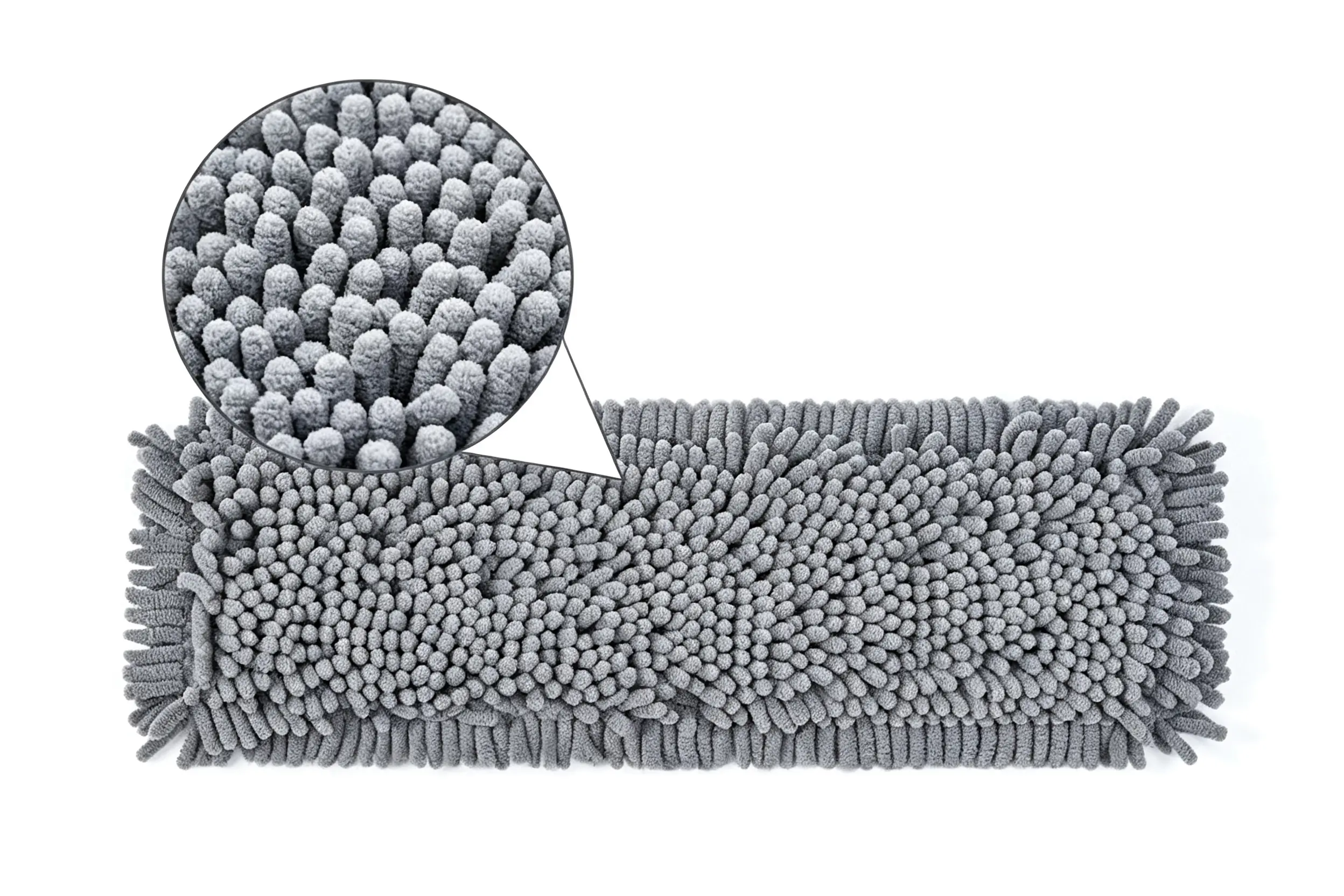
You’ve probably heard the term "chenille," but what makes it so different from a standard cleaning cloth? It’s not just about being fuzzy. The real magic is in its construction, which completely changes how it interacts with dirt and water on your floors. Let’s take a closer look at what sets it apart and why it’s become a go-to material for serious cleaning.
What Exactly Is a Chenille Mop Cloth?
You see the word "chenille" on packaging but might just think of a soft blanket. If you don’t understand its structure, you won’t know why it’s a superior cleaning tool.
Chenille is a fabric with a special pile structure.2 Its name comes from the French word for "caterpillar" because its surface has many soft, raised yarn strands. This design makes the fabric fluffy, highly absorbent, and amazing at trapping dirt within its fibers.
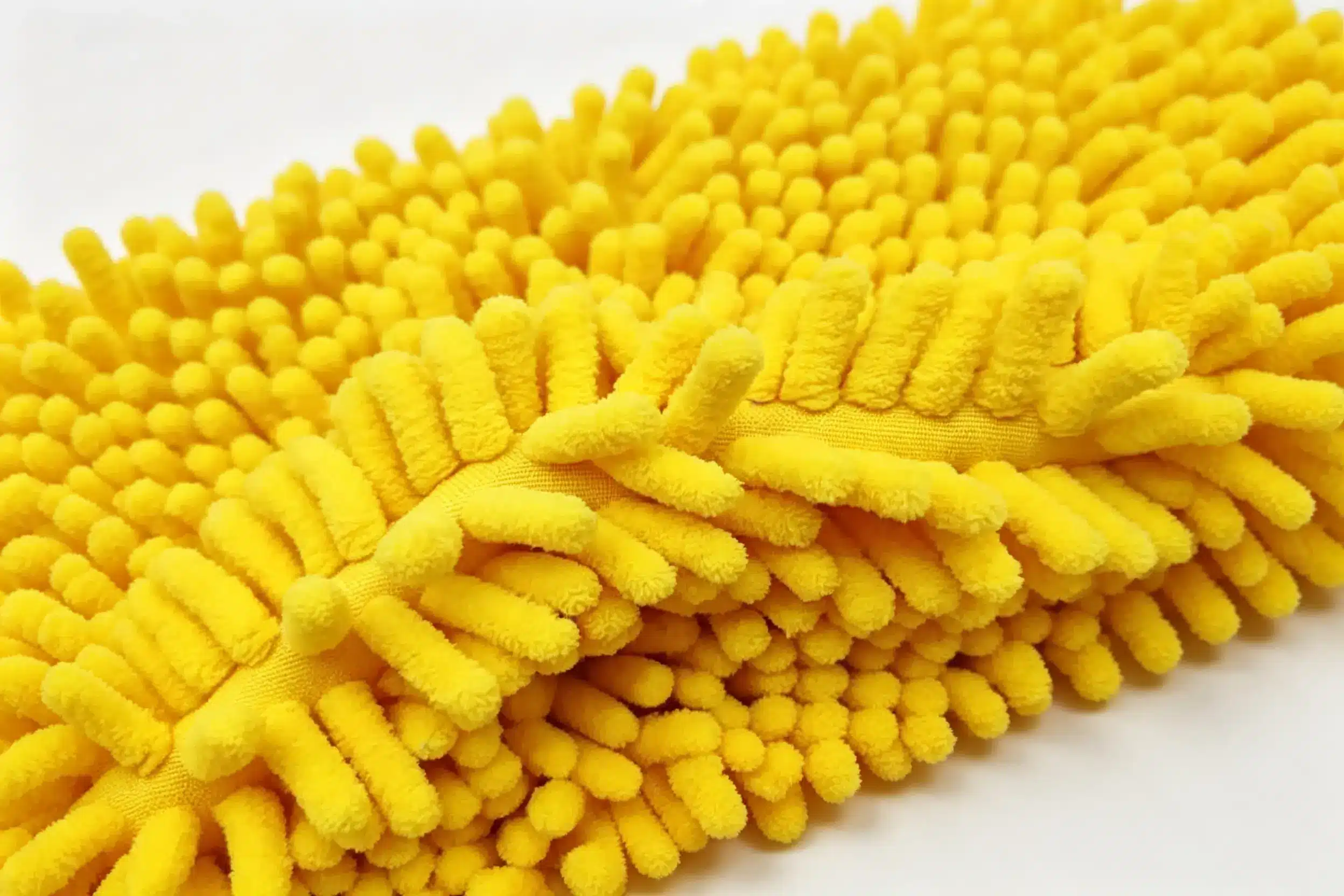
Let’s dive deeper into what makes chenille unique. Think of a standard microfiber cloth. Its fibers are woven flat against the surface. It’s smooth and effective, but it has its limits.
Now, picture chenille. It’s not a flat surface. Instead, it’s covered in countless tiny "caterpillars" or "fingers" that stand upright. I remember the first time we produced a batch in my factory; the difference was visible right away. These upright strands give the cloth its signature fluffy and bulky feel.
This structure provides three key advantages:
- Stores More Water3: The gaps between the chenille strands create a massive reservoir. This is why a thick chenille mop pad can hold several times its weight in water.
- Captures More Debris4: The fingers actively grab and hold onto dust, pet hair, and crumbs instead of just pushing them around.
- Increases Surface Area5: More contact with the floor means a more thorough clean with every swipe.
Here is a simple breakdown:
| Feature | Standard Microfiber | Chenille Microfiber |
|---|---|---|
| Surface | Flat and smooth | Fluffy with upright "fingers" |
| Thickness | Thin | Thick and bulky |
| Feel | Soft | Very plush and soft |
| Cost | Lower | Higher |
Why Are Chenille Mops So Popular for Home Use?
Your current mop probably leaves wet patches and trails of dust behind. This gets even more annoying if you have pets or kids, making you feel like you’re always cleaning.
Chenille mops are popular for three big reasons: they absorb a massive amount of water, they are fantastic at trapping dust and hair, and they are gentle on all floor types.6 This makes cleaning faster, more effective, and safer for delicate surfaces like hardwood.
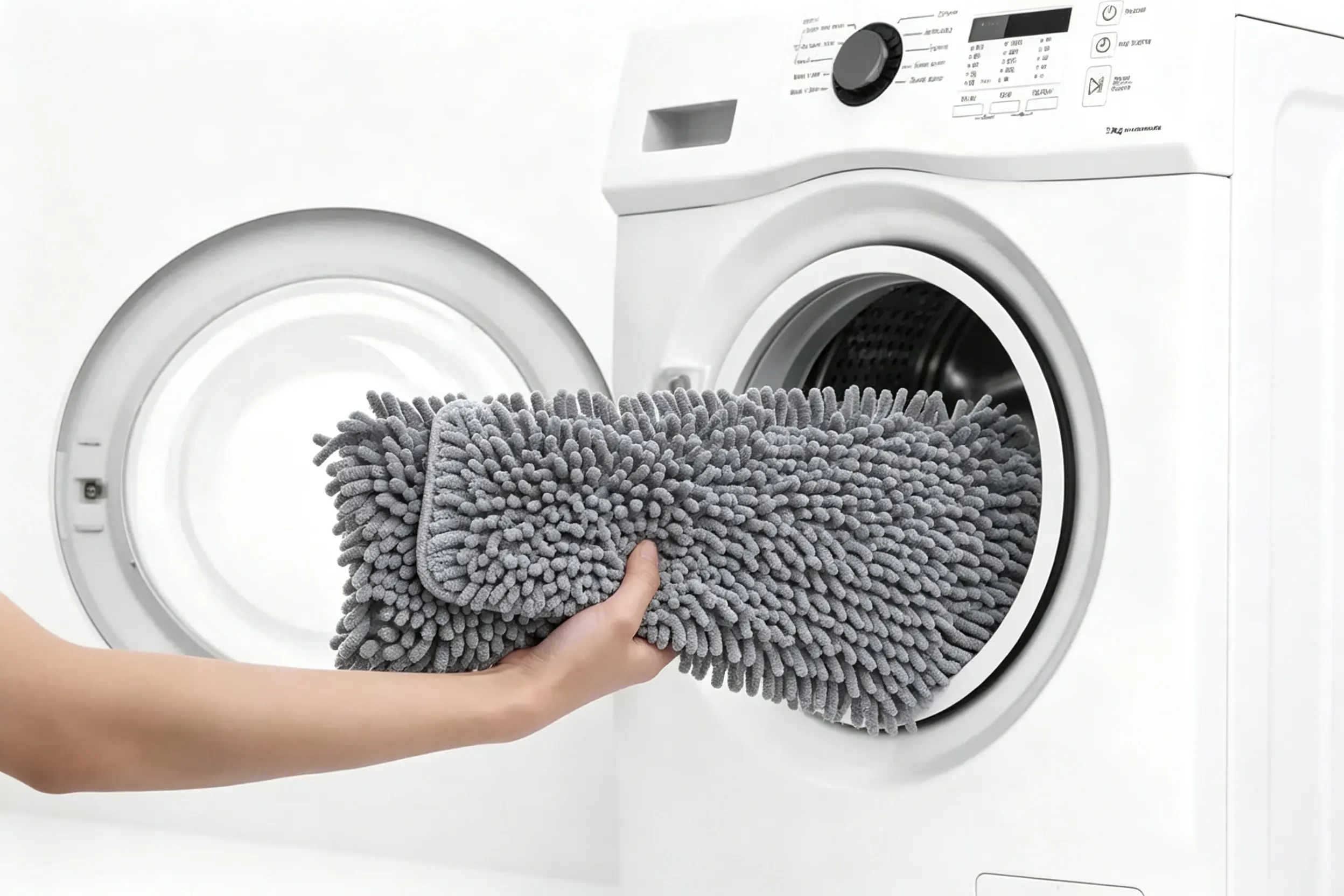
Let’s break down why so many of my clients, especially those developing products for pet owners or high-end homes, insist on chenille.
1. Incredible Water Absorption
The structure is the hero here. The dense, caterpillar-like strands create thousands of tiny pockets that soak up and hold onto water. A standard 300 GSM microfiber cloth absorbs well, but an 800-1000 GSM chenille mop pad is on another level. It doesn’t just wipe up a spill; it swallows it. This means fewer trips to the bucket to wring it out and a floor that dries much faster without streaks.
2. Excellent Dust and Hair Removal
For households with pets, chenille is a game-changer. I’ve heard this from many brand owners we supply. The soft, thick fibers act like magnets for pet hair, dust bunnies, and crumbs. Instead of pushing debris around, the chenille structure traps it deep within the fibers until you’re ready to wash the pad. This ensures you’re actually removing dirt from the floor, not just relocating it.
3. Safe and Scratch-Free on All Floors
The material is incredibly soft and plush. This makes it perfect for cleaning delicate surfaces without worry. You can confidently use a chenille mop on:
- Hardwood floors
- Marble
- Tile
- Laminate and vinyl
It cleans effectively without leaving micro-scratches, preserving the finish of your expensive flooring.
What Are the Main Types of Chenille Materials?
You’ve probably seen different "chenille" products with very different price tags. If you choose the wrong one, you might get a mop pad that falls apart or doesn’t clean well.
The two main types are Polyester Chenille7 and Microfiber Chenille. Polyester is a budget-friendly option used in many standard household mops. Microfiber Chenille, usually an 80/20 polyester-polyamide blend, offers far better absorption and cleaning power, making it the choice for premium products.
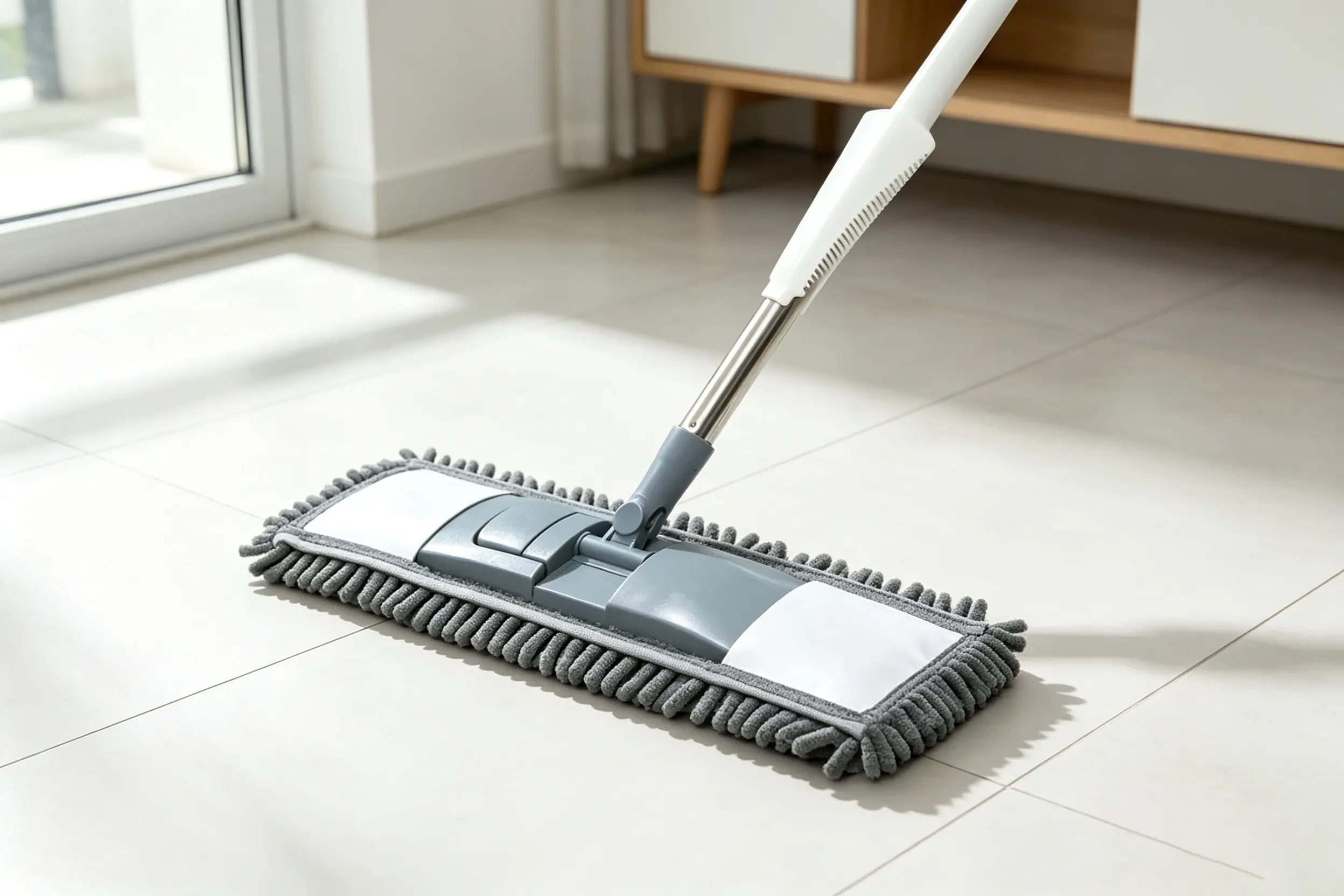
As a manufacturer, I work with both materials every day, and they serve different market needs. Understanding the difference is key for buyers like Tom, who need to match the product to their customers’ expectations.
1. Polyester Chenille
This is the most common type you’ll find on the market, especially for entry-level or budget-friendly mop pads. It’s made from 100% polyester.
- Advantage: The main benefit is its low cost, which makes it accessible for mass-market products.
- Performance: It still provides the classic fluffy chenille texture and does a decent job with dry dusting and light mopping.
- Best For: General household cleaning where cost is the primary factor.
2. Microfiber Chenille (The Premium Choice)8
This is what high-end brands in Europe and North America look for. It’s typically made from a blend of 80% polyester and 20% polyamide.
- Advantage: The addition of polyamide dramatically improves performance. Polyamide is highly absorbent and gives the material a softer, more effective cleaning edge.
- Performance: It absorbs water faster, scrubs away grime more effectively, and feels much softer to the touch. It’s also more durable through many wash cycles.
- Best For: Premium cleaning lines, automotive care, and for customers who demand the best performance.
The choice really depends on the target market. For a simple, affordable mop, polyester works. But for a product that needs to deliver superior cleaning results, the microfiber blend is always the winner.
How Do Chenille Pads Attach to Mops?
You found the perfect chenille mop pad, but then you get home and it doesn’t fit your mop. It’s a frustrating waste of time and money, and your floors are still dirty.
Chenille mop pads typically attach in two main ways: with a pocket that slides over the mop head (Pocket Mop Pad9) or with Velcro strips that stick to the base (Velcro Mop Pad). Checking which system your mop uses is crucial before buying a replacement.
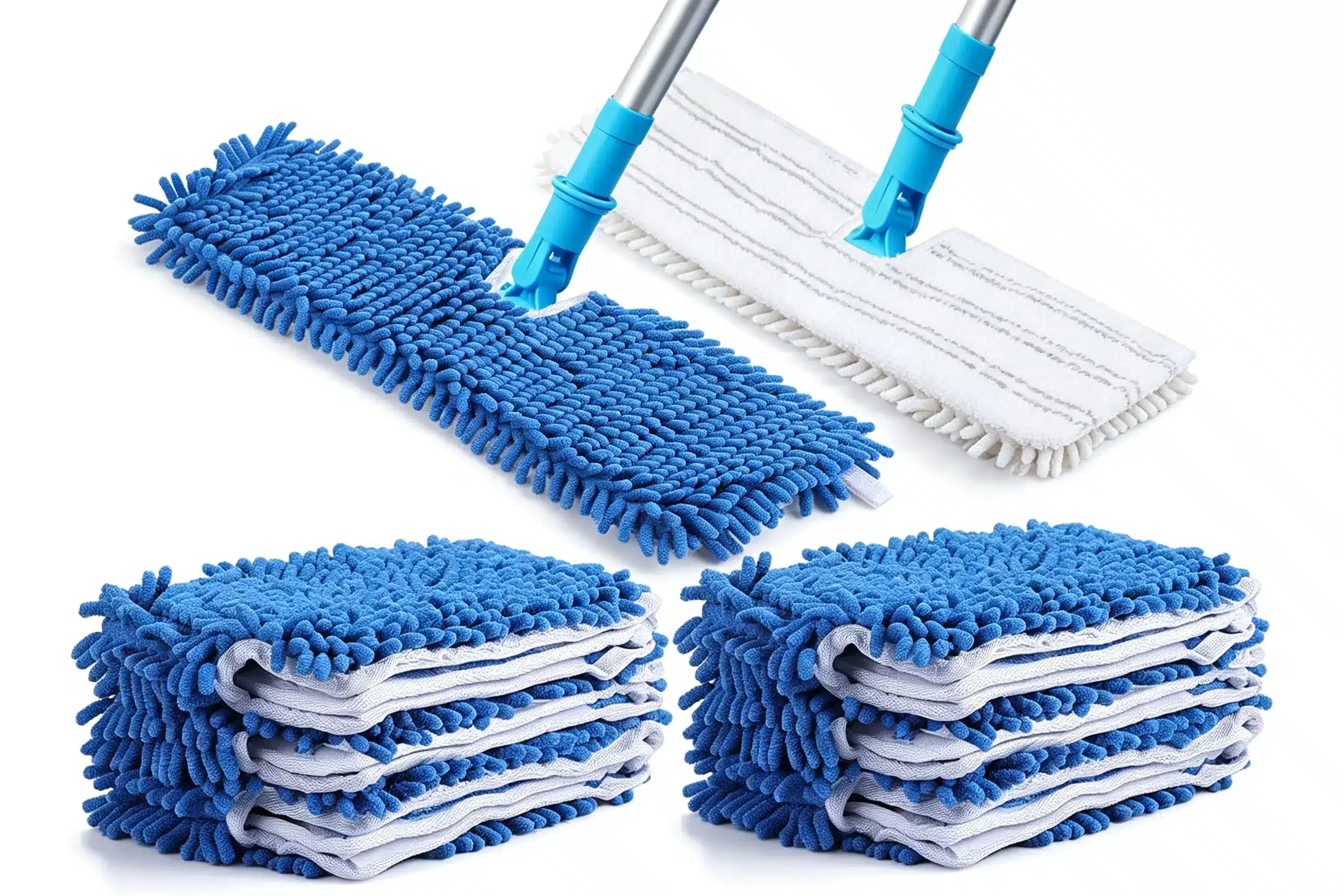
When we develop new mop pads for our B2B clients, the attachment style is one of the first things we decide on. It determines how the user will interact with the product every time they clean.
Here’s a closer look at the main types used for flat mops:
1. Pocket Mop Pad
This design features a fabric pocket on the back of the chenille pad. You simply bend the mop head and slide each end into the pockets.
- Pros: It provides a very secure fit. The pad will not slide or peel off during aggressive scrubbing. This is a durable, reliable design that many commercial cleaners prefer.
- Cons: It can be a little slower to change the pad compared to Velcro.
2. Velcro Mop Pad (Hook-and-Loop)10
This style has strips of hook-and-loop fastener (like Velcro) on the back. You just press it onto the corresponding strips on the bottom of your mop head.
- Pros: It’s incredibly fast and easy to attach and remove. You can switch from a wet pad to a dry pad in seconds.
- Cons: Over time, the hook-and-loop material can get clogged with hair and lint, reducing its grip.
Beyond these, chenille is also used to make full mop covers or "sleeves" that can slip over a broom or a different style of mop head, adding to its versatility.
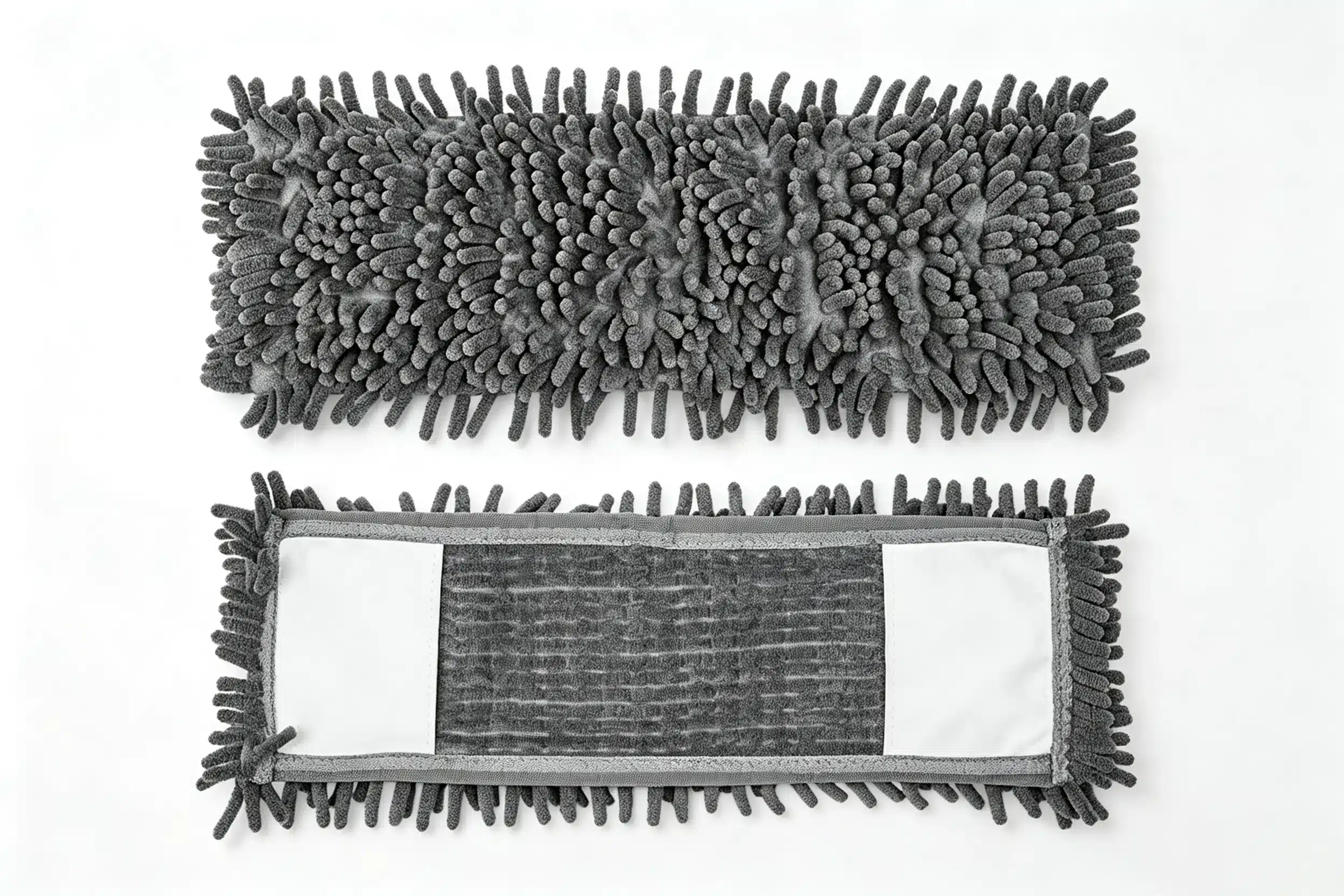
3. Elastic Flat Mop Cover (Elastic Edge Mop Cover)
This design features an elastic edge or stretchable opening around the microfiber mop cover. Simply stretch the cover and slide it over the flat mop head for quick installation.
Pros:
Simply stretch and fit the cover over the mop head,One size can fit multiple similar flat mop designs.
Provides longer service life compared with hook-and-loop systems. Safer for delicate surfaces such as hardwood floors and furniture edges.
Cons:
If the elastic design is not tight enough, the mop cover may shift during intensive cleaning.
Requires more fabric to fully cover the mop head,The material cost is slightly higher compared with open-style mop pads.
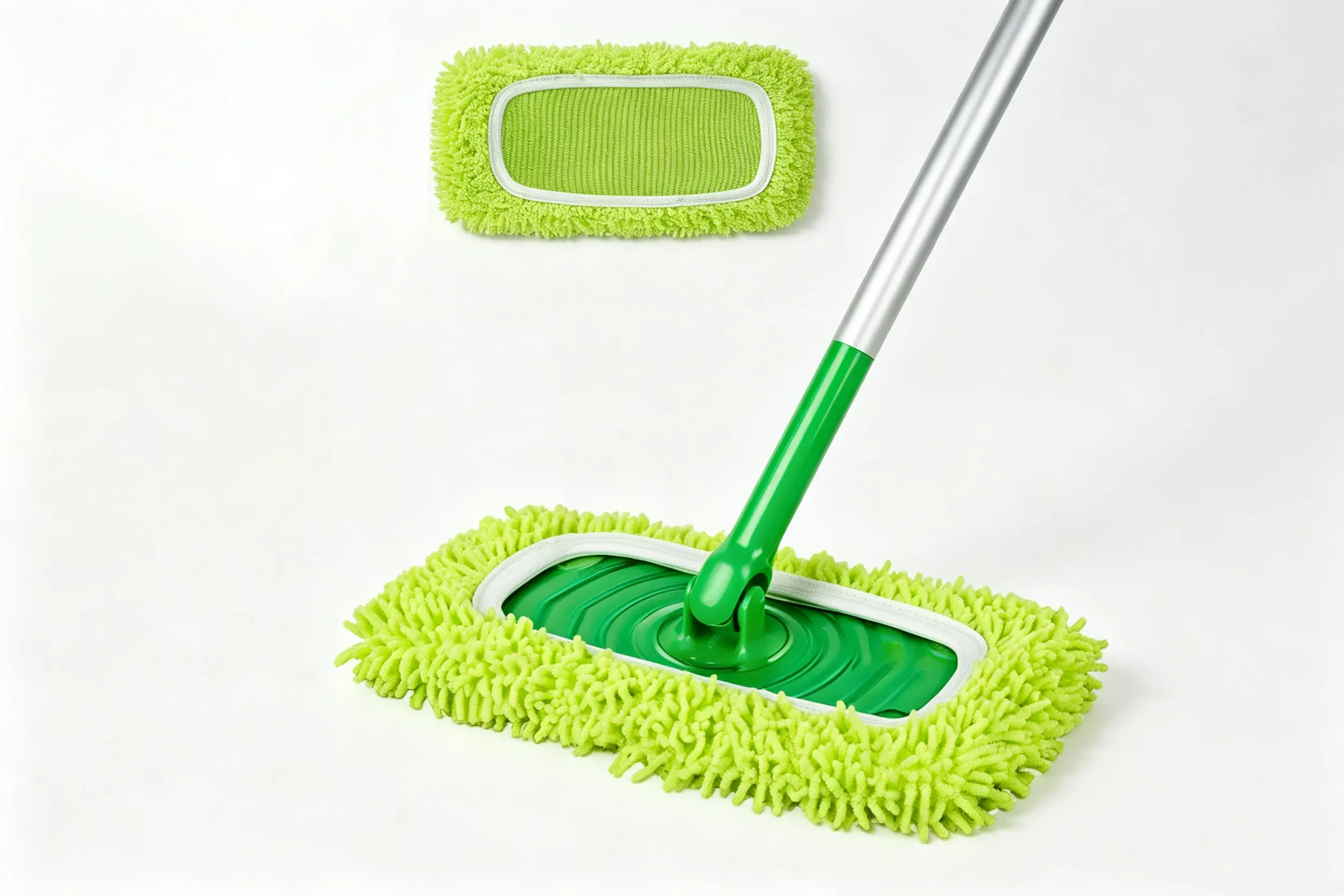
4. Broom Cover / Broom Sock
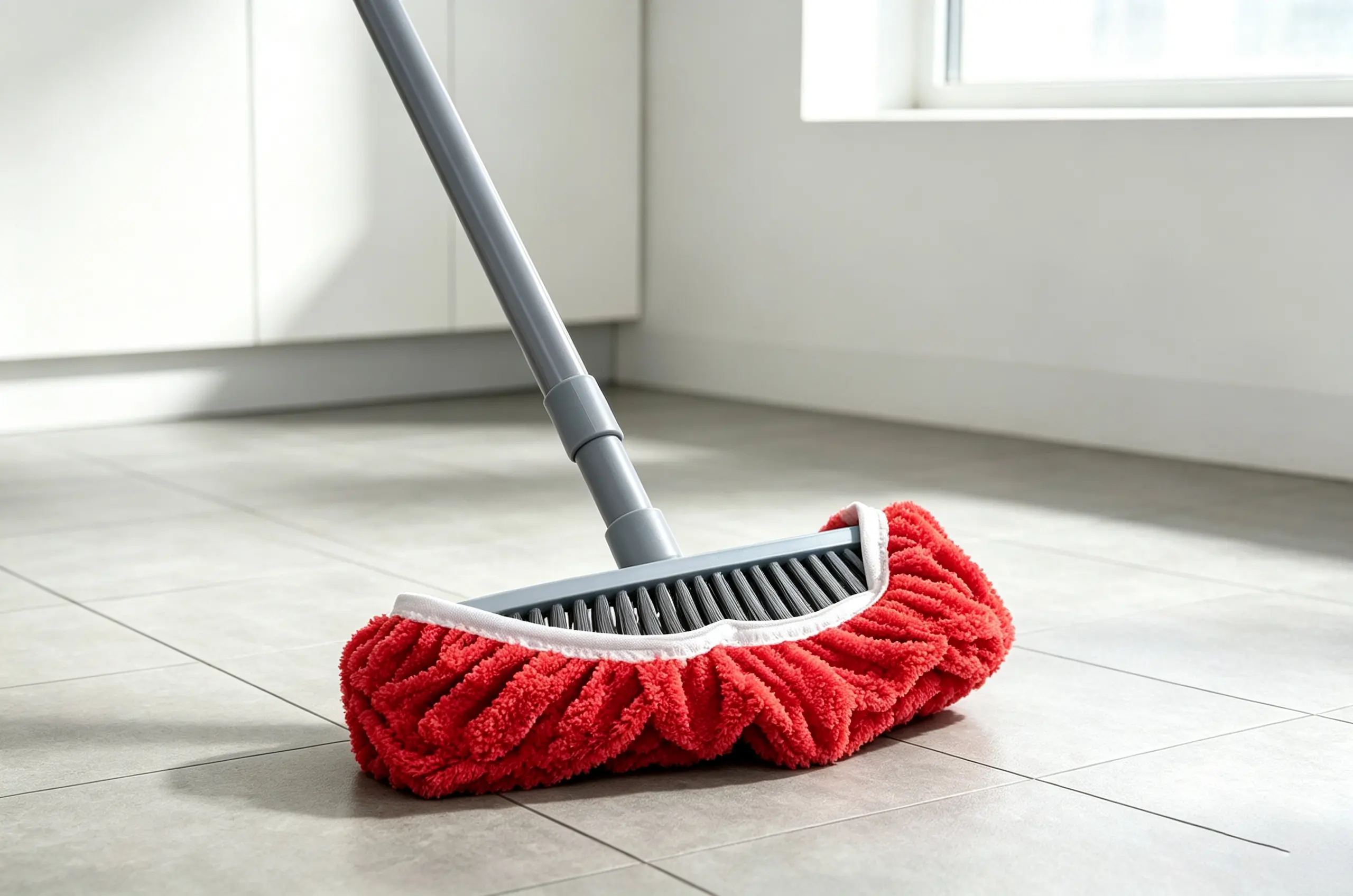
A microfiber cover designed to fit over a broom head or floor sweeper. The cover collects dust, hair, and small particles during cleaning.
Pros:
Upgrades a traditional broom into a microfiber cleaning tool. Adds more value to standard cleaning products.
Cons:
Different broom designs have different dimensions.
Requires elastic or adjustable structures for better compatibility.
Conclusion
Chenille mop cloths offer superior cleaning with their unique structure, high absorbency, and amazing dust-trapping ability, making them a top choice for any home or cleaning professional.
"Soft to the touch. Practical by design. For chenille fabrics, gently blot …", https://www.instagram.com/reel/DVYX4zTDKLi/. Chenille’s caterpillar-like fibers increase surface area, enhancing cleaning efficiency by trapping more dirt and absorbing water. Evidence role: mechanism; source type: research. Supports: Chenille mop cloths are effective due to their unique fiber structure.. Scope note: The source may not directly compare chenille to other materials. ↩
"Chenille fabric – Wikipedia", https://en.wikipedia.org/wiki/Chenille_fabric. Chenille’s pile structure is characterized by raised yarn strands, which contribute to its absorbency and dirt-trapping ability. Evidence role: definition; source type: encyclopedia. Supports: Chenille has a unique pile structure that makes it effective for cleaning.. Scope note: The source may focus on chenille’s general properties rather than cleaning applications. ↩
"Water Absorption Capacity and Agricultural Utility of Biopolymer …", https://pmc.ncbi.nlm.nih.gov/articles/PMC12355620/. Chenille’s fiber gaps allow it to hold significantly more water compared to flat microfiber cloths. Evidence role: mechanism; source type: research. Supports: Chenille mop pads can store more water due to their fiber structure.. Scope note: The comparison may not account for all microfiber types. ↩
"Evaluation of the efficiency of some sediment trapping methods after a …", https://pubmed.ncbi.nlm.nih.gov/19931969/. Chenille’s raised fibers are designed to trap debris more effectively than flat microfiber cloths. Evidence role: mechanism; source type: research. Supports: Chenille mop pads capture more debris due to their fiber design.. Scope note: The source may not quantify the debris-trapping efficiency. ↩
"Chenille fabric – Wikipedia", https://en.wikipedia.org/wiki/Chenille_fabric. Chenille’s upright fibers increase the contact area with surfaces, improving cleaning efficiency. Evidence role: mechanism; source type: research. Supports: Chenille mop pads increase surface area for better cleaning.. Scope note: The source may not directly measure surface area increase. ↩
"Chenille Dry Mop Pad | All Home Care – Norwex", https://www.norwex.com/p/chenille-dry-mop-pad-small?srsltid=AfmBOorX6GcJP8CqRrPvtUf1UpScY82WQ1huUk326TsyVuWqlxJ4xv_a. Chenille mops are favored for their high water absorption, effective debris trapping, and compatibility with delicate floors. Evidence role: general_support; source type: research. Supports: Chenille mops are effective for water absorption, debris trapping, and safe use on delicate floors.. Scope note: The source may not address all three benefits equally. ↩
"What Is Chenille Fabric? A Complete Guide for Beginners", https://icefabrics.com/blogs/news/what-is-chenille-fabric?srsltid=AfmBOoqZqdlu5N_jTFgISYchQZqR_K48qdirKDhmoWaxQSLlR2mqOqyb. Polyester chenille is a cost-effective material commonly used in household mop pads. Evidence role: definition; source type: encyclopedia. Supports: Polyester chenille is a budget-friendly option for mop pads.. Scope note: The source may not compare polyester chenille to other chenille types. ↩
"What is Microfibre Fabric: Properties, How its Made and Where – Sewport", https://sewport.com/fabrics-directory/microfibre-fabric. Microfiber chenille, often an 80/20 polyester-polyamide blend, offers superior cleaning and absorption compared to polyester chenille. Evidence role: definition; source type: research. Supports: Microfiber chenille is a premium material for cleaning applications.. Scope note: The source may focus on general microfiber properties rather than chenille-specific advantages. ↩
"3 Pack Steam Mop Replacement Pads, Microfiber … – Amazon.com", https://www.amazon.com/Strips-Microfiber-Replacement-Refills-Pocket/dp/B07TB56W6J. Pocket mop pads feature fabric pockets for secure attachment to mop heads, offering durability during cleaning. Evidence role: definition; source type: encyclopedia. Supports: Pocket mop pads provide a secure fit for mop heads.. Scope note: The source may not compare pocket mop pads to other attachment styles. ↩
"10” x 5.5” Microfiber [Wet Mop Pad]", https://microfibertech.com/products/10-x-55-microfiber-wet-mop-pad?srsltid=AfmBOoqwhBZPwW9kKqcUpVWRtncUahodm9wZns49LbpNJaHUWjsvRqiy. Velcro mop pads use hook-and-loop fasteners for quick attachment and removal during cleaning. Evidence role: definition; source type: encyclopedia. Supports: Velcro mop pads offer convenience in attachment and removal.. Scope note: The source may not address long-term durability issues of Velcro pads. ↩