
Are you tired of dealing with frizz, breakage, and endless blow-drying after every wash? Your regular towel might be secretly causing damage, but a simple switch can protect your hair.
Microfiber towels are better for hair because their ultra-fine fibers absorb water quickly through capillary action.1 This reduces the need for damaging friction, which causes frizz, breakage, and split ends, especially when your hair is wet and most fragile.
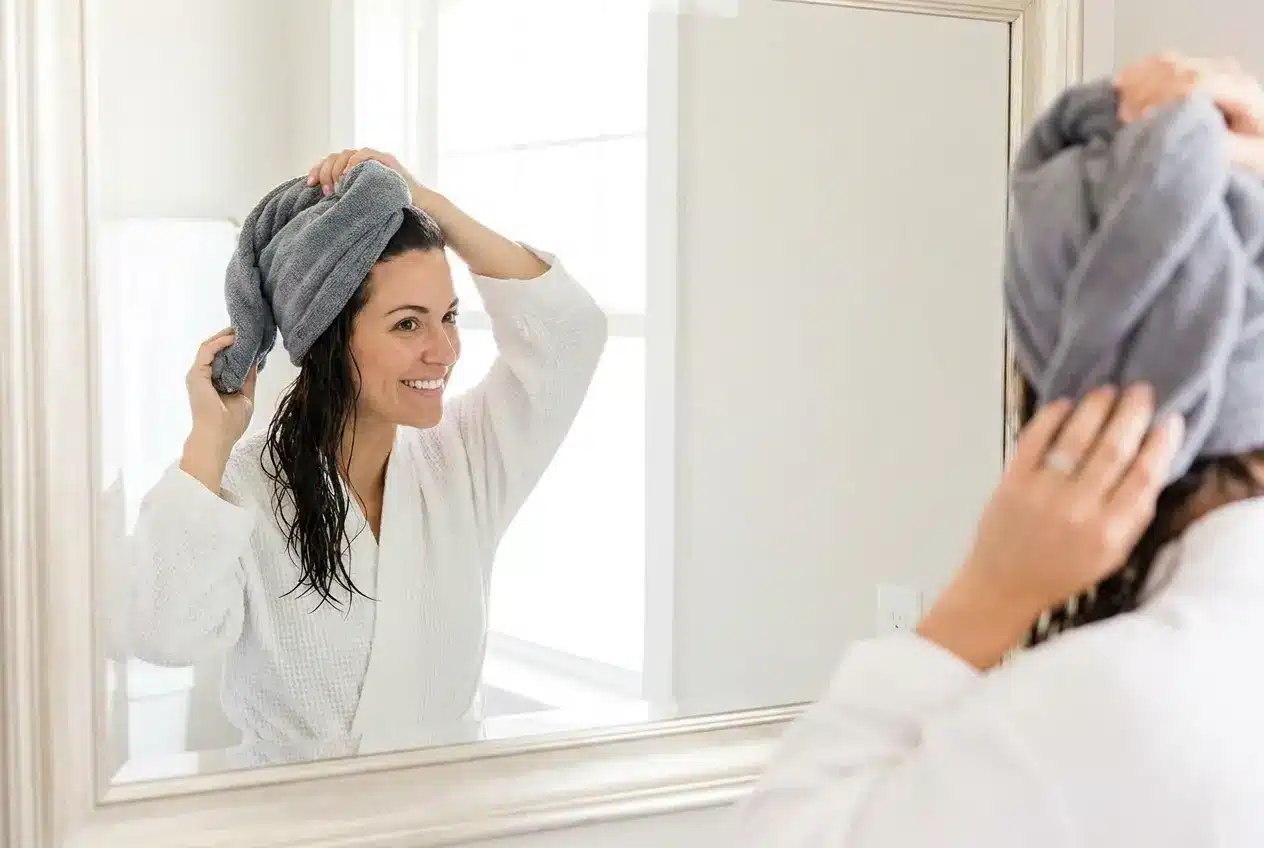
It seems simple, right? A towel is just a towel. But I learned the hard way that this is not true at all. For years, I struggled with frizzy, damaged hair despite using expensive conditioners and treatments. It never occurred to me that the problem started the moment I stepped out of the shower and reached for my old cotton bath towel. The difference was night and day when I finally made the switch. Let’s break down exactly how this works and why it matters so much for the long-term health of your hair.
How does a microfiber towel actually protect your hair?
You see your hair breaking and getting frizzy, but you can’t figure out the cause. You’ve tried new products, but the damage continues, starting right after you wash it.
A microfiber towel protects your hair by minimizing friction.2 Its soft, dense fibers gently absorb water without roughing up the hair cuticle. You can simply press or wrap the towel, which preserves your hair’s structure and prevents the mechanical damage caused by rubbing with cotton towels.

To understand why microfiber is so much better, we need to look at what happens to your hair when it’s wet. Think of each hair strand as being covered in tiny, overlapping scales called cuticles. When your hair is dry and healthy, these cuticles lie flat and smooth. But when hair gets wet, it swells, and these cuticle scales lift and open up. In this state, your hair is incredibly fragile and vulnerable to damage.
Now, imagine rubbing your wet, vulnerable hair with a traditional cotton towel. The coarse loops of a cotton towel catch on those raised cuticles, tearing and shredding them.3 This is what we call mechanical damage, and it’s a primary cause of frizz, split ends, and breakage.
Microfiber works completely differently.4 Instead of rough loops, it’s made of millions of incredibly fine fibers. These fibers create a massive surface area that wicks away water through a process called capillary action. It gently pulls moisture away from the hair surface without needing any harsh rubbing.
| Feature | Traditional Cotton Towel | Microfiber Hair Towel |
|---|---|---|
| Texture | Coarse, looped fibers | Ultra-fine, soft fibers |
| Action Needed | Rubbing and squeezing | Gentle pressing or wrapping |
| Effect on Cuticle | Lifts and tears cuticles | Leaves cuticles smooth |
| Result | Frizz, breakage, split ends | Smooth, healthier hair |
Can switching towels really reduce heat damage?
You rely on your blow dryer every day, but you know the high heat is slowly cooking your hair. This leads to a frustrating cycle of damage that makes your hair look worse.
Yes, switching to a microfiber towel can significantly reduce heat damage.5 It absorbs much more water than cotton, so your hair is less saturated when you begin blow-drying. This cuts down the time needed under high heat, minimizing damage to the hair shaft.6
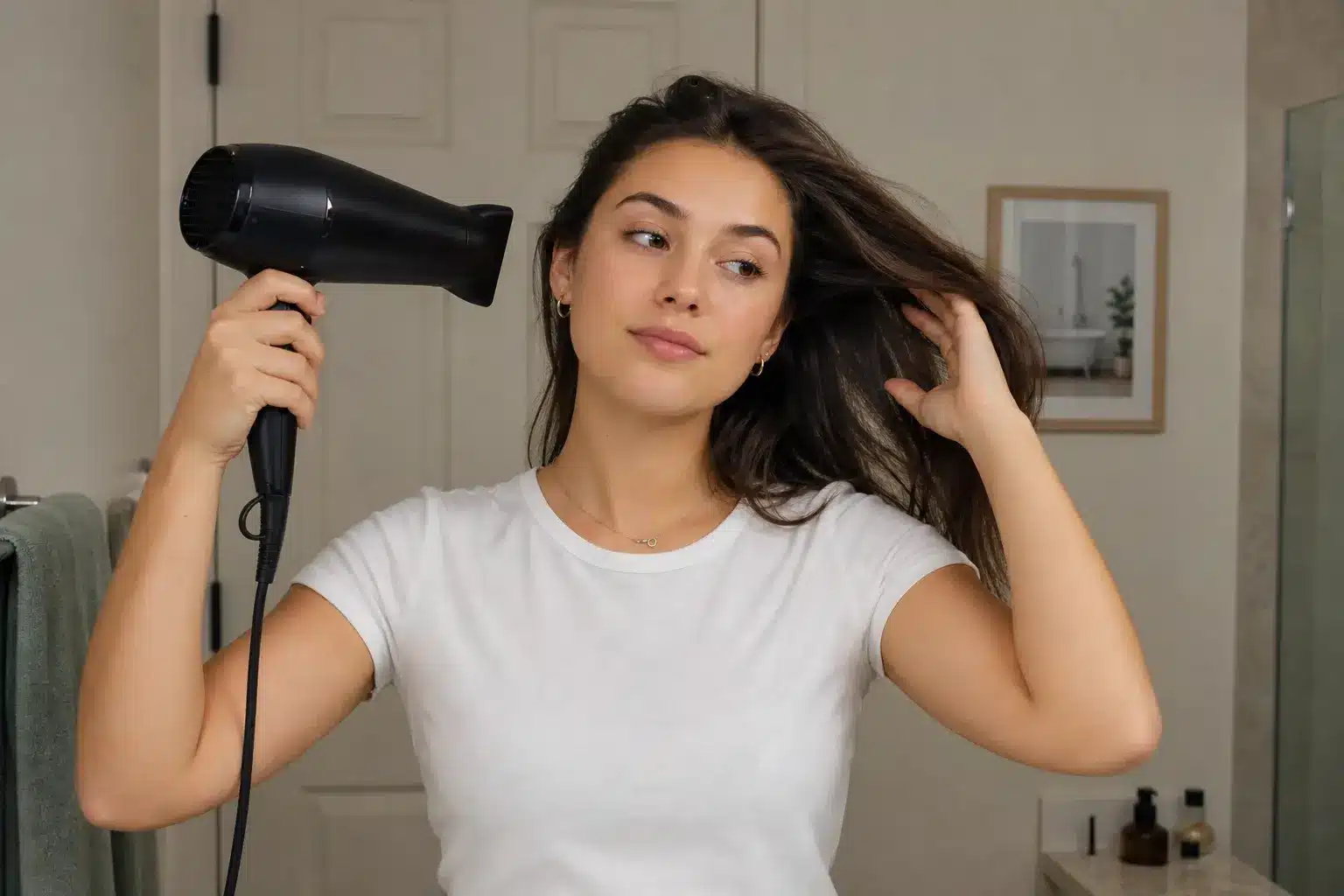
This is one of the biggest benefits I noticed personally. My hair is thick, and it used to take forever to blow-dry. I would blast it on high heat for at least 15 minutes, and I could practically feel my hair getting brittle. The logic is simple: the more water your towel removes, the less work your blow dryer has to do.
After I started using a microfiber towel, my routine changed completely. I wrap my hair in the towel while I get dressed. By the time I take it off, my hair isn’t dripping wet anymore. It’s just damp. My blow-drying time was cut by more than half. Now, I only need about five minutes on a medium heat setting to get it fully dry. Over weeks and months, this reduction in heat exposure makes a huge difference.
Here is the typical damage cycle with a cotton towel:
- Start: Hair is soaking wet.
- Towel Dry: Rubbing with a cotton towel removes some water but leaves hair very damp and frizzy.
- Blow-Dry: Requires 15-20 minutes of high heat to evaporate all the remaining water.
- Result: Hair is dry but also damaged, brittle, and needs more styling products to look decent.
Here is the new, healthier cycle with a microfiber towel:
- Start: Hair is soaking wet.
- Towel Dry: Gently wrapping in microfiber removes most of the water.
- Blow-Dry: Requires only 5-7 minutes of low or medium heat.
- Result: Hair is dry, smooth, and healthy, with less need for heat and styling.
What’s the difference between hair towels and regular microfiber cloths?
You know microfiber is good, but you wonder if you can just grab any microfiber cleaning cloth. Using the wrong type could be ineffective and not give you the hair benefits you want.
The main differences are the weave, texture, and weight. Hair towels use a specific, softer weave, like waffle or suede, to be extra gentle.7 Regular cleaning cloths might have a more aggressive texture designed for scrubbing, not for delicately handling fragile hair cuticles.

As a manufacturer, this is something we focus on intensely. Not all microfiber is created equal. The product’s final use determines how we design and produce the fabric. A cloth made for scrubbing a countertop has very different requirements than a towel made to protect delicate hair.
The weave is the most important factor. Microfiber hair towels are often made with a waffle weave, which creates gentle pockets for water absorption, or a flat, suede-like weave that is incredibly smooth. These designs are optimized to absorb a lot of water quickly without snagging on the hair. A general-purpose cleaning cloth, however, often uses a terry-style loop or a split-fiber weave designed to "grab" onto dust and grime. That grabbing action is exactly what you want to avoid with your hair.
Weight, or GSM (grams per square meter), also plays a role.8 A hair towel needs to be absorbent but lightweight, so it doesn’t put strain on your neck or pull on your hair roots when wrapped up. We can fine-tune these properties for the perfect balance.
| Feature | Microfiber Hair Towel | General Cleaning Cloth |
|---|---|---|
| Intended Use | Gently drying fragile hair | Scrubbing, dusting, general cleaning |
| Weave Type | Waffle, Suede, Smooth | Terry Loop, Split-Fiber |
| Texture Feel | Very soft and smooth | Slightly grabby or coarse |
| Design Goal | Maximum gentle absorption | Maximum particle trapping and scrubbing |
Conclusion
Switching to a microfiber towel protects hair by reducing friction and cutting down on heat damage.9 This simple change leads to smoother, stronger, and healthier hair in the long run.
"Microfiber vs. Cotton: The Science of Hair Towels – Turbie Twist", https://www.turbietwist.com/blogs/hair-towels-101/microfiber-vs-cotton-the-science-of-hair-towels?srsltid=AfmBOoqbvUYyVsJVuCOETat1Tf5vNLoa2M9r_k5Yuv2DPLiaJ_RyDO_p. Capillary action in microfiber towels allows for efficient water absorption, which can reduce friction and potential hair damage. Evidence role: mechanism; source type: education. Supports: Microfiber towels absorb water quickly through capillary action, reducing the need for damaging friction.. Scope note: The effectiveness may vary depending on the specific microfiber towel’s design and quality. ↩
"Microfiber Towel for Curly, Wavy & Coily Hair – Curlsmith", https://curlsmith.com/products/microfiber-towel. Microfiber towels minimize friction due to their soft and dense fibers, which can help preserve hair cuticles. Evidence role: mechanism; source type: research. Supports: Microfiber towels minimize friction, protecting hair cuticles.. Scope note: The degree of friction reduction may depend on the specific towel’s texture and weave. ↩
"Is there any scientific evidence whatsoever that towel drying hair is …", https://www.reddit.com/r/Haircare/comments/t5f6vm/is_there_any_scientific_evidence_whatsoever_that/. Cotton towels can cause mechanical damage to wet hair by catching on raised cuticles. Evidence role: mechanism; source type: research. Supports: Cotton towels cause mechanical damage by catching on raised hair cuticles.. Scope note: The extent of damage may depend on the specific cotton towel’s texture and usage method. ↩
"people say cotton hair towels are too rough but others say … – Reddit", https://www.reddit.com/r/HaircareScience/comments/17m9y2w/people_say_cotton_hair_towels_are_too_rough_but/. Microfiber towels differ from cotton towels by using ultra-fine fibers that wick moisture through capillary action, reducing mechanical damage. Evidence role: mechanism; source type: education. Supports: Microfiber towels wick moisture differently than cotton towels, reducing mechanical damage.. Scope note: The comparison assumes standard cotton towels and may not account for variations in cotton towel quality. ↩
"Does anyone else struggle to get their hair dry with microfibre towels?", https://www.reddit.com/r/Wavyhair/comments/122qkj7/does_anyone_else_struggle_to_get_their_hair_dry/. Microfiber towels can reduce heat damage by absorbing more water, thus shortening blow-drying time. Evidence role: mechanism; source type: research. Supports: Switching to microfiber towels reduces heat damage by shortening blow-drying time.. Scope note: The reduction in heat damage depends on individual hair types and drying methods. ↩
"Amazon.com : Hicober Microfiber Hair Towel Wrap, Fast Drying Hair …", https://www.amazon.com/Microfiber-Hicober-Turbans-Drying-Towels/dp/B08S31RWBK. Reducing blow-drying time with microfiber towels can minimize heat exposure and damage to the hair shaft. Evidence role: mechanism; source type: research. Supports: Shorter blow-drying times minimize heat damage to the hair shaft.. Scope note: The reduction in heat damage depends on individual drying techniques and hair types. ↩
"Waffle Hair Towel – Amazon.com", https://www.amazon.com/waffle-hair-towel/s?k=waffle+hair+towel. Hair towels often use softer weaves like waffle or suede to minimize damage to fragile hair cuticles. Evidence role: definition; source type: institution. Supports: Hair towels use softer weaves to minimize damage to fragile hair cuticles.. Scope note: The effectiveness of the weave type may vary across different brands and manufacturing processes. ↩
"The Microfiber Hair Towel – Crown Affair", https://www.crownaffair.com/products/the-towel?srsltid=AfmBOor6IdlBvqRtmX6eXTIB3zSkER8Z1FnAl-2jc-hmADJSqu5lsQ48. The GSM of microfiber towels affects their absorbency and suitability for hair care applications. Evidence role: definition; source type: education. Supports: GSM affects the absorbency and suitability of microfiber towels for hair care.. Scope note: The optimal GSM for hair towels may vary depending on individual preferences and hair types. ↩
"Road Test: Are microfibre hair towels worth it? – Fashion Journal", https://fashionjournal.com.au/beauty/microfibre-hair-towel/. Microfiber towels protect hair by reducing friction and shortening blow-drying times, which minimizes heat damage. Evidence role: general_support; source type: education. Supports: Microfiber towels protect hair by reducing friction and minimizing heat damage.. Scope note: The benefits may vary depending on individual hair types and towel quality. ↩