
Tired of your microfiber towels losing their grip and leaving streaks? You follow the rules, but they still fail. The problem is that common advice misses the most important details.
The best way to wash microfiber towels is to use warm water, a small amount of liquid detergent, and wash them separately from other fabrics. Never use fabric softener or high heat.
You’ve probably heard the basics of washing microfiber, but those tips don’t always solve the problem. As a manufacturer, I’ve spent years testing these products, and I can tell you that the real secrets are in the details that most people overlook. What you wash your towels with, the temperature you use, and even when you decide to wash them can make a huge difference. Let’s look at what our tests and experience have shown to be the best practices for keeping your towels working like new.
Why should you wash microfiber even if it looks clean?
Your microfiber towel looks perfectly fine after a light dusting. You think it’s good for another use, but this is a mistake that slowly ruins its cleaning power.
Microfiber is designed to trap dirt, not resist it.1 Even if a towel looks clean, its split fibers are likely already full of dust, oil, and other unseen contaminants.
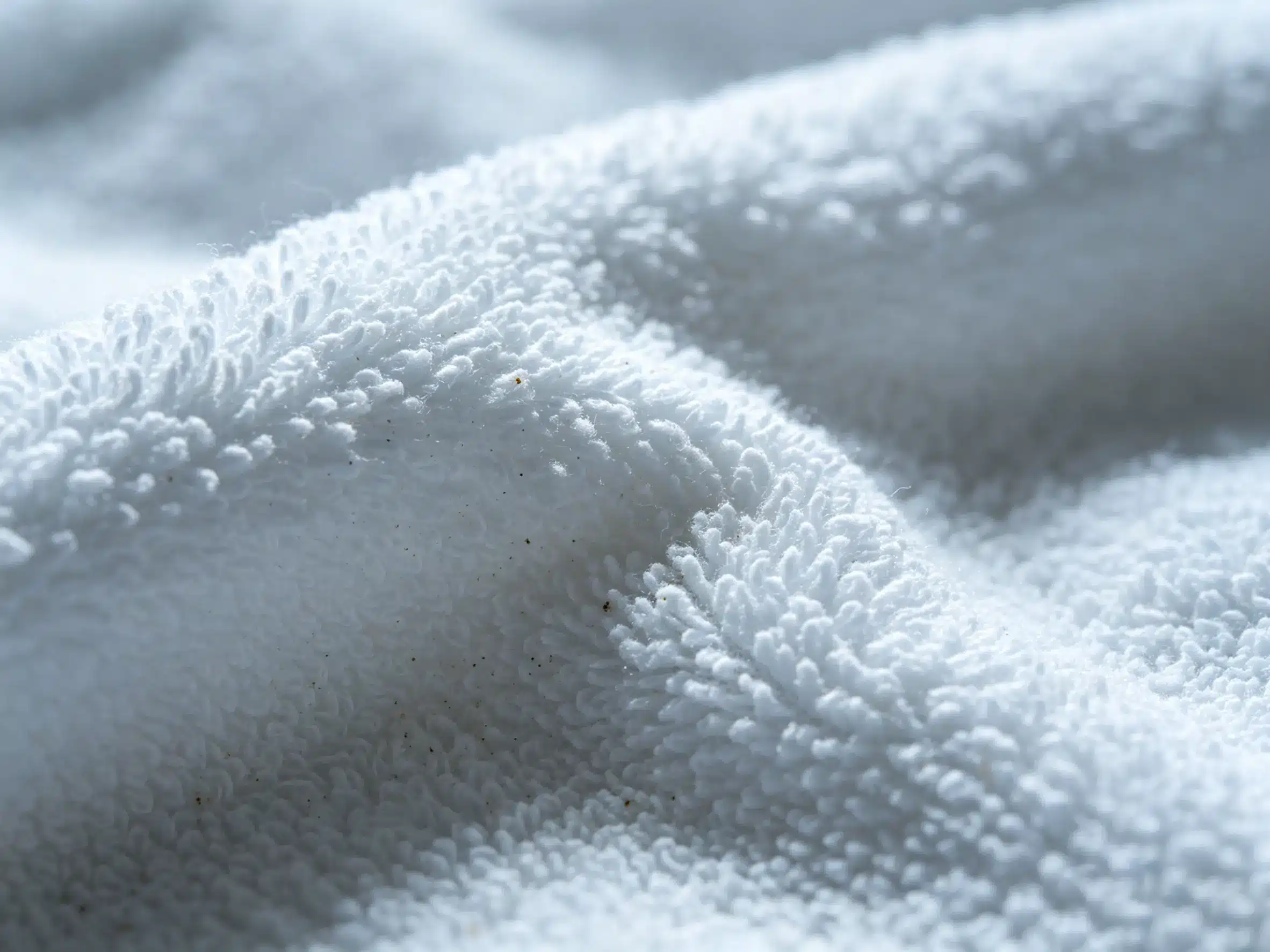
Many people think microfiber is like cotton, where you wash it when it looks dirty. This is a fundamental misunderstanding of how it works. A cotton cloth just pushes dirt around. A microfiber cloth has millions of tiny, split fibers that actively grab and hold onto dust, liquids, and grime. This is its superpower. But this also means that even after one use, those fibers are filled with particles. If you don’t wash them out, the towel loses its ability to pick up more dirt. It’s like trying to use a sponge that’s already full of water. From my manufacturing experience, I always tell clients: the performance of the towel depends on its fibers being empty and ready to work.2 So, the best practice is to wash your microfiber towels soon after each use, not when they finally look dirty.
Is fabric softener really that bad for microfiber?
You want your towels to be soft, so adding fabric softener seems logical. But this common laundry habit is actually the fastest way to destroy your microfiber towels’ effectiveness.
Yes, fabric softener is the biggest enemy of microfiber.3 It coats the fibers with a waxy film, which completely blocks their ability to absorb water and trap dirt effectively.
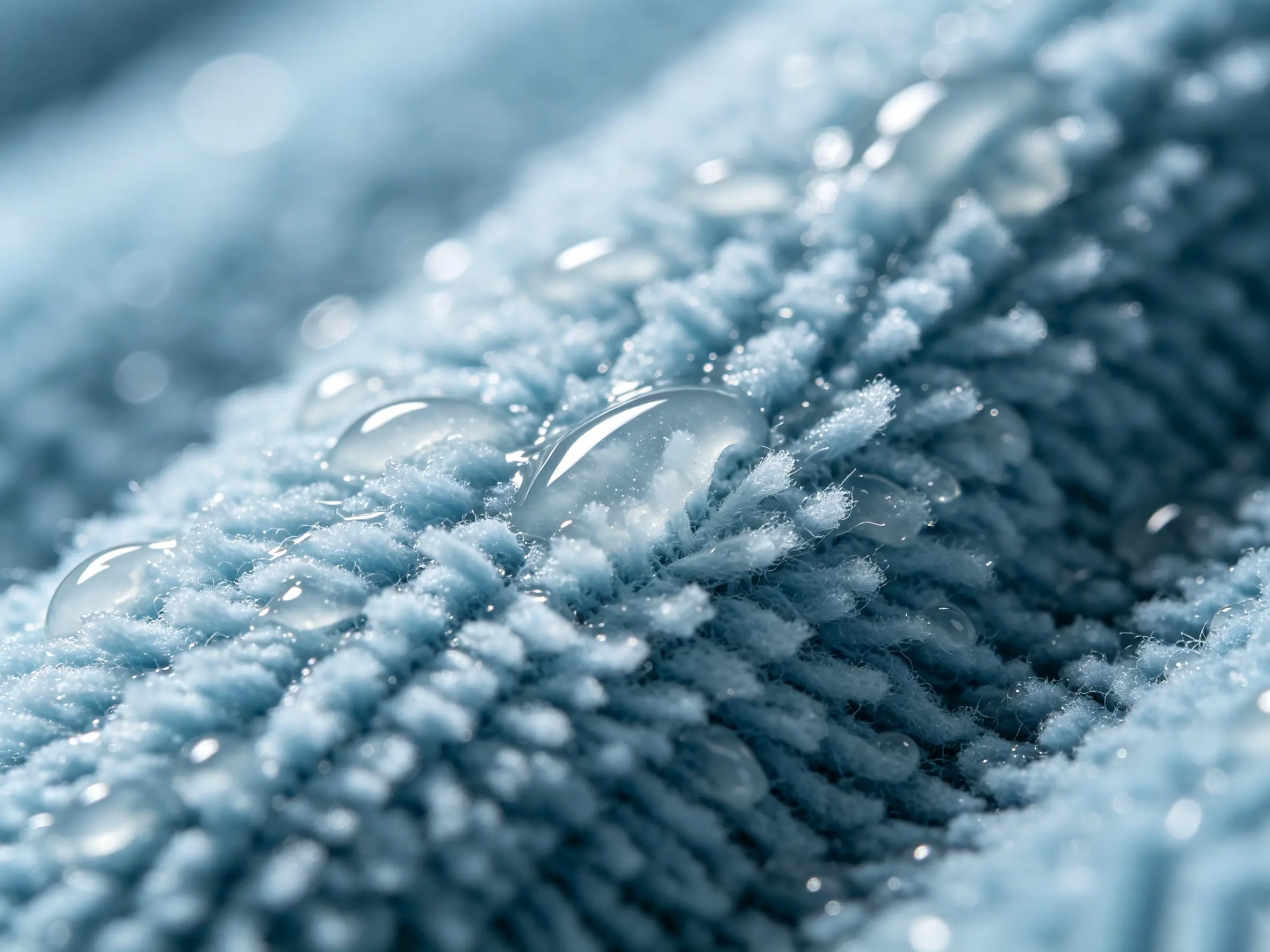
In all our lab tests, nothing damages a microfiber towel’s performance more than fabric softener. It’s worse than using the wrong detergent or washing at the wrong temperature. Here’s why: fabric softeners work by depositing a layer of lubricating chemicals onto fabrics to make them feel softer. On cotton, this is fine. On microfiber, it’s a disaster. This waxy coating clogs the microscopic gaps in the split fibers. As a result, the towel can no longer absorb water, create the static charge needed to attract dust, or grip onto grime. Instead of a cleaning tool, you are left with a cloth that just pushes dirt and water around, leaving streaks and residue behind. We consider this so critical that we tell all our B2B clients to put "DO NOT USE FABRIC SOFTENER" in bold on their product care labels. It’s that important.
Can heat from a dryer ruin your microfiber towels?
Worried that your washing machine is too harsh on your towels? The real danger is not the washing, but the drying. High heat can permanently damage your microfiber investment.
Yes, high heat from a dryer can melt the delicate fibers of a microfiber towel.4 This makes the towel feel hard and stiff, and it permanently destroys its cleaning ability.
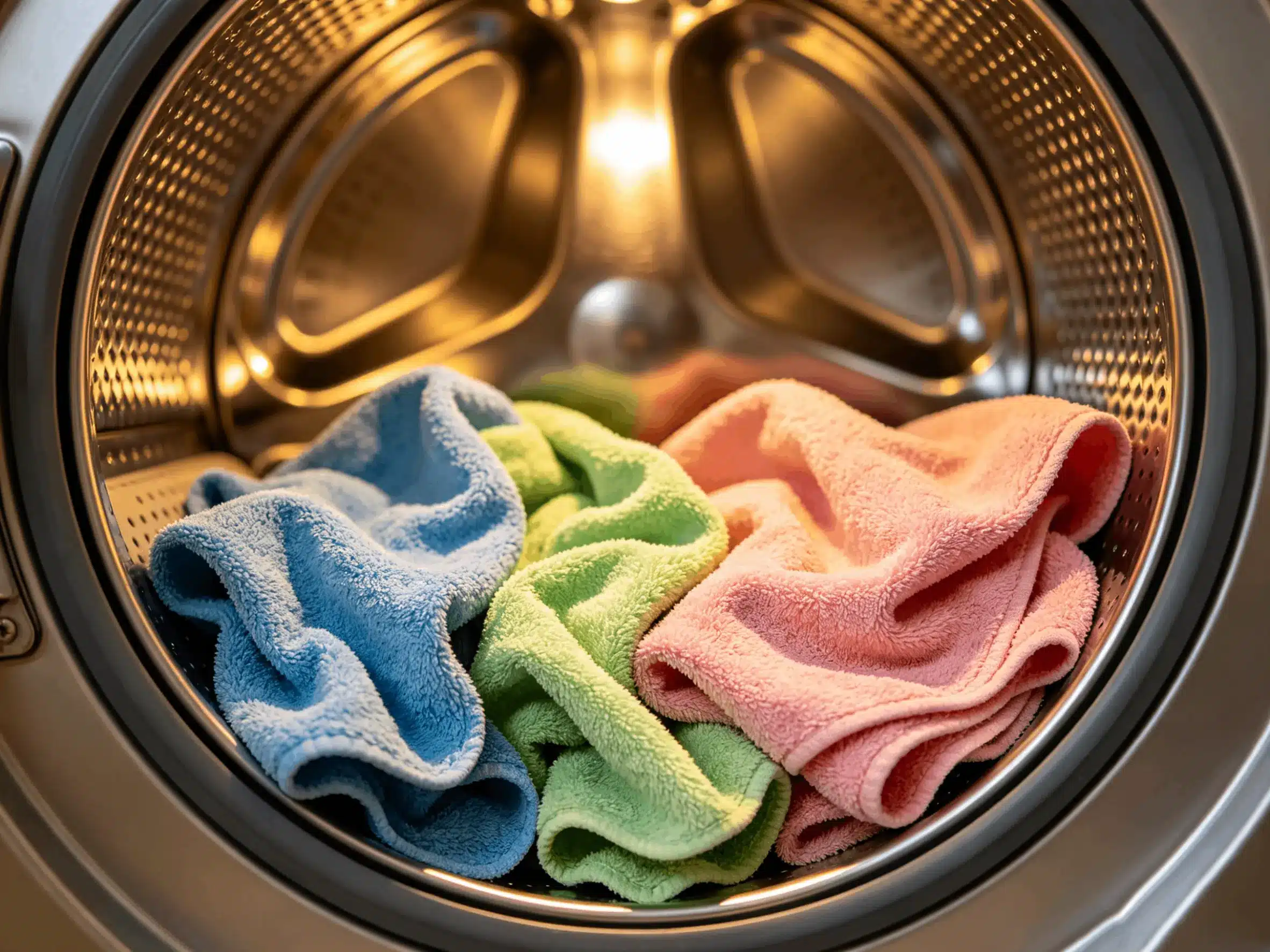
Many users are more concerned about the washing machine, but our tests show that the dryer is a far greater threat. Microfiber is made from polyester and polyamide, which are essentially plastics. Like any plastic, they are sensitive to heat. When you use a high-heat setting on your dryer, the tips of the tiny, split fibers can actually melt. This process is called "fusing." When the fibers fuse, their special star-shaped structure collapses. The towel loses its softness and, more importantly, its ability to grab and hold dirt. It becomes stiff and abrasive, making it useless for delicate surfaces like car paint or glass. The best method is always to air dry your towels. If you must use a dryer, always choose the lowest heat setting or the "air fluff" option with no heat at all. This simple step will dramatically extend the life of your towels.
Why should you never wash microfiber with cotton towels?
You just finished cleaning and throw all the dirty cloths into the wash together. It seems efficient, but mixing microfiber with cotton is a hidden mistake that causes frustrating results.
Washing microfiber with cotton causes the microfiber to become clogged with lint.5 The microfiber’s fibers will grab and hold onto the cotton lint, making the towel leave streaks and fibers behind.
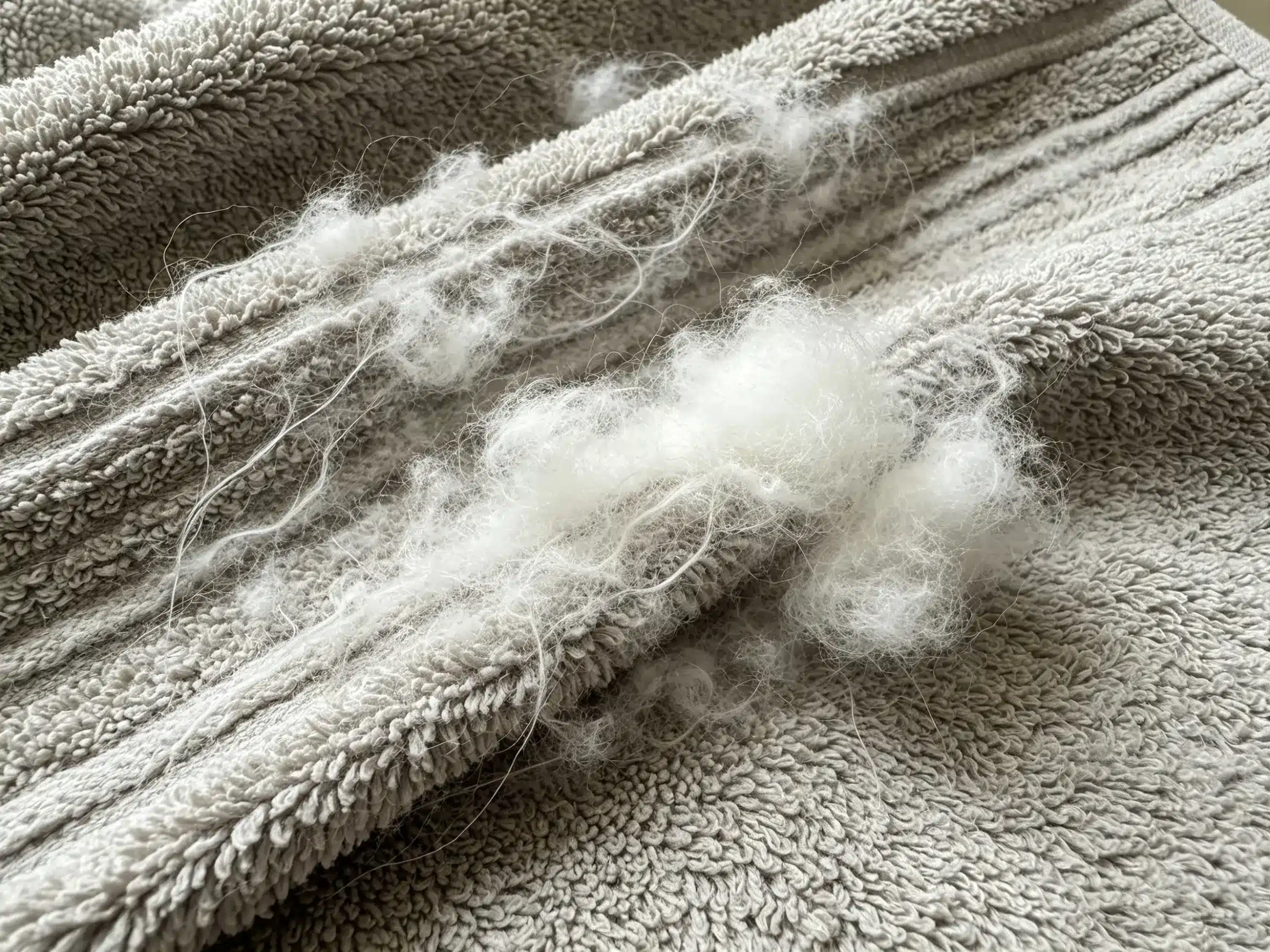
This is one of the most common mistakes I see consumers make. Microfiber’s job is to grab tiny particles, and it does its job extremely well. The problem is that it can’t tell the difference between dust on your counter and lint from a cotton t-shirt in the laundry. Cotton fabrics, especially towels and fleece, are constantly shedding tiny fibers, or lint. When you wash them with your microfiber cloths, the microfiber acts like a magnet for all that loose lint. The lint gets trapped deep within the microfiber’s structure and is very difficult to remove. The result? The next time you try to clean a mirror or your car’s windows, the towel leaves behind a trail of tiny fibers. To avoid this, always wash microfiber products in a separate load. It’s a simple rule that makes a world of difference in performance.
Does separating different microfiber towels for washing really matter?
You use different towels for different jobs, but you wash them all together. This practice can spread contaminants and ruin your specialized towels, especially in professional settings.
Yes, separating different types of microfiber towels is crucial.6 Cross-contamination can transfer oils, waxes, and harsh chemicals, ruining the effectiveness of your towels for other tasks.
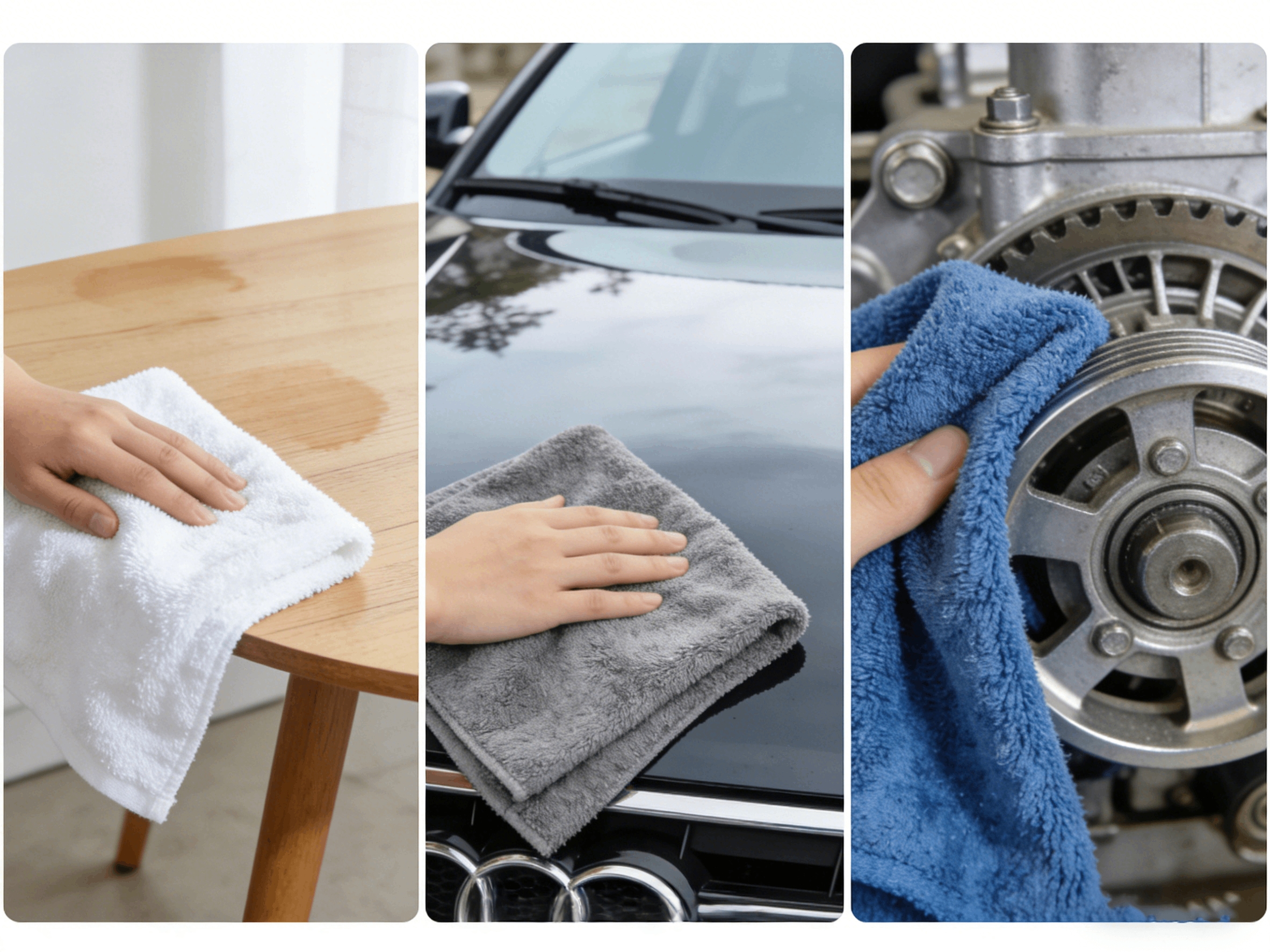
In the professional car detailing world, this is a non-negotiable rule. Think about the different jobs a towel does. A towel used to apply wax is covered in oily residues, while a glass towel needs to be perfectly clean and absorbent. If you wash them together, that wax and oil will transfer to the glass towel. The next time you try to clean your windshield, you’ll be smearing a thin layer of wax residue all over it, creating a streaky mess. The same logic applies to other tasks. Here’s a quick breakdown of why separation is key:
| Towel Type | Typical Contaminants | Risk if Mixed |
|---|---|---|
| Wax/Polish Towels | Oils, solvents, abrasives | Contaminates other towels with oil, reducing absorbency. |
| Drying Towels | Water, mineral deposits | Can become less absorbent if contaminated with oils. |
| Glass Towels | Glass cleaner residue | Easily ruined by any lint or oil, causing streaks. |
| Wheel/Engine Towels | Heavy grime, brake dust, grease | Can transfer heavy, abrasive grit to delicate paint towels. |
By washing these towels separately, you protect their specific functions and ensure they perform perfectly every time.
How much detergent is too much for microfiber?
If a little detergent cleans, more detergent must clean better, right? This logic might apply to your gym clothes, but for microfiber, it’s the opposite and can lead to poor performance.
Using too much detergent is a common mistake.7 Microfiber does not absorb soap like cotton, so excess detergent gets trapped in the fibers, causing streaks and reducing absorbency.
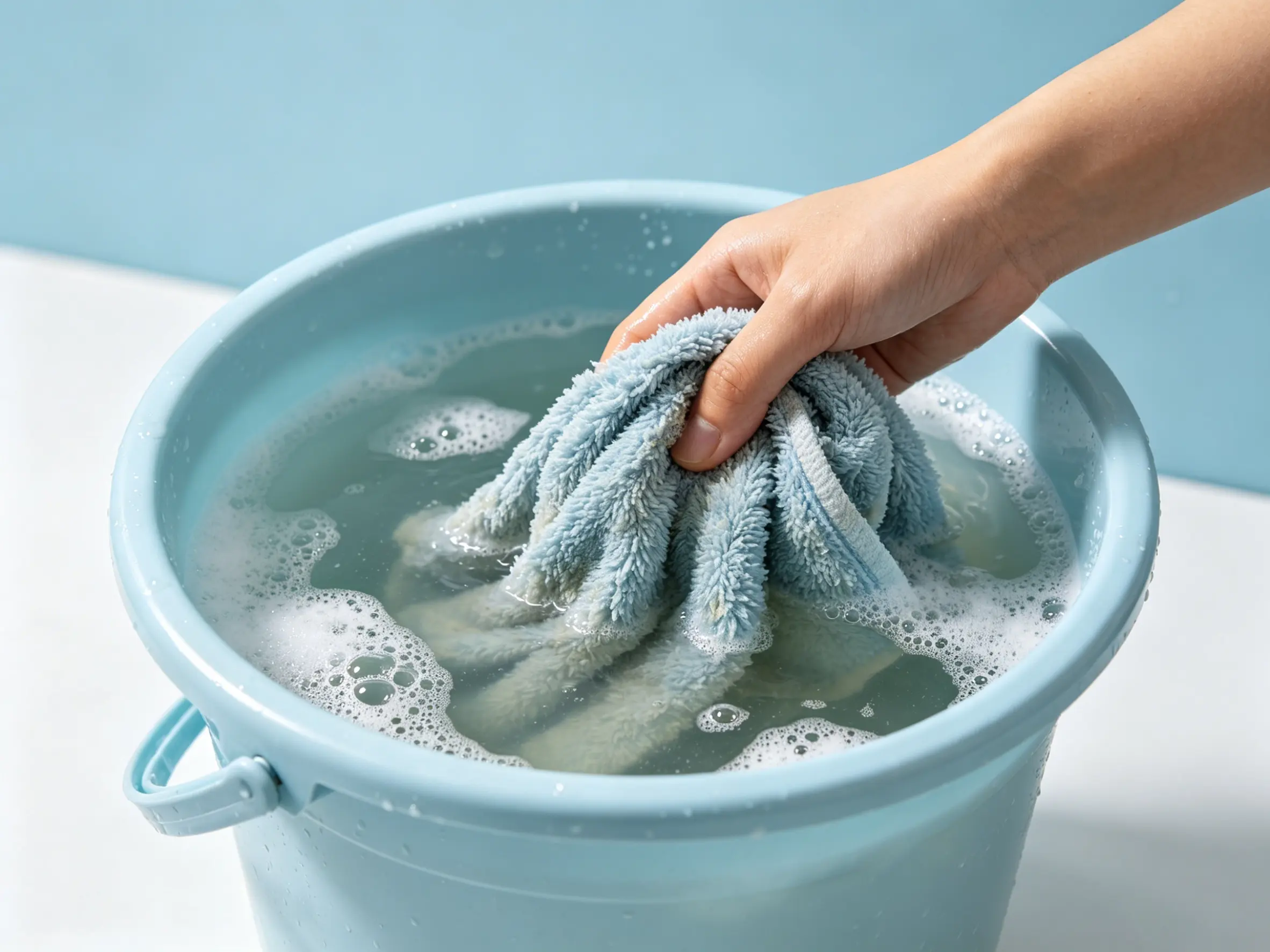
From a material science perspective, microfiber and cotton handle detergent very differently. Cotton fibers are hollow and absorbent, so they soak up water and detergent. Microfiber’s split fibers are designed to trap particles on their surface, not absorb liquids into their core.8 When you use too much detergent, the soap doesn’t get fully rinsed away. Instead, a sticky residue builds up within the millions of tiny fibers. This residue clogs the very structure that makes the towel effective. A towel with detergent buildup will feel slick, absorb water slowly, and leave behind a hazy film or streaks on smooth surfaces like glass or stainless steel. As a general rule, we’ve found that using about half the amount of detergent recommended for a normal laundry load is the sweet spot. It’s enough to clean the towels without causing residue problems.
What is the ideal water temperature for washing microfiber?
You have three options on your washing machine: cold, warm, and hot. Choosing the wrong one can either fail to clean your towels or actively damage them. So which is correct?
Warm water, typically between 30–40°C (86–104°F), provides the best balance.9 It’s effective at removing oils and grime without being hot enough to risk damaging the synthetic fibers.
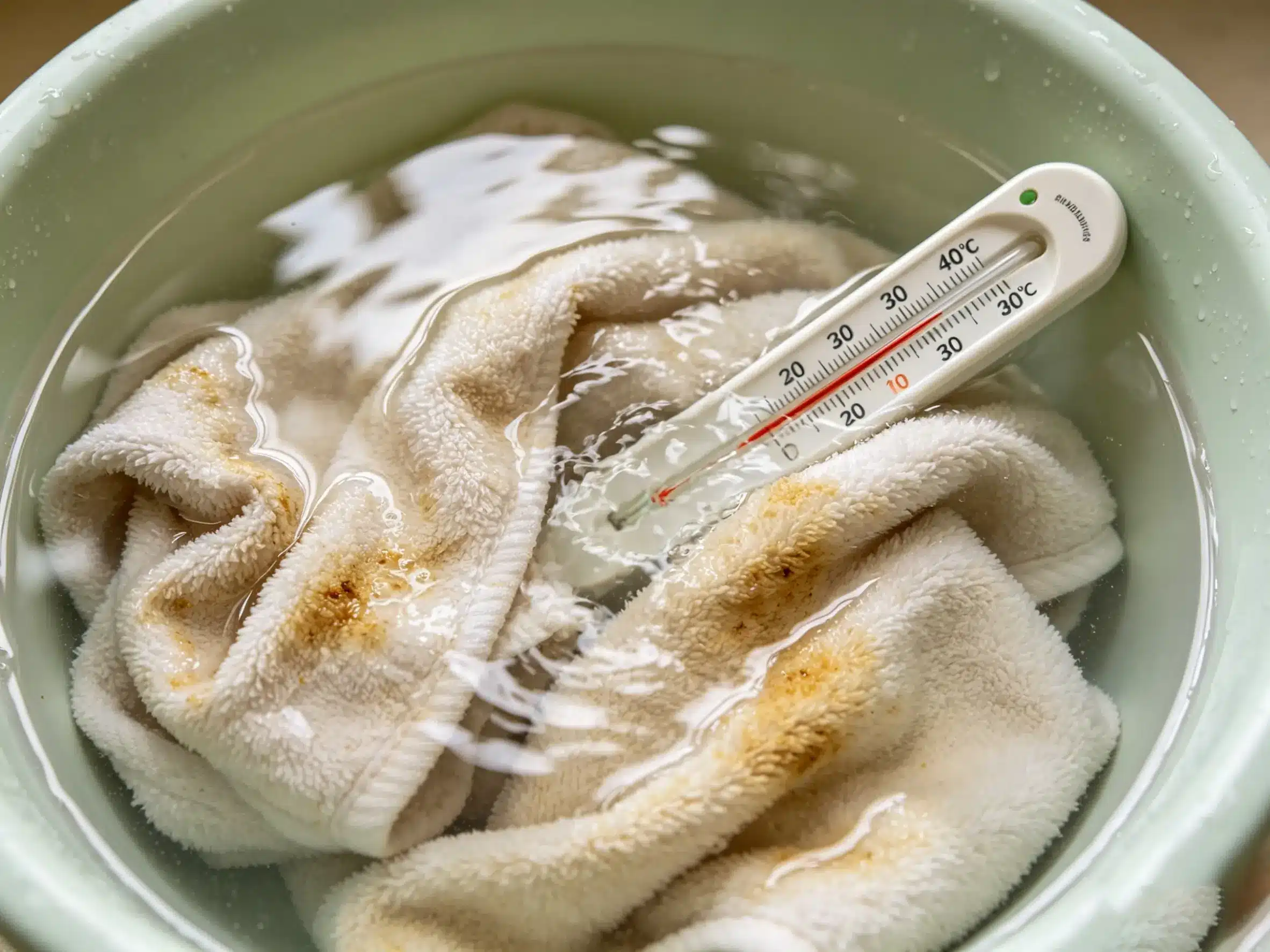
Finding the right temperature is a balancing act between cleaning power and fiber preservation. Our internal testing has consistently shown this: Cold water struggles to break down and release oils, grease, and waxes that microfiber is so good at trapping.10 The towels may come out looking clean, but oily residues can remain. On the other end, very hot water (above 60°C or 140°F) can cause the polyester and polyamide fibers to deform or even begin to melt, as we discussed earlier. This damage is permanent and makes the towel stiff and ineffective. Warm water is the perfect middle ground. It’s warm enough to help the detergent work effectively and release greasy soils, but it’s cool enough to pose no threat to the integrity of the fibers. For 99% of microfiber washing situations, selecting the "warm" cycle is the safest and most effective choice.
Is there one single best way to wash all microfiber towels?
People are always looking for a single, simple answer. But when it comes to cleaning, the best method often depends on what you were cleaning in the first place.
No, the best washing method depends on the towel’s use.11 A greasy garage towel needs a different cleaning process than a towel used for dusting delicate electronics.
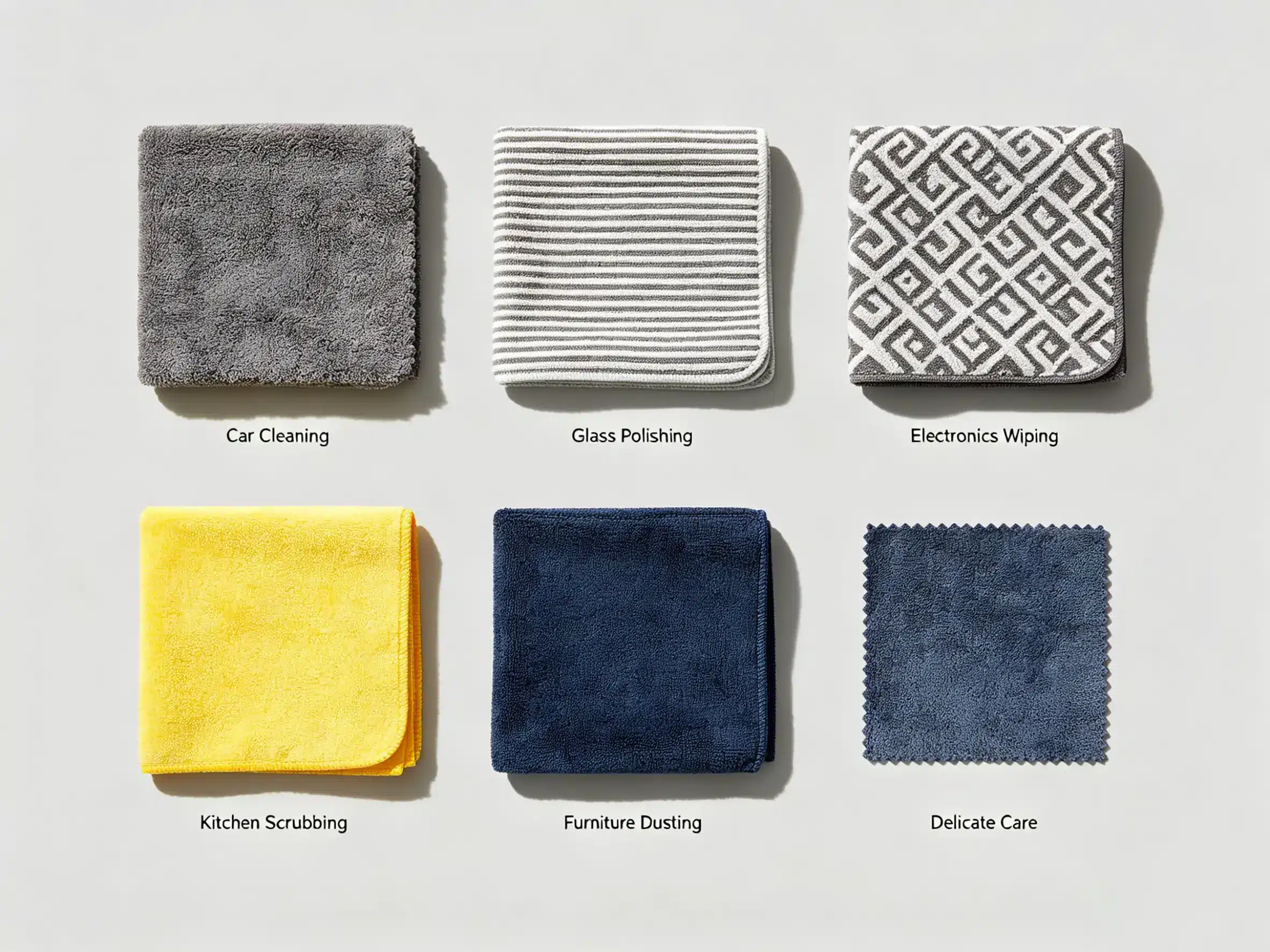
A "one-size-fits-all" approach to washing microfiber is not practical. The best way to wash a towel is determined by its job and the type of dirt it has collected. For example, a household towel used for light dusting with water just needs a simple wash with a minimal amount of regular liquid detergent. However, a car detailing towel used to remove heavy carnauba wax is loaded with oils and solvents. This towel might require a specialized microfiber detergent designed to break down those specific compounds. A towel used to wipe up a kitchen grease spill may need a pre-soak with a degreasing agent before its main wash. Thinking about the towel’s purpose allows you to tailor the wash method for the best results, ensuring each towel is perfectly clean and ready for its specific task without residue or damage. The contamination dictates the cleaning protocol.
How many washes should a good microfiber towel last?
You bought a pack of microfiber towels, and after a few months, they feel useless. Is this normal, or is the quality to blame? Durability is a key indicator of quality.
A high-quality microfiber towel, when cared for properly, should easily withstand hundreds of wash cycles.12 Premium towels can last for 200, 300, or even 500+ washes without losing performance.
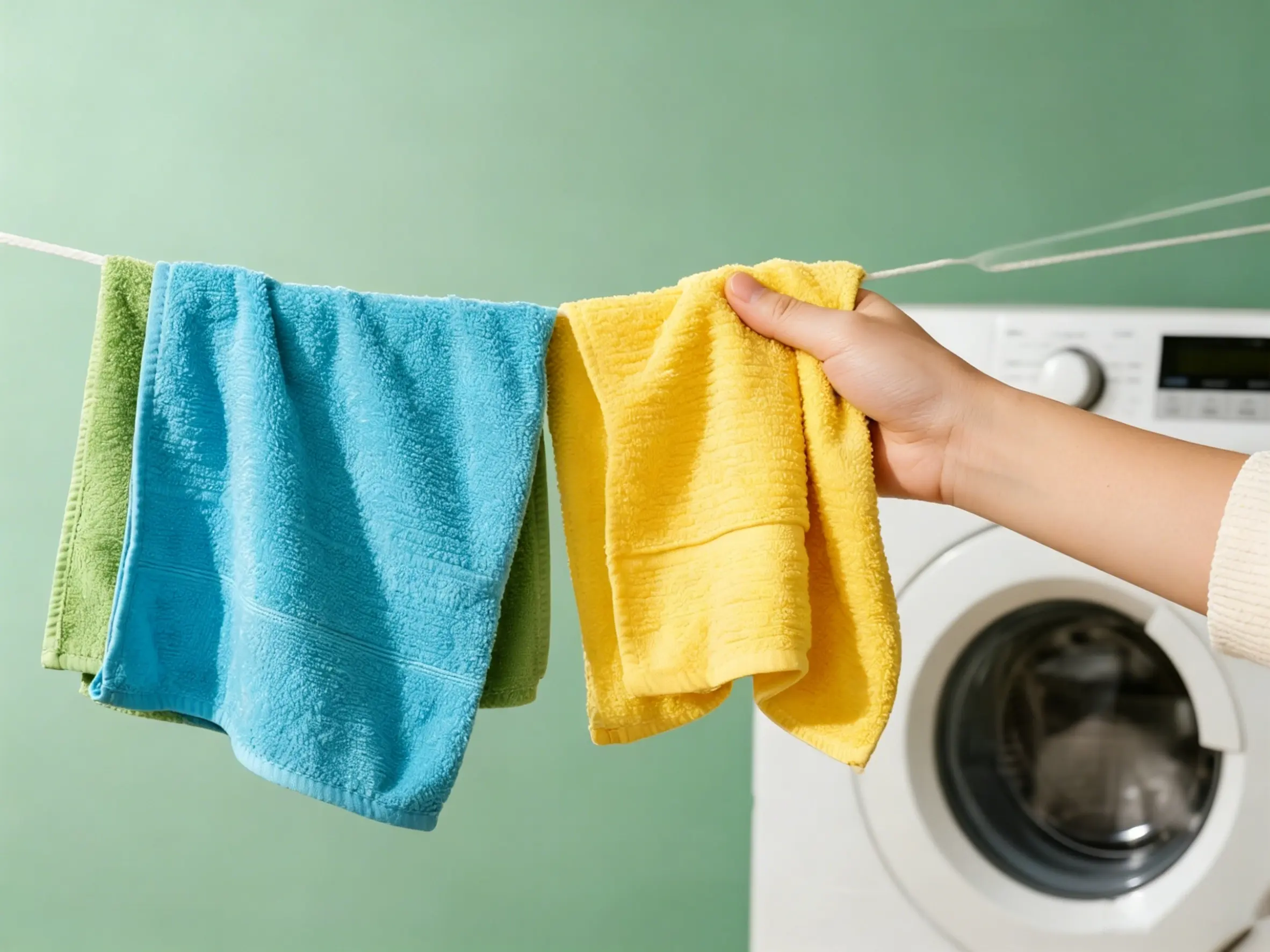
As a manufacturer, one of the key metrics we track is wash cycle durability. It’s a direct measure of the quality of the raw materials and the construction of the fabric. A cheap, low-grade microfiber towel might start to degrade after just 20 or 30 washes. The fabric will feel thinner, it will lose its softness, and its absorbency will drop significantly. In contrast, a well-made towel is an investment. We source high-grade polyester and polyamide yarns and use advanced weaving techniques to create a durable fabric. When these high-quality towels are washed using the correct methods we’ve discussed—no fabric softener, no high heat, separate loads—they maintain their performance for years. So, if your towels are failing quickly despite proper care, it’s a strong sign that they were low-quality from the start. A towel’s longevity is not just a feature; it’s the ultimate proof of its quality.
Conclusion
Properly washing microfiber towels is about preserving their unique fiber structure. Use warm water, minimal detergent, and always avoid fabric softeners and high heat to ensure they last for years.
"Microfiber – Wikipedia", https://en.wikipedia.org/wiki/Microfiber. This source explains the mechanism by which microfiber traps dirt and contaminants, supporting the claim about its cleaning properties. Evidence role: mechanism; source type: education. Supports: Microfiber is designed to trap dirt, not resist it.. ↩
"Spread of bacteria on surfaces when cleaning with microfibre cloths", https://pubmed.ncbi.nlm.nih.gov/19108933/. This source explains how microfiber’s cleaning performance relies on its fibers being free of contaminants, supporting the claim about washing after each use. Evidence role: mechanism; source type: education. Supports: Microfiber towels perform best when their fibers are free of contaminants and ready to trap new particles.. ↩
"Washing Microfiber towels and there might have been fabric … – Reddit", https://www.reddit.com/r/AutoDetailing/comments/bk7wu7/washing_microfiber_towels_and_there_might_have/. This source discusses how fabric softeners affect microfiber’s performance, supporting the claim about their negative impact. Evidence role: mechanism; source type: education. Supports: Fabric softener damages microfiber towels by coating their fibers.. ↩
"Microfiber Emissions from Functionalized Textiles: Potential Threat …", https://pmc.ncbi.nlm.nih.gov/articles/PMC10221355/. This source explains the temperature sensitivity of polyester and polyamide fibers, supporting the claim about heat damage to microfiber towels. Evidence role: mechanism; source type: education. Supports: High heat can damage microfiber towels by melting their fibers.. ↩
"What’s causing microfiber towels to lint or not dry properly? – Facebook", https://www.facebook.com/groups/226043429672219/posts/1160370259572860/. This source explains how microfiber attracts lint during washing, supporting the claim about mixing microfiber with cotton. Evidence role: mechanism; source type: education. Supports: Mixing microfiber with cotton during washing leads to lint clogging the microfiber fibers.. ↩
"[PDF] What’s so great about microfiber? – UCSF", https://wspehsu.ucsf.edu/wp-content/uploads/2015/10/FactSheet_Microfiber.pdf. This source discusses the importance of separating microfiber towels to prevent cross-contamination, supporting the claim about specialized washing practices. Evidence role: mechanism; source type: education. Supports: Separating microfiber towels by type prevents cross-contamination and preserves their effectiveness.. ↩
"How to PROPERLY Clean Microfiber Towels – Facebook", https://www.facebook.com/cleanthatup/posts/how-to-properly-clean-microfiber-towels/1530062939121217/. This source explains how excess detergent affects microfiber’s performance, supporting the claim about detergent residue issues. Evidence role: mechanism; source type: education. Supports: Excess detergent causes residue buildup in microfiber towels, reducing their effectiveness.. ↩
"[PDF] What You Should Know About Microfiber Pollution – US EPA", https://19january2021snapshot.epa.gov/sites/static/files/2020-07/documents/article_2_microfibers.pdf. This source explains the structural design of microfiber, supporting the claim about its particle-trapping mechanism. Evidence role: mechanism; source type: education. Supports: Microfiber’s split fibers trap particles on their surface rather than absorbing liquids into their core.. ↩
"Safe washing temp for microfiber towels. : r/AutoDetailing – Reddit", https://www.reddit.com/r/AutoDetailing/comments/16k63ck/safe_washing_temp_for_microfiber_towels/. This source discusses the optimal water temperature for cleaning microfiber towels, supporting the claim about warm water’s effectiveness. Evidence role: mechanism; source type: education. Supports: Warm water is the ideal temperature for washing microfiber towels effectively without damaging their fibers.. ↩
"Discover the RIGHT Way to Wash Microfiber Towels", https://www.facebook.com/cleanthatup/posts/discover-the-right-way-to-wash-microfiber-towels/1466354068825438/. This source explains the limitations of cold water in cleaning microfiber towels, supporting the claim about its ineffectiveness for removing certain residues. Evidence role: mechanism; source type: education. Supports: Cold water is less effective at cleaning microfiber towels because it struggles to remove oils, grease, and waxes.. ↩
"Microfiber Pollution in the Earth System – PMC – NIH", https://pmc.ncbi.nlm.nih.gov/articles/PMC9734713/. This source explains how different contaminants require tailored washing methods for microfiber towels, supporting the claim about specialized cleaning protocols. Evidence role: mechanism; source type: education. Supports: The best washing method for microfiber towels depends on the type of contaminants they have collected.. ↩
"Microfiber towels. Quality matters? : r/AutoDetailing – Reddit", https://www.reddit.com/r/AutoDetailing/comments/1ebe1e6/microfiber_towels_quality_matters/. This source provides durability metrics for microfiber towels, supporting the claim about their longevity under proper care. Evidence role: statistic; source type: education. Supports: High-quality microfiber towels can last hundreds of washes with proper care.. ↩