
Are you tired of cleaning cloths that just push dirt around? This leaves surfaces streaky and unclean. Microfiber’s unique design1 actually traps dirt, giving you a perfect clean.
Microfiber is so good at cleaning because its fibers are incredibly fine. They reach into microscopic grooves on surfaces to physically grab and hold onto dirt, dust, and liquid. This provides a much deeper and more effective clean than traditional cotton or paper towels.
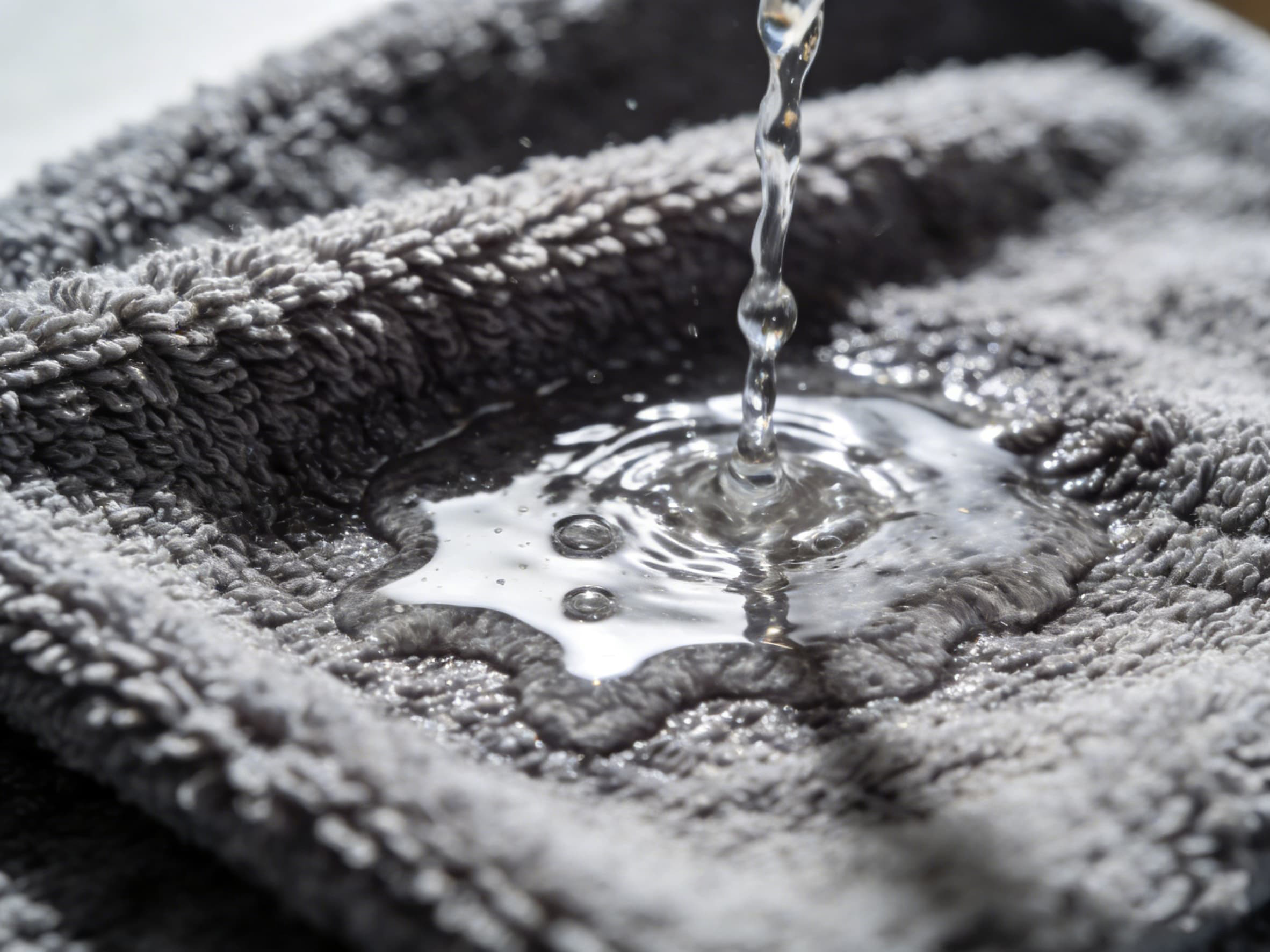
I’ve been manufacturing these products for years, and I’ve seen exactly what makes them work so well. It’s not magic, it’s just smart science and quality production. Many of my clients, from large European brands to Amazon sellers, ask me what makes our cloths superior. The answer is in the details of the fiber itself. Let’s break down the key reasons why this material has become the standard for professional cleaning2.
How do ultra-fine fibers achieve a deeper clean?
Do you find that normal cloths leave dirt behind in tiny cracks? This means the job is never truly finished. A microfiber cloth uses its tiny fibers to pull dirt out completely.
The secret is the fineness of the fibers. They are many times thinner than a human hair. This allows them to get into surface pores and textures3 where cotton cloths can’t reach, physically scraping up and trapping grime instead of just wiping over it.
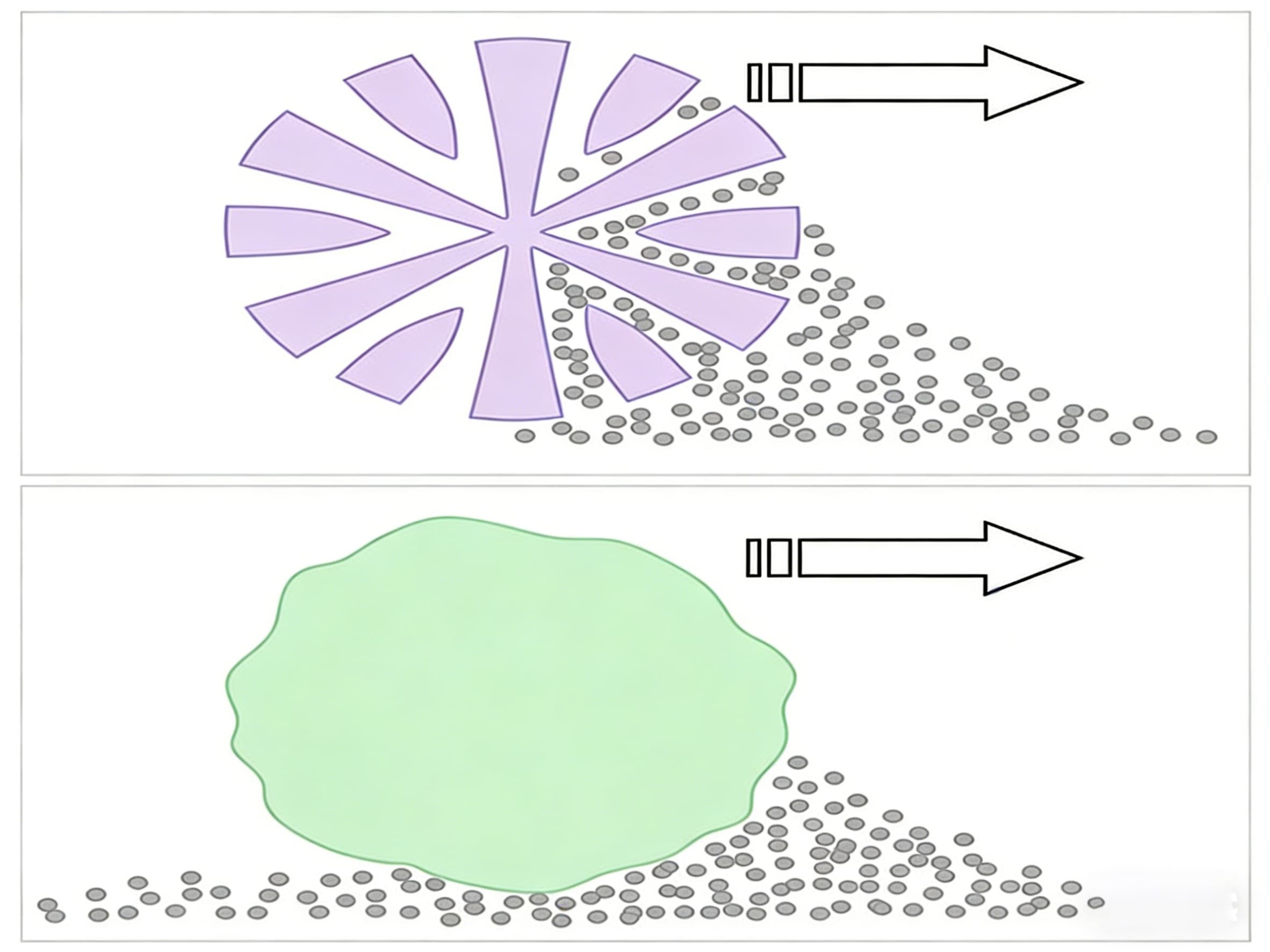
In my factory, we focus on producing fibers that are split during the manufacturing process. A normal, non-split fiber is just a very thin plastic thread. But when we split it, it creates a structure that looks like an asterisk (*). These split fibers4 have sharp edges that act like tiny scrapers. They get under the dirt particles and lift them off the surface. The open spaces in the fiber then trap the dirt. A regular cotton cloth has round fibers, so it mostly pushes dirt around. It can’t get into the tiny imperfections found on almost every surface, from glass to wood. This is why you see a streak-free shine after using a quality microfiber cloth. It has physically removed everything from the surface.
| Feature | Microfiber Cloth | Traditional Cotton Cloth |
|---|---|---|
| Fiber Shape | Split, asterisk-like (*) | Round and smooth |
| Cleaning Action | Lifts and traps dirt | Pushes and smears dirt |
| Surface Contact | High, reaches into pores | Low, glides over the top |
| Result | Deep, streak-free clean | Surface-level clean, often leaves residue |
What makes the polyester and polyamide blend5 so effective?
Are you looking for a cloth that works for both spills and dusting? Using the wrong cloth can be inefficient. Our microfiber blend is designed for all cleaning tasks, wet or dry.
The blend of polyester and polyamide gives the cloth its power. Polyester provides the scrubbing ability6, while polyamide is highly absorbent and quick-drying7. This combination creates a powerful capillary action8 that pulls in and locks away both dirt and liquid.
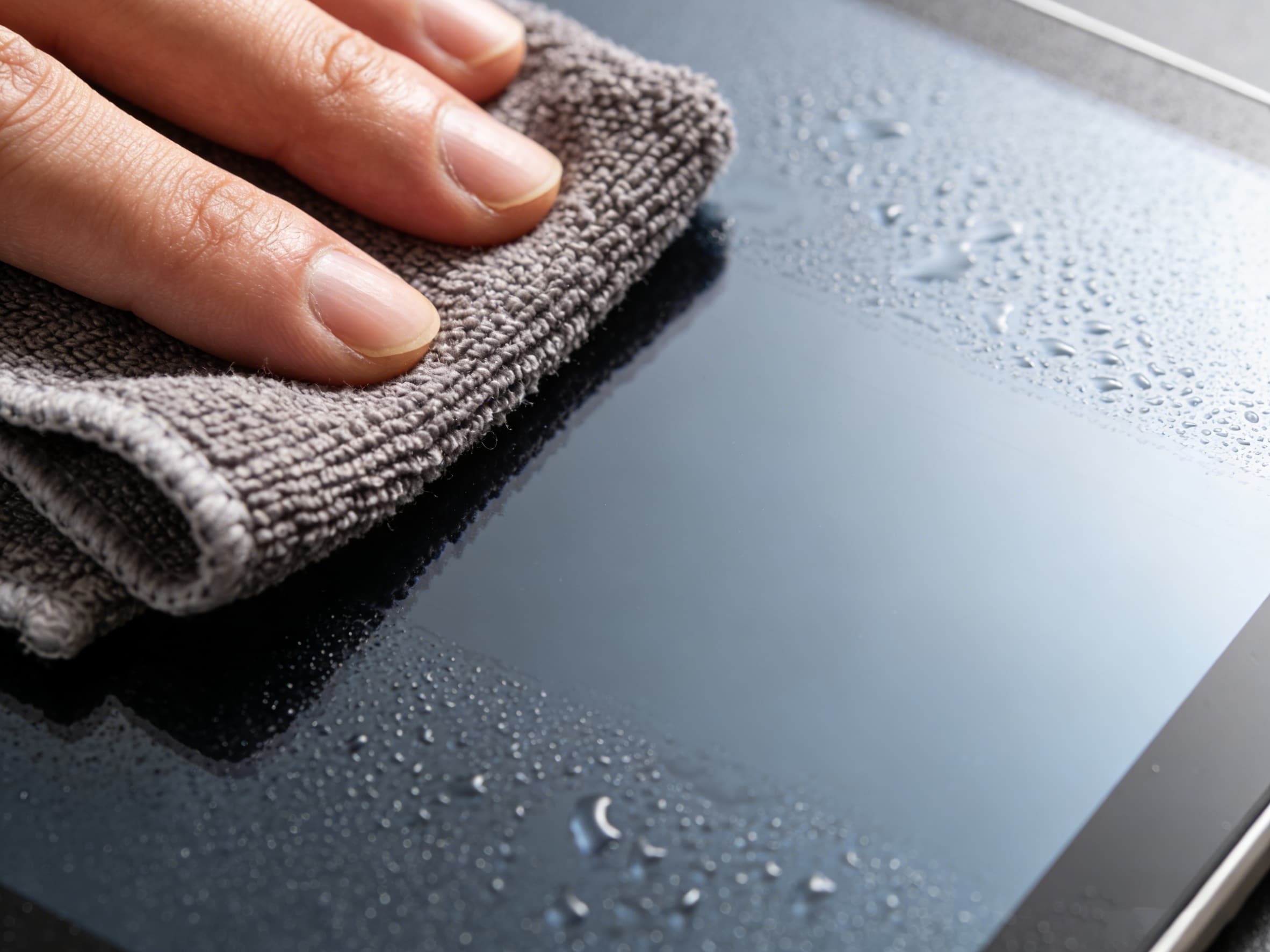
When we produce our fabrics, we typically use a blend like 80% polyester and 20% polyamide. This ratio is perfect for most cleaning applications. The polyester part of the fiber is great at scrubbing and attracting oily grime. The polyamide part loves water. When these two materials are combined in a single fiber, they create a network of tiny channels. This is what we call capillary action8. When you wipe a surface, these channels suck up water and dirt like a straw. More importantly, the cloth holds onto this grime instead of redepositing it back onto the surface you are cleaning. This is why you can clean a large area without rinsing the cloth constantly. Whether you are using it dry for dusting or wet for scrubbing, the cloth is actively pulling and trapping contaminants.
| Cleaning Method | How the Blend Works | Key Benefit |
|---|---|---|
| Dry Cleaning | Polyester fibers create a static charge9 that attracts dust particles. | Removes fine dust without chemicals. |
| Wet Cleaning | Polyamide fibers absorb large amounts of water, while polyester scrubs dirt. | Cleans spills and grime effectively. |
Is microfiber safe for all surfaces without chemicals?
Are you worried about using harsh chemicals on sensitive surfaces? Cleaners can damage electronics, car paint, or food prep areas. High-quality microfiber cleans perfectly with just water.
Yes, it is completely safe. Good microfiber cleans physically, not chemically. The fine fibers do the hard work, removing over 99% of bacteria with just water. Our cloths contain no added waxes or fillers, so they won’t scratch delicate surfaces like screens or glass.
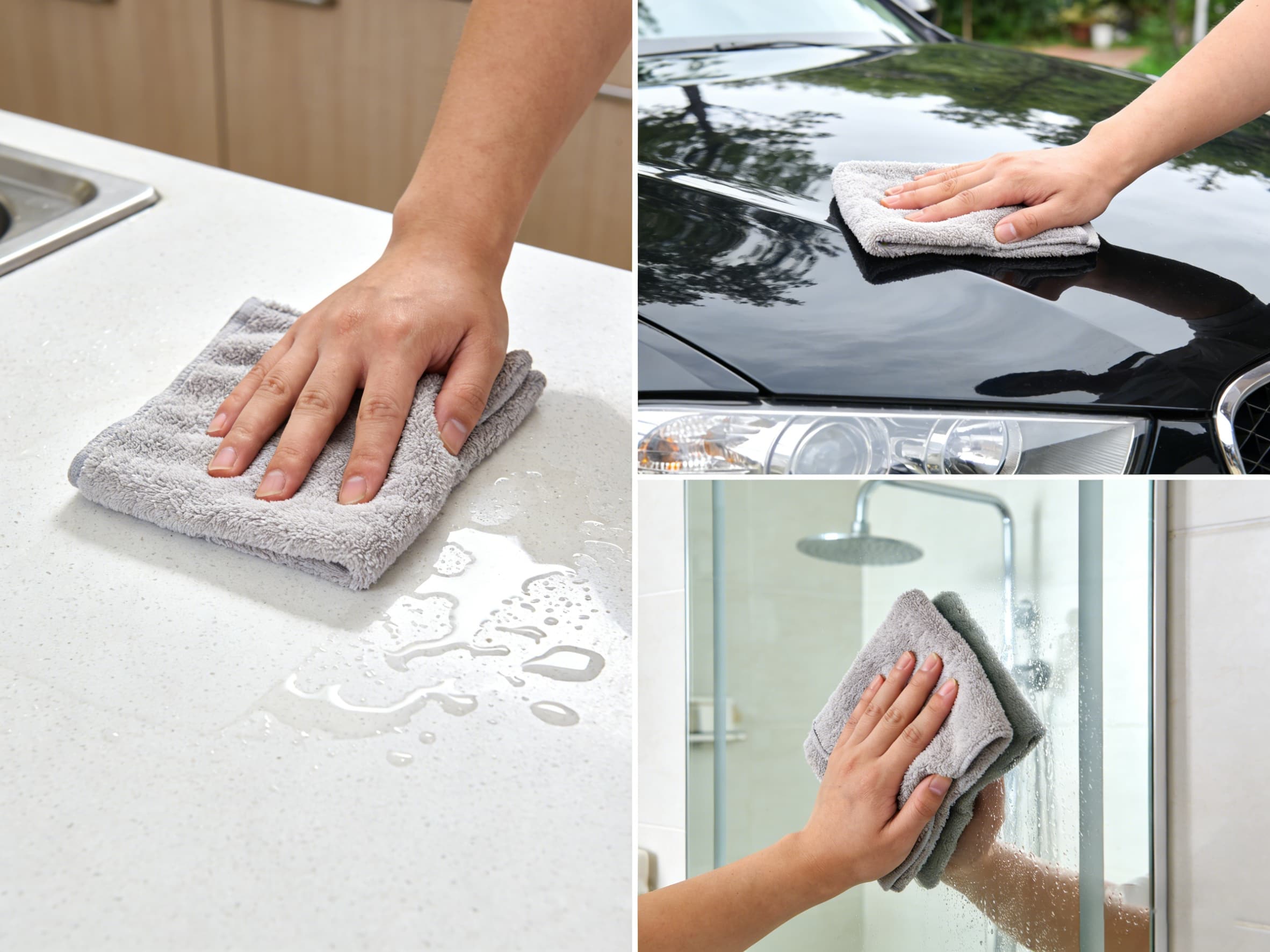
This is a major focus for my clients, especially those in Europe who need to meet strict regulations like REACH. They need a product that is safe and effective. The beauty of our microfiber is that its cleaning power comes from its physical structure. The split fibers are what remove the dirt. You don’t need to add a chemical spray to make it work. This is great for cleaning kitchen counters10 where food is prepared, or for wiping a baby’s high chair. It is also essential for car detailing11. Car paint is delicate and can be easily scratched. Our cloths gently lift contaminants without abrading the clear coat. We have done many tests to ensure our materials are pure. They don’t leave behind any residue, which is why they are perfect for cleaning windows, mirrors, and stainless steel without any streaks.
| Surface Type | Cleaning Challenge | Why Microfiber is Safe |
|---|---|---|
| Glass & Mirrors | Streaks and lint | Cleans with just water, leaves no residue. |
| Car Paint | Scratches and swirl marks | Ultra-soft fibers lift dirt without scratching. |
| Electronics | Damage from liquid cleaners | Can be used dry or lightly damp, no chemicals needed. |
| Kitchen Counters | Chemical contamination | Removes bacteria physically, safe for food areas. |
Why is high-quality microfiber so durable and cost-effective?
Do you find yourself constantly replacing cheap cleaning cloths? Low-quality cloths fall apart and lose their cleaning ability quickly. A well-made microfiber cloth is a long-term investment.
High-quality microfiber is extremely durable because of its strong synthetic fibers12 and dense weave. It can be washed hundreds of times without losing its cleaning power. This makes it much more cost-effective in the long run compared to disposable wipes or cheap cotton rags.
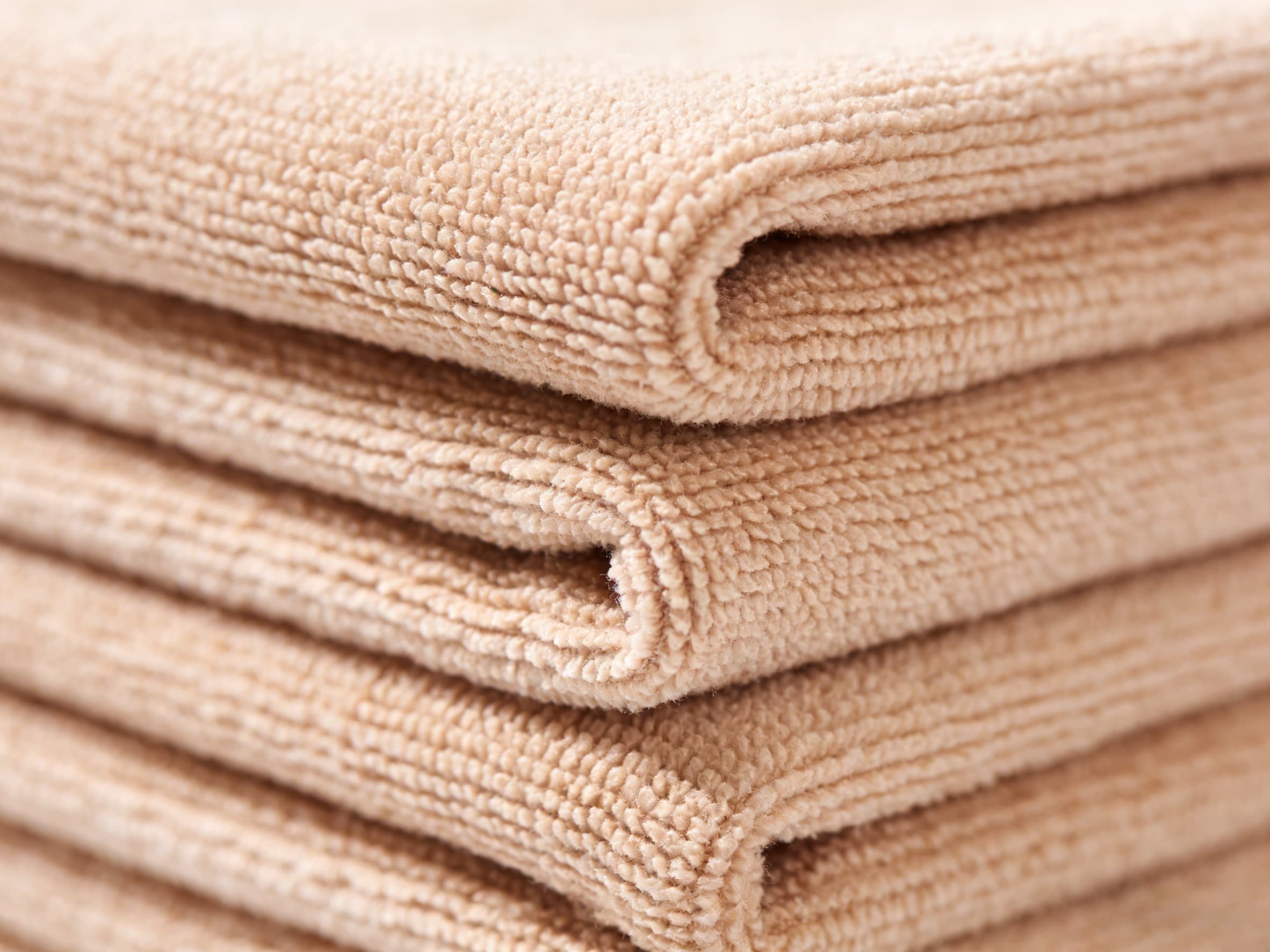
As a manufacturer, I can tell you that durability comes from the quality of the raw materials and the production process. A cloth’s density, measured in GSM (grams per square meter)13, is a good indicator of quality. A higher GSM cloth is thicker, more absorbent, and more durable. But it’s not just about weight. The way the fibers are split and woven is critical. We ensure our cloths have a strong construction so the fibers don’t break down or "un-split" in the wash. A good microfiber cloth can handle hundreds of washing cycles in hot water. Its capillary structure remains intact, so its cleaning ability doesn’t fade. For my B2B clients, this means they are offering their customers a product with excellent value. It saves money over time because it lasts so long. It is a reusable, sustainable solution.
| Wash Cycles | Cleaning Efficiency | Structural Integrity |
|---|---|---|
| 0-50 Washes | 100% | Fibers remain perfectly split and intact. |
| 50-200 Washes | ~98% | Minor wear, but cleaning power is strong. |
| 200+ Washes | ~95% | Still highly effective for most tasks. |
How does microfiber prevent static and dust buildup?
Does dust seem to reappear right after you finish cleaning? Many cloths create static electricity, which attracts a new layer of dust. Microfiber is designed to solve this problem.
Microfiber is naturally low in static. Unlike some synthetic cloths, it doesn’t create a strong electrical charge when you wipe a surface. This means it won’t attract a fresh layer of dust right after you’ve cleaned, keeping surfaces cleaner for longer.
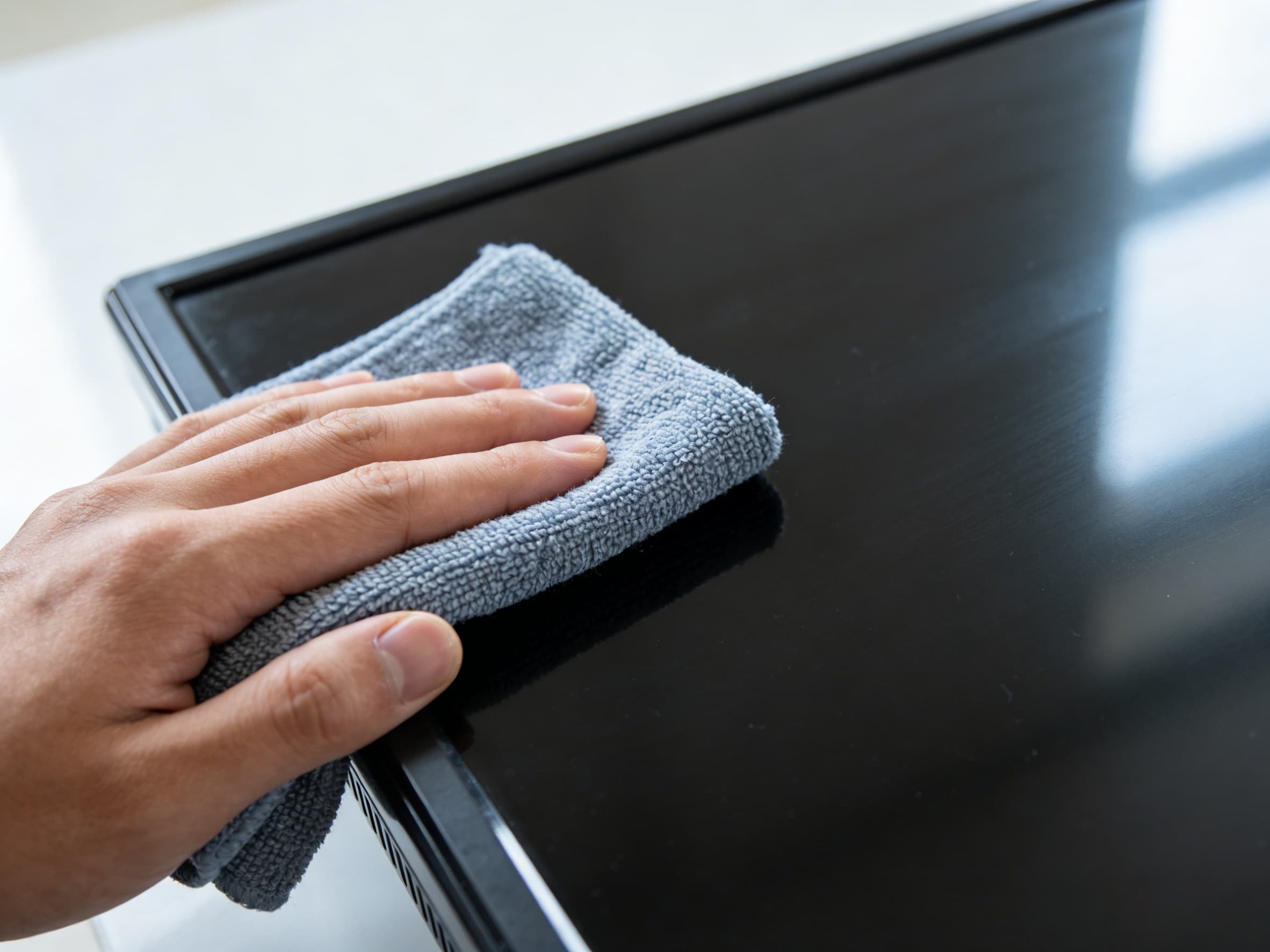
This is an often-overlooked feature, but it’s very important, especially for cleaning electronics14, car interiors, and other sensitive items. The polyamide in the fiber blend helps to dissipate any static charge that might be generated. When you wipe a TV screen or a car dashboard with a regular cloth, the friction can create static. This static charge then pulls floating dust particles from the air right back onto the surface you just cleaned. It’s very frustrating. With microfiber, this effect is greatly reduced. The cloth removes the existing dust, and it doesn’t create a static field that invites more. This makes it the ideal material for final wipe-downs in professional car detailing or for cleaning sensitive lab equipment. It provides a truly clean finish that lasts.
| Material | Static Generation | Dust Attraction After Cleaning |
|---|---|---|
| Microfiber | Low | Very Low |
| Polyester (100%) | High | High |
| Cotton | Moderate | Moderate |
| Paper Towel | Moderate | Moderate |
Conclusion
Microfiber’s power comes from its fine fibers, smart blend, and durable design. It delivers a safe, deep, and long-lasting clean that other materials simply cannot match.
-
Understanding the unique design of microfiber can help you choose the best cleaning products for effective dirt removal. ↩
-
Understand why microfiber is favored in professional cleaning for its deep and streak-free results. ↩
-
Learn how microfiber cloths reach into surface pores and textures for a deeper clean. ↩
-
Discover the science behind split fibers and their role in lifting and trapping dirt for a streak-free clean. ↩
-
Explore the benefits of this blend in microfiber cloths, offering scrubbing ability and high absorbency. ↩
-
Learn about polyester’s role in enhancing microfiber’s ability to scrub and attract grime. ↩
-
Discover how polyamide enhances microfiber’s ability to absorb water and dry quickly. ↩
-
Understand how capillary action in microfiber cloths helps in pulling and locking away dirt and liquid. ↩ ↩
-
Discover how microfiber’s low static charge helps keep surfaces dust-free for longer periods. ↩
-
Find out how microfiber effectively removes bacteria from kitchen counters without chemicals. ↩
-
Understand the benefits of using microfiber in car detailing, preventing scratches and swirl marks. ↩
-
Explore how synthetic fibers contribute to the durability and longevity of microfiber cloths. ↩
-
Find out how GSM is used to measure the quality and durability of microfiber cloths. ↩
-
Find out why microfiber is ideal for cleaning sensitive electronics without damaging them. ↩