
Are you tired of cleaning cloths that just smear dirt around or fall apart after a few uses? This frustration leads to wasted time and money on subpar products.
While calling it the "best in the world" is a bold claim, microfiber is absolutely one of the top cleaning cloths available. Its unique structure offers superior cleaning power1, durability, and versatility2 that few other materials can match.
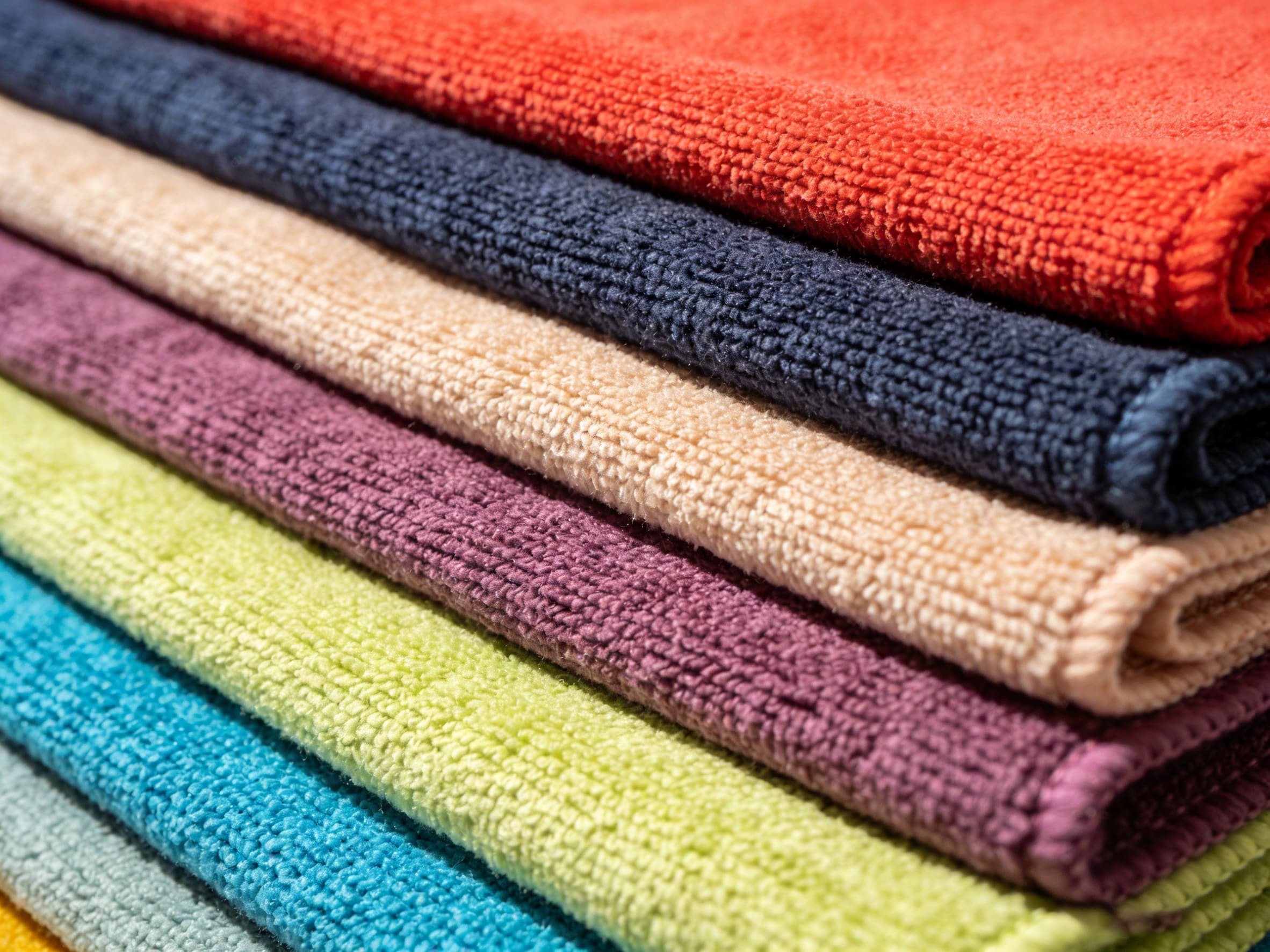
I’ve spent years in the cleaning products industry, and I’ve seen countless materials come and go. But microfiber has remained a dominant force for a reason. It truly changed the game. To understand why it’s so highly rated, we need to look closer at what makes it different from the cloths you might be used to. Let’s break down how it stacks up against the competition and where it shines the brightest.
How Does Microfiber Compare to Other Cleaning Cloths?
Do you feel like you’re constantly buying new sponges or paper towels? Cotton cloths leave lint, and other options just don’t seem to get the job done right.
Microfiber easily outperforms traditional cotton cloths in both absorbency and durability3. It is also more cost-effective4 than bamboo fiber and significantly more reusable and effective than disposable non-woven wipes.
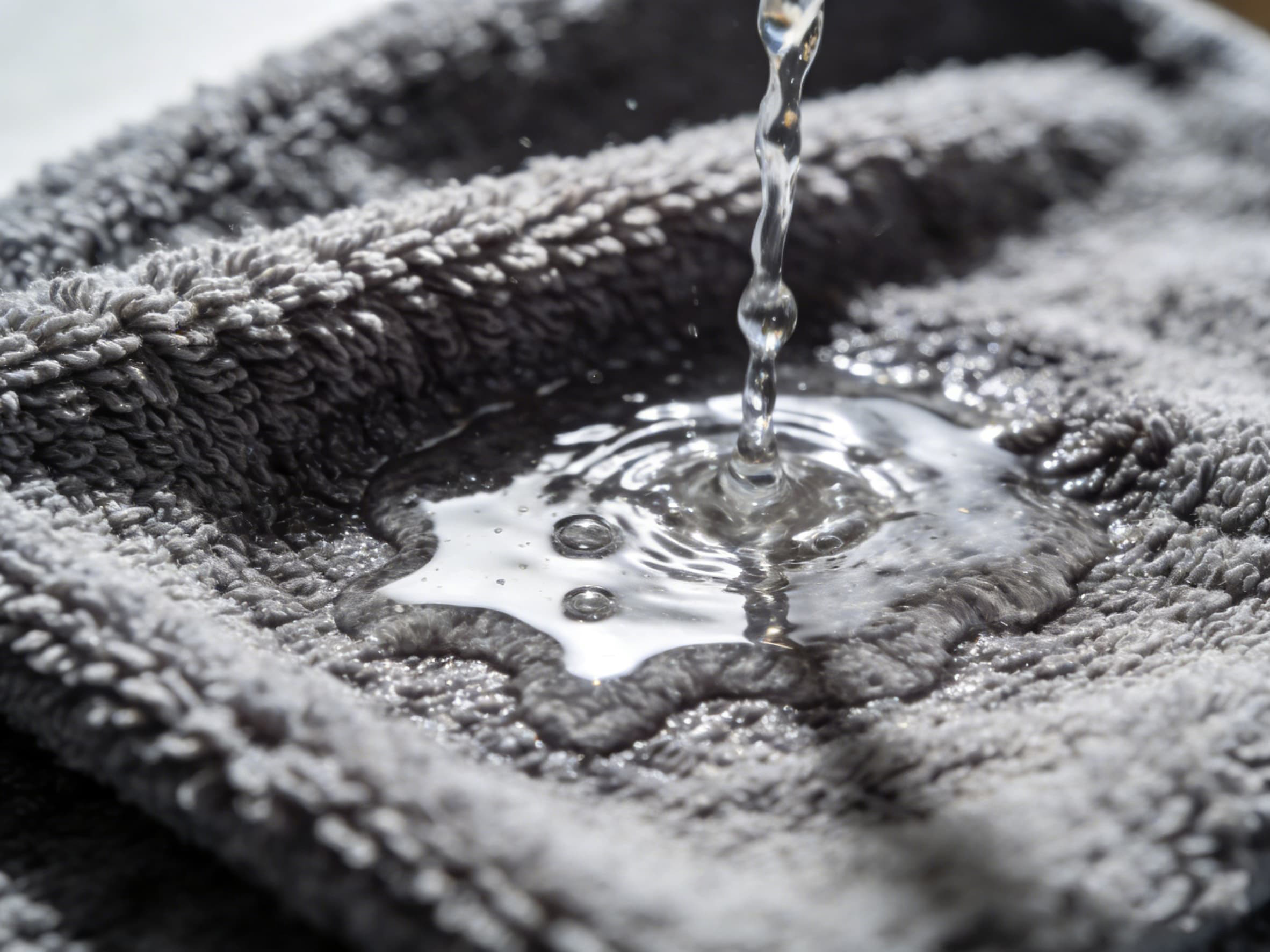
When I first started, cotton was the standard. But it had major flaws. Let’s look at a direct comparison to see why so many people, including myself, have made the switch to microfiber. The difference isn’t just small; it’s a complete upgrade in performance and value. With proper care5, a single microfiber cloth can be washed and reused over 300 times, making it an incredibly economical and eco-friendly choice6. The data speaks for itself.
A Head-to-Head Comparison
| Feature | Microfiber | Cotton | Bamboo | Non-Woven |
|---|---|---|---|---|
| Absorbency | Excellent | Poor | Good | Moderate |
| Durability | Excellent | Poor | Moderate | Poor |
| Lint-Free | Yes | No | Mostly | Yes |
| Cost | Moderate | Low | High | Very Low |
| Reusability | 300+ Washes | ~50 Washes | ~100 Washes | Single-Use |
Cotton tends to push water and dirt around rather than lifting it. Bamboo is a good natural alternative but often comes at a higher price point and isn’t quite as durable. Non-woven cloths are great for single-use applications but create waste and are not designed for deep cleaning or repeated use. Microfiber hits the sweet spot: it actively traps dirt and liquid, lasts for hundreds of washes, and provides the best long-term value.
Where Can You Use Microfiber Cloths for the Best Results?
Do you own a different type of cloth for your kitchen counters, your glass windows, and your car? Keeping track of so many specialized cleaners can be a huge hassle.
Microfiber’s greatest strength is its versatility. It is safe and highly effective on almost any surface, making it the perfect all-in-one tool for household cleaning7, automotive detailing, and even industrial tasks.
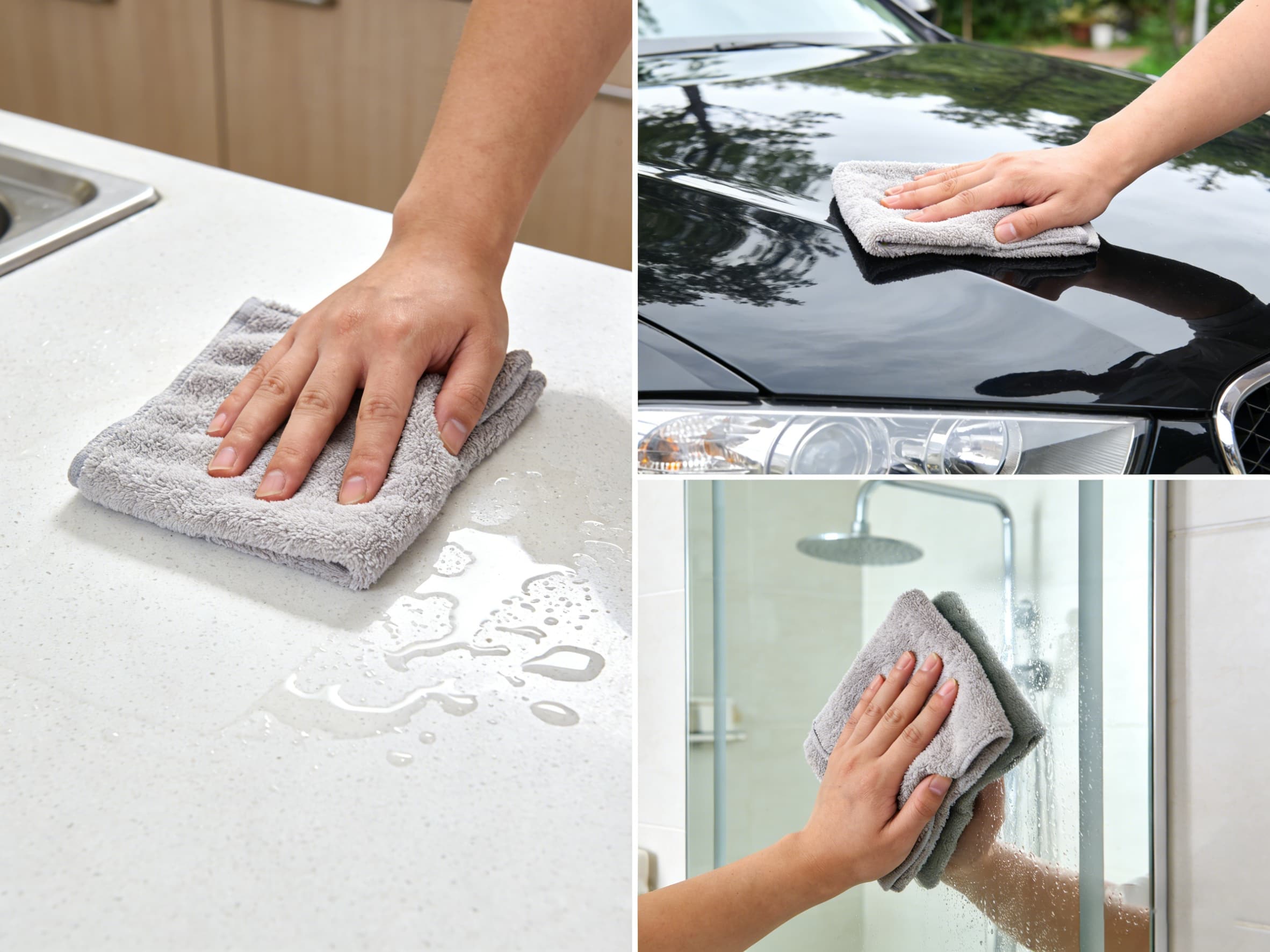
The beauty of microfiber is its wide range of applications. You can dramatically simplify your cleaning supply closet. I use it for everything, from wiping down my stainless steel appliances at home to drying my car after a wash. Its ability to clean effectively without scratching or leaving residue makes it an indispensable tool. It works just as well for heavy-duty jobs, like wiping grease off machinery, as it does for delicate tasks like dusting electronics. This adaptability is what makes it a true workhorse in any environment.
For Household Cleaning
In the home, microfiber is a champion. Use it dry for dusting; the static charge it generates acts like a magnet for dust particles. Use it damp with just water to wipe down kitchen counters, scrub bathrooms, and clean windows for a streak-free shine. It removes over 99% of bacteria from surfaces with just water, reducing the need for harsh chemical cleaners.
For Automotive Care
For car enthusiasts, microfiber is essential. The soft fibers are perfect for drying a car without causing swirl marks or scratches on the paint. Special "long-short pile" towels are designed for this: the long pile side absorbs huge amounts of water, while the short pile side is perfect for buffing away wax or polish. They are also great for cleaning interiors, from the dashboard to the leather seats.
For Industrial Use
In a professional or industrial setting, microfiber’s durability and ability to trap oil and grease are invaluable. It can clean machinery, wipe up spills, and polish metal parts without leaving behind lint. Its robust construction means it can withstand the heavy-duty use and frequent washing required in these environments.
So, What Exactly Makes Microfiber Work So Well?
You’ve probably heard the term "microfiber" a thousand times, but do you know what it actually is? It sounds like a complicated scientific material, but the concept is quite simple.
Microfiber is a fabric made from synthetic fibers8 that are incredibly thin—even finer than a strand of silk. These fibers are split, creating a massive surface area with millions of tiny hooks that grab and hold onto dirt, dust, and liquid.
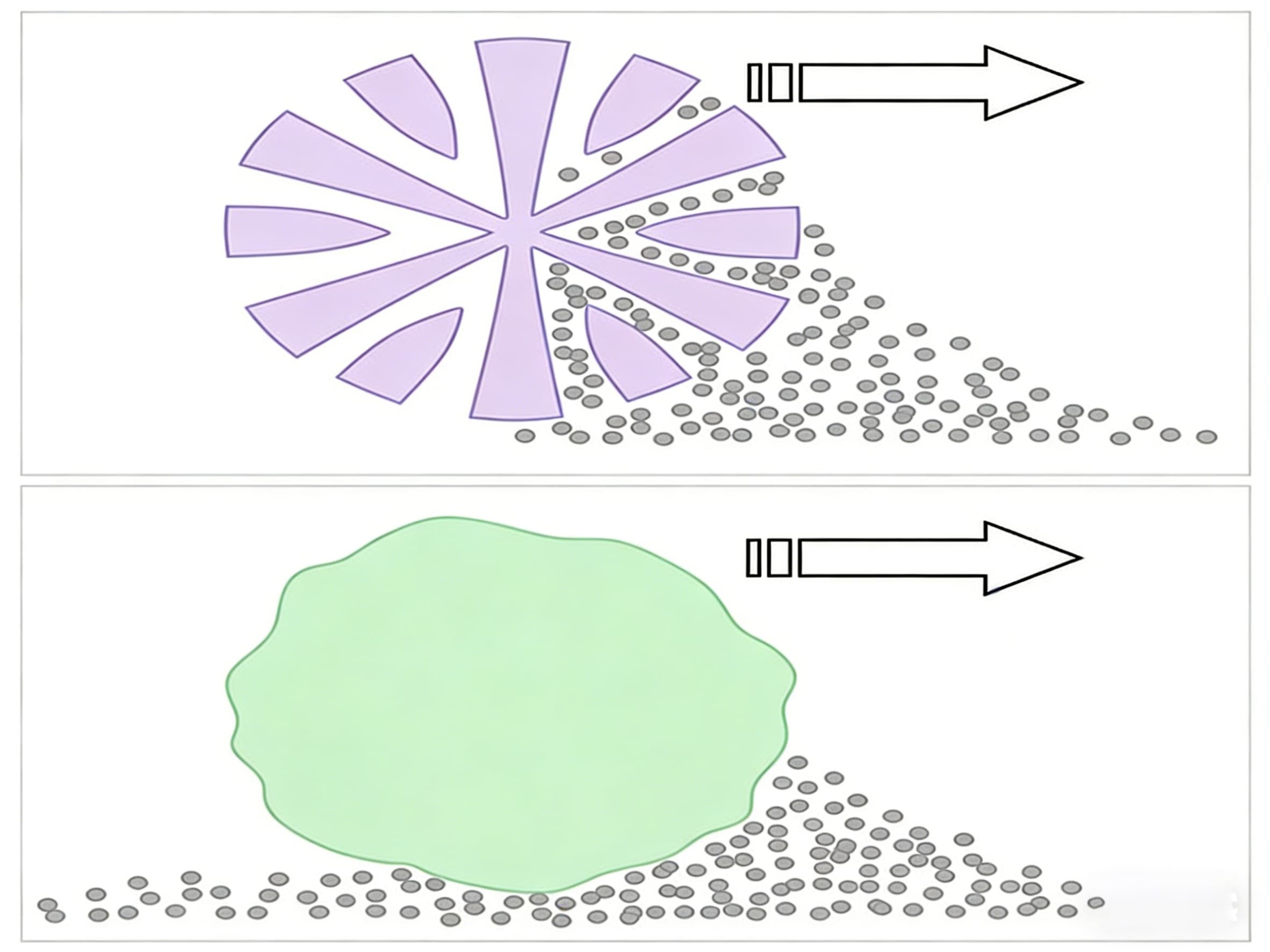
You don’t need a degree in chemistry to understand it. Just think of the name: "micro" and "fiber." It really is just a super, super fine thread. These threads are typically a blend of two plastics: polyester and polyamide9. Polyester provides the structure and scrubbing power, while polyamide adds density and absorbency. When these fibers are woven together and split, they create a net-like surface10. When you wipe a surface, this net doesn’t just push dirt around; it actively scoops it up and traps it within the fibers until you wash the cloth. This is why it cleans so much more effectively than a flat cotton cloth. It’s not magic, it’s just very clever engineering.
Can Microfiber Cloths Fit Into Any Cleaning Routine?
Do you find that a standard square cleaning cloth doesn’t always work for every task? Sometimes you need something for a delicate job, and other times you need a quick, disposable-like option.
Yes, microfiber is incredibly adaptable in its design. It can be manufactured with different edges for specific tasks or in convenient formats like tear-off rolls or pop-up boxes11 to fit any workflow.
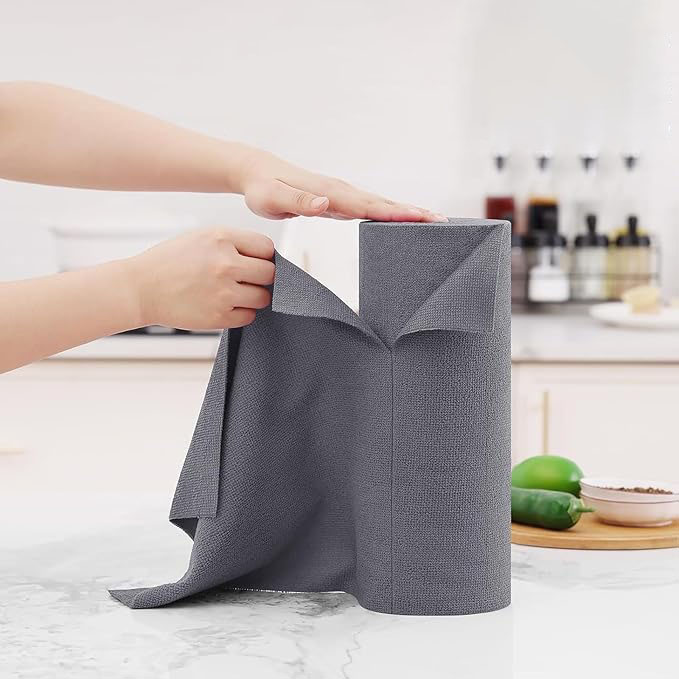
This is one of my favorite things about microfiber. The material itself is amazing, but the way it can be formatted makes it even better. It has fully integrated into modern life. I have to admit, I can’t live without it. In my own home and garage, you’ll find it in various forms. This level of customization means you don’t have to change your habits to fit the cloth; you can find a cloth that fits your habits.
Different Edges and Finishes
The finish of a cloth matters. For polishing a car or cleaning eyeglasses, you want an edgeless cloth. These are cut with ultrasonic waves to ensure there is no stitched edge that could cause fine scratches on delicate surfaces. For general, heavy-duty cleaning, a cloth with a durable overlocked edge is best, as it prevents fraying through hundreds of wash cycles.
Convenient Dispensing Options
Microfiber has even borrowed ideas from other household products. You can now get microfiber cloths on a perforated roll12, just like paper towels. You can tear one off for a messy job and then toss it in the laundry. There are also pop-up boxes, like a tissue box, that dispense one cloth at a time. This is perfect for workshops or kitchens where you need to grab a cloth quickly with one hand.
How Do I Use and Care For My Microfiber Cloths?
Did you just invest in a set of high-quality microfiber cloths and now you’re worried you might ruin them in the first wash? Proper care is key to their longevity.
Caring for microfiber is simple. Use it with warm water, with or without a small amount of mild detergent. To keep it effective, wash it separately from other laundry and never use fabric softener or bleach. Always air dry or tumble dry on low.
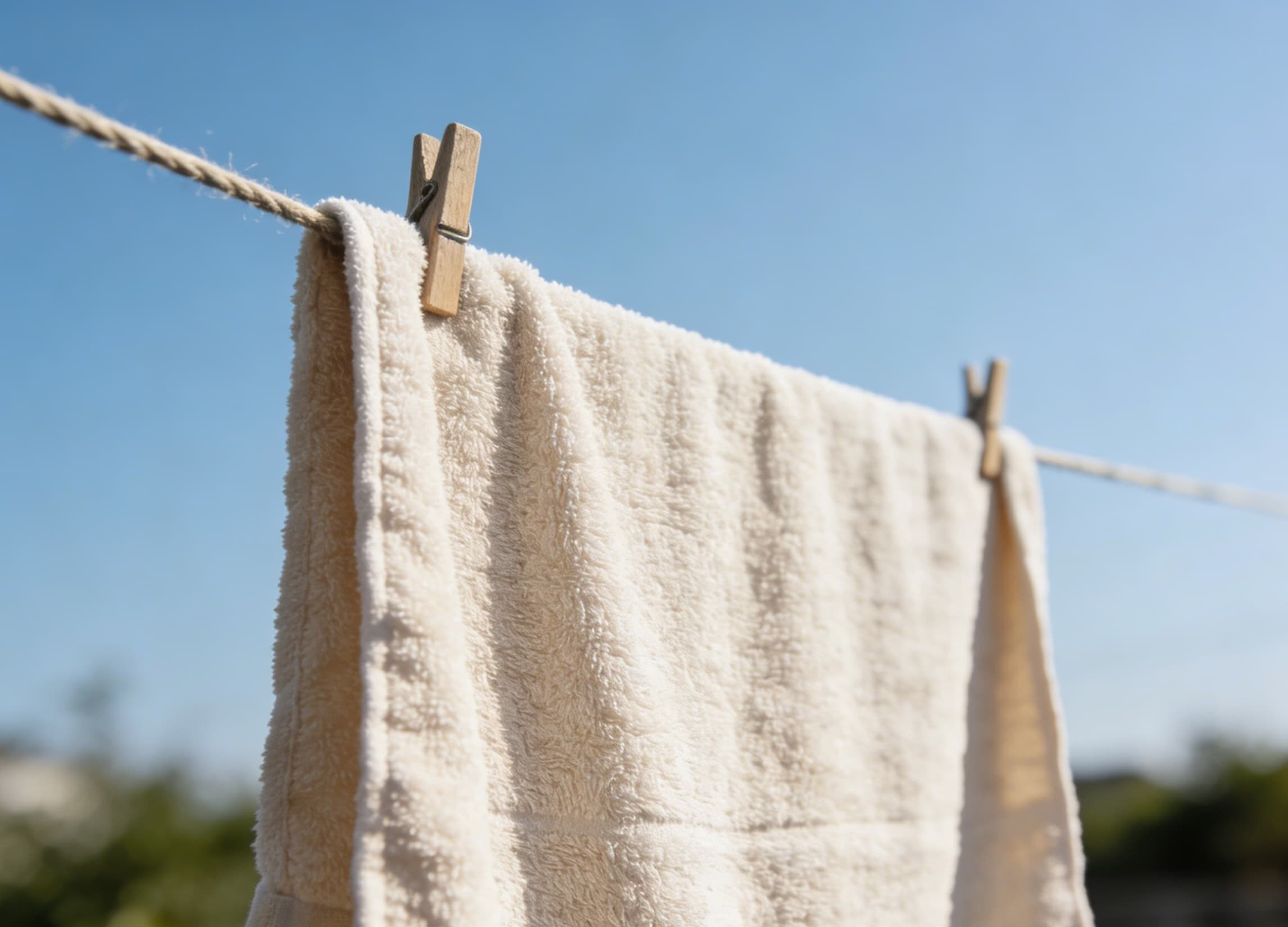
I’ve seen people make simple mistakes that ruin their cloths. The biggest enemies of microfiber are heat, fabric softener, and lint. Fabric softener clogs the tiny spaces between the fibers, making the cloth non-absorbent and useless for cleaning. High heat can literally melt the fine fibers, destroying their texture and cleaning ability. Following a few simple rules will ensure your cloths last for years and perform like new every time you use them.
Best Practices for Use
For most jobs, dampening the cloth with warm water is all you need. The fibers will do the work of lifting dirt and grime. If you’re tackling a greasy mess, you can add a tiny drop of a mild detergent, like dish soap, to the cloth.
Washing and Drying Instructions
- Wash Separately: Always wash microfiber with other microfiber items. If you wash them with cotton towels, the microfiber will pull the lint from the cotton, which is very difficult to remove.
- Use Warm Water: Wash with warm, not hot, water.
- Mild Detergent Only: Use a small amount of a liquid detergent. Avoid powdered detergents, as they may not dissolve fully and can clog the fibers.
- No Fabric Softener or Bleach: This is the most important rule. These chemicals will destroy the cloth’s effectiveness.
- Air Dry or Tumble Dry Low: The best method is to hang them to air dry. If you must use a dryer, use the lowest heat setting and do not use any dryer sheets.
Conclusion
Microfiber is a premier cleaning tool13. Its versatility, durability, and superior cleaning power make it a cost-effective and efficient choice for nearly any cleaning task you can imagine.
-
Learn about the unique structure of microfiber that gives it unmatched cleaning efficiency and effectiveness. ↩
-
See how microfiber’s adaptability allows it to be used on various surfaces and for multiple cleaning purposes. ↩
-
Understand the qualities that make microfiber both highly absorbent and durable, making it a long-lasting cleaning solution. ↩
-
Explore how microfiber’s reusability and efficiency make it a budget-friendly option for cleaning needs. ↩
-
Ensure your microfiber cloths last longer and perform better with proper care and maintenance tips. ↩
-
Find out how using microfiber can reduce waste and environmental impact compared to disposable cleaning products. ↩
-
Discover the many ways microfiber can simplify and enhance your home cleaning routine. ↩
-
Understand the composition of microfiber and how its synthetic fibers contribute to its cleaning abilities. ↩
-
Learn about the roles of polyester and polyamide in creating microfiber’s unique cleaning properties. ↩
-
Discover how microfiber’s structure allows it to trap dirt and liquids effectively. ↩
-
Explore the convenience of pop-up boxes for easy access to microfiber cloths in busy environments. ↩
-
See how perforated rolls of microfiber offer convenience and efficiency for quick cleaning tasks. ↩
-
Discover the features that make microfiber a top choice for effective and versatile cleaning. ↩