
You want to keep your microfiber towels1 clean, but you’re worried about ruining them. Using the wrong cleaner can destroy their effectiveness. The answer might be right next to your sink.
Yes, a small amount of simple dish soap is safe and effective for cleaning microfiber towels. It cuts through grease and grime without damaging the delicate fibers. Just make sure the dish soap does not contain any bleach2 or fabric softeners, as these additives will ruin the towel.
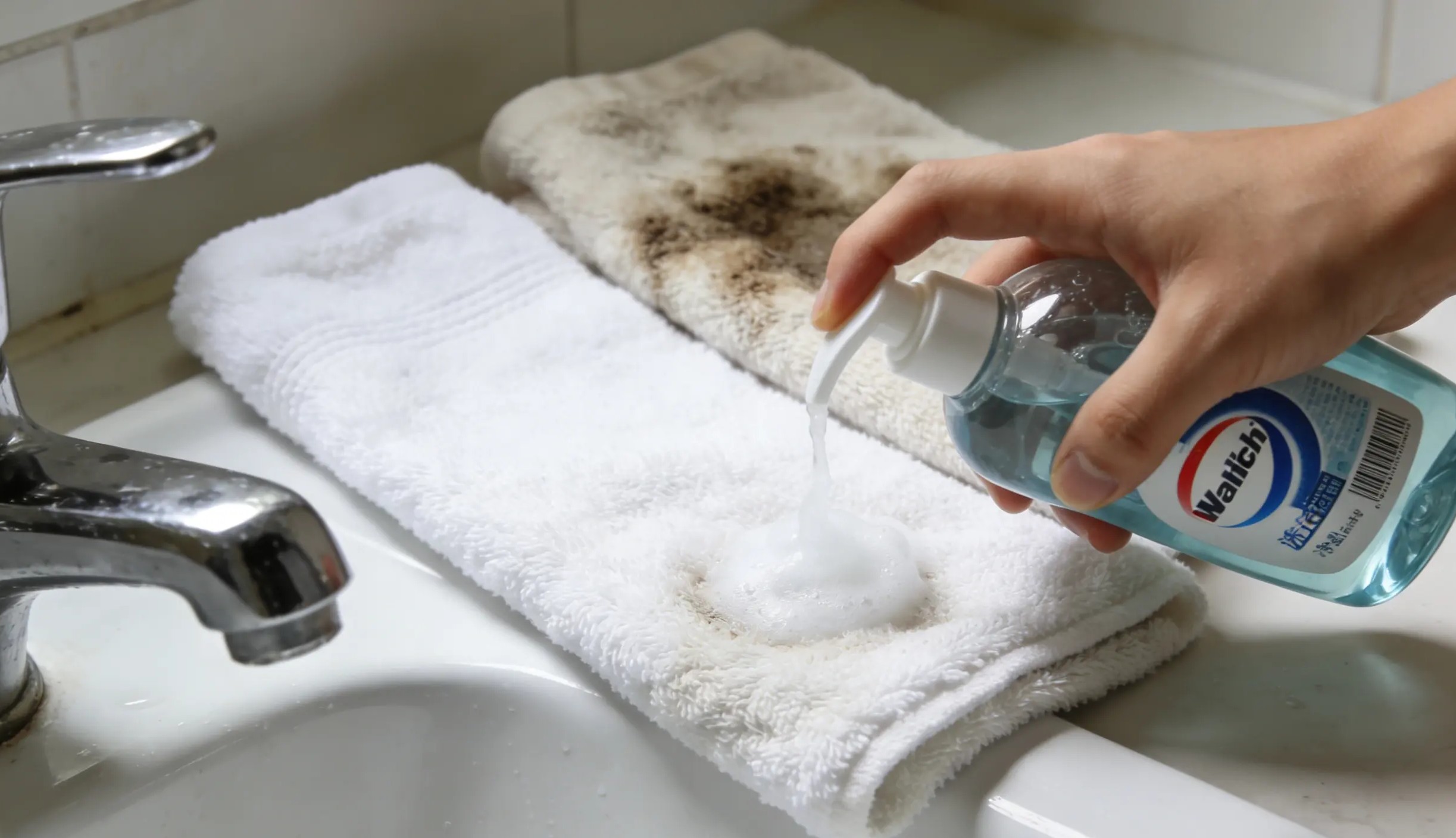
So, we know that a little dish soap3 is a good choice for cleaning. But this is just the start. The way you wash your towels and the type of dish soap you choose make a big difference. We need to look at why this simple method works so well. Let’s explore how to do it right and what you must avoid to protect your towels.
Why is a little dish soap effective for microfiber?
Your microfiber cloth gets greasy, and water alone won’t cut it. This is frustrating because a dirty cloth just spreads the mess around. A drop of dish soap can restore its cleaning power.
Dish soap is effective because its formula is designed to break down oil and grease. These molecules, called surfactants4, lift grime from the microfiber’s tiny split fibers. This allows water to easily rinse the dirt away, making the towel clean and absorbent again.
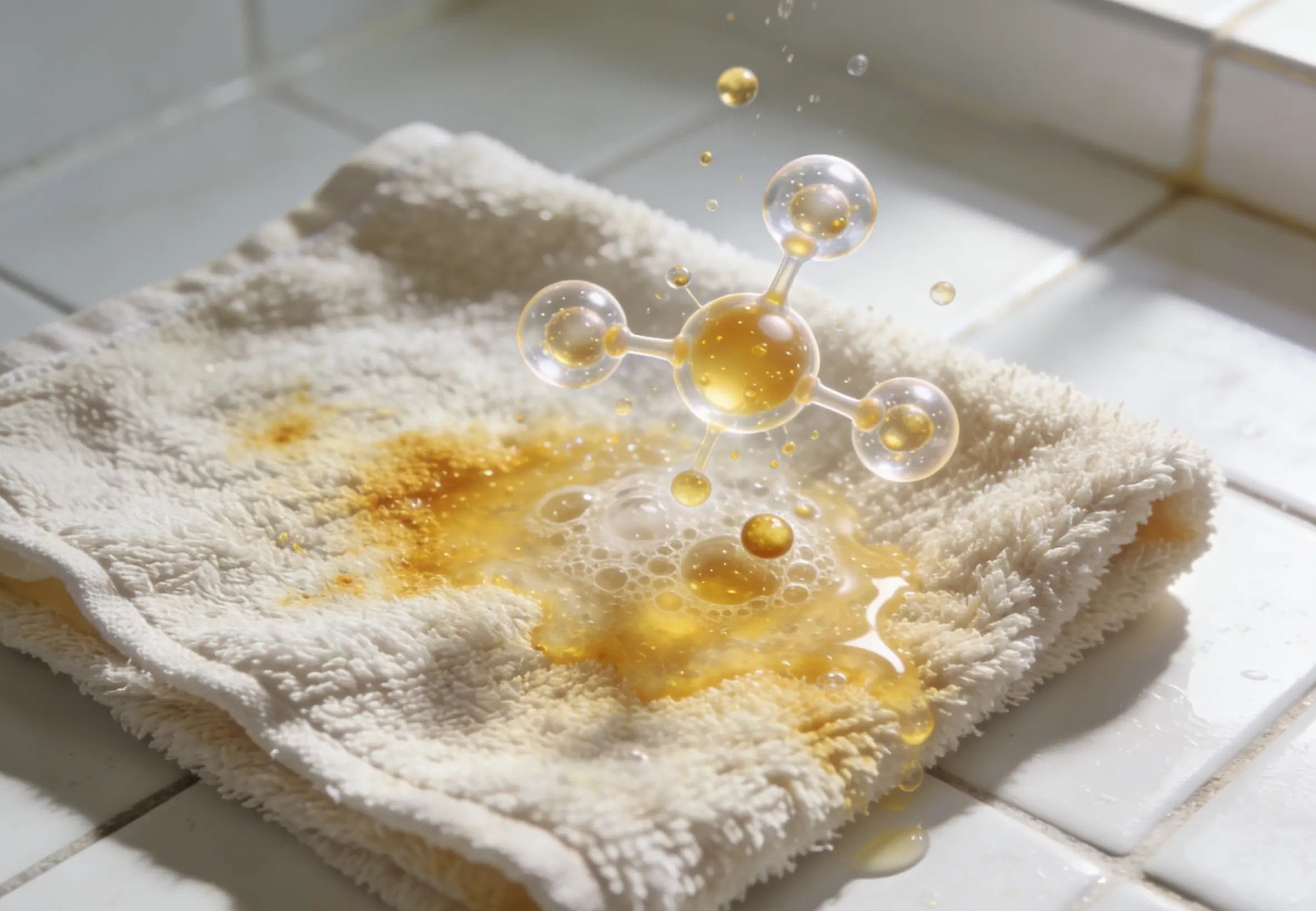
To really understand this, we need to look at how microfiber works. The fibers are incredibly small and are split during manufacturing. This process creates a huge amount of surface area and a positive electrical charge. This structure is perfect for trapping negatively charged dust and absorbing liquids. However, when the cloth gets covered in oil or grease, these tiny spaces get clogged. Water alone can’t remove the oil because they don’t mix. This is where dish soap comes in. Dish soap contains surfactants. One end of a surfactant molecule loves water (hydrophilic), and the other end loves oil (hydrophobic). The oil-loving end grabs onto the grease on your towel, and the water-loving end holds onto the rinse water, pulling the grease away from the fibers. This process deep cleans the towel and restores its ability to absorb and trap dirt.
| Cleaning Method | Dust & Dirt | Water-Based Spills | Oil & Grease |
|---|---|---|---|
| Water Only | Good | Excellent | Poor |
| Water + Dish Soap | Excellent | Excellent | Excellent |
Can using too much dish soap damage microfiber towels?
You might think more dish soap means a better clean. But after washing, your towel feels stiff and leaves streaks everywhere. This is a common problem caused by using too much dish soap.
Yes, using too much dish soap can harm microfiber. The excess dish soap is very hard to rinse out completely. The leftover dish soap residue clogs the microscopic gaps between the fibers. This reduces the towel’s absorbency5 and cleaning ability, making it almost useless.
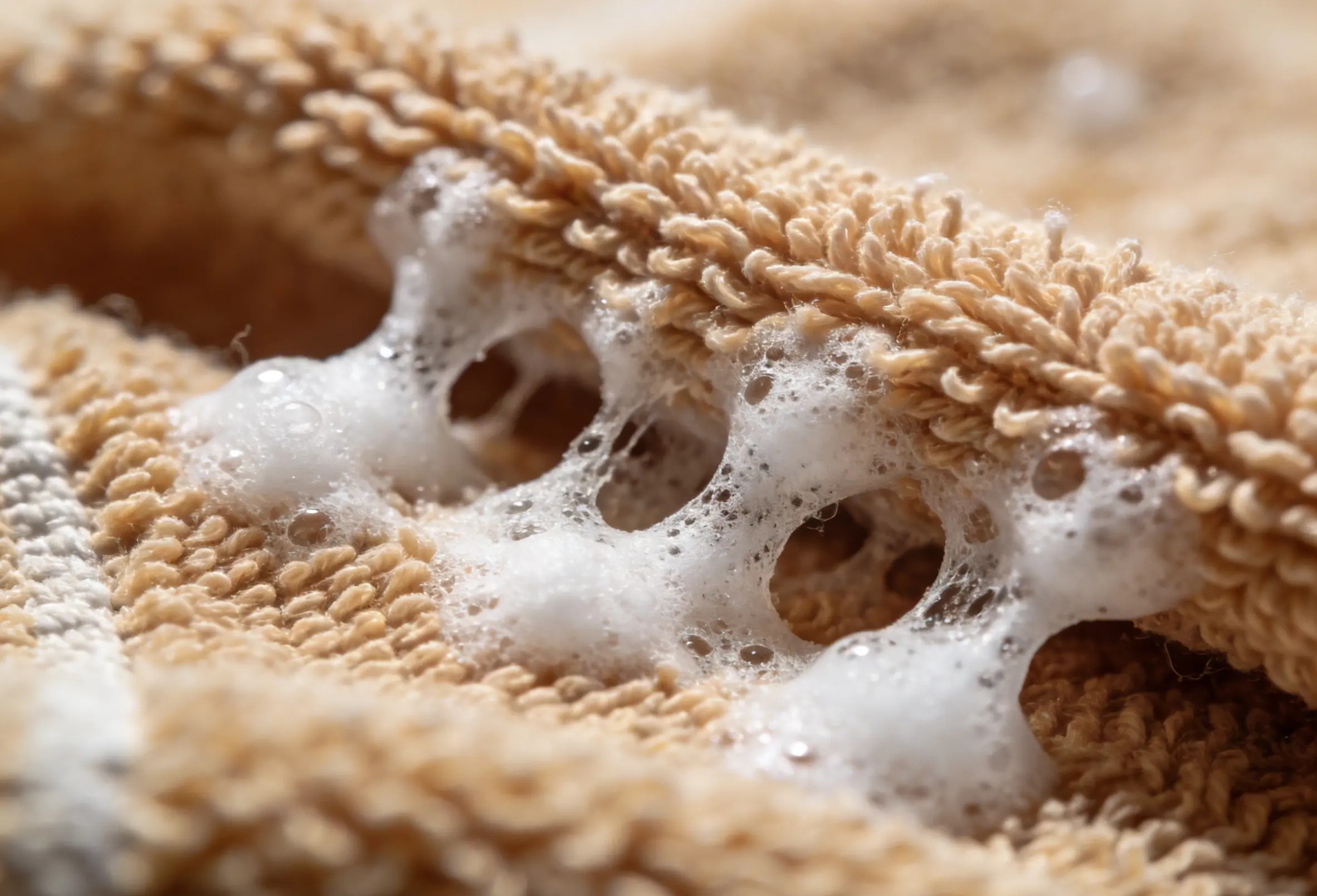
The magic of microfiber is in its structure. The millions of tiny fibers create an enormous surface area that grabs onto everything. When you use too much dish soap, it doesn’t all wash away. The remaining dish soap dries and hardens inside the fabric. This dish soap residue essentially glues the fibers together, filling in the gaps that are supposed to trap dirt and absorb water. A towel clogged with dish soap residue will not absorb spills. Instead, it will just push water around. It also loses its static charge, so it won’t pick up dust effectively. You are left with a towel that feels stiff and leaves streaks on surfaces. To fix this, you have to rinse the towel repeatedly in warm water6 until all the dish soap is gone. It is much better to just use a tiny amount of dish soap from the start. For handwashing a single cloth, a few drops is enough.
| Symptom of a Damaged Towel | The Cause | How to Fix It |
|---|---|---|
| Feels Stiff or Hard | Dish Soap residue is gluing fibers together. | Rinse thoroughly in warm water. |
| Doesn’t Absorb Water | Gaps between fibers are clogged. | Use less dish soap in the next wash. |
| Leaves Streaks on Surfaces | The towel is pushing around residue. | Avoid fabric softeners7 completely. |
What ingredients in dish soap should you always avoid?
You need to wash your towels, so you grab the first dish soap you see. But some dish soaps have chemicals that can permanently destroy your microfiber. Knowing which ingredients to avoid is simple and will save your towels.
Always avoid dish soaps or detergents that contain bleach2 or fabric softeners. Bleach chemically breaks down and weakens the synthetic fibers. Fabric softeners coat the fibers with a waxy film, which completely destroys their ability to absorb water and attract dust.
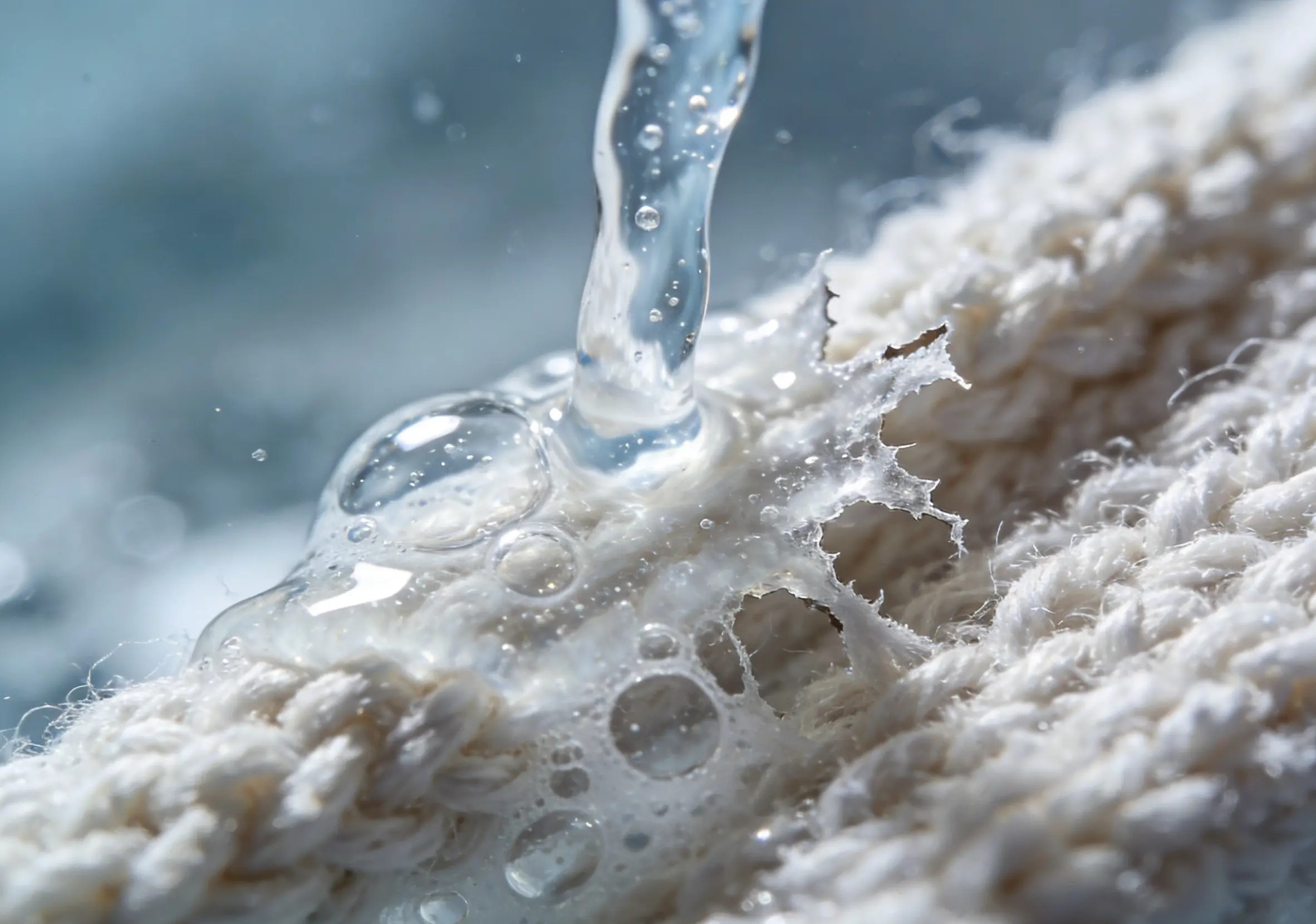
Let’s break down why these ingredients are so bad for microfiber. Bleach is a very strong chemical. It can make cotton whites brighter, but it is too harsh for the synthetic materials in microfiber, which are usually a blend of polyester and polyamide. Bleach will cause these fibers to become brittle and break down over time, ruining the towel. Fabric softener is just as bad, but for a different reason. Its job is to leave a soft, waxy coating on fabrics. For microfiber, this coating is a disaster. It clogs every tiny space between the fibers, making it impossible for the towel to absorb liquids or pick up dust with its static charge. It completely cancels out the properties that make microfiber effective. You should also be careful with high heat. Washing microfiber in water hotter than 60°C (140°F) can cause the synthetic fibers8 to melt, which also ruins the towel.
| Category | Safe for Microfiber | Unsafe for Microfiber |
|---|---|---|
| Cleaning Agent | Simple dish soap, mild detergent | Soaps with bleach |
| Additives | None needed | Fabric softeners |
| Washing Conditions | Warm or cold water (under 60°C) | Hot water (over 60°C) |
Does the quality of the microfiber towel matter?
You bought some cheap microfiber towels, and the color bled everywhere in the wash. This is messy and makes you wonder what chemicals are in the dyes. This is a classic sign of a low-quality product.
Yes, quality matters immensely. High-quality towels from a professional manufacturer use colorfast dyes9 that are locked into the fibers. They will not bleed during washing. Cheaper towels often use low-grade, unstable dyes that wash out, staining other items and creating unsafe wastewater.
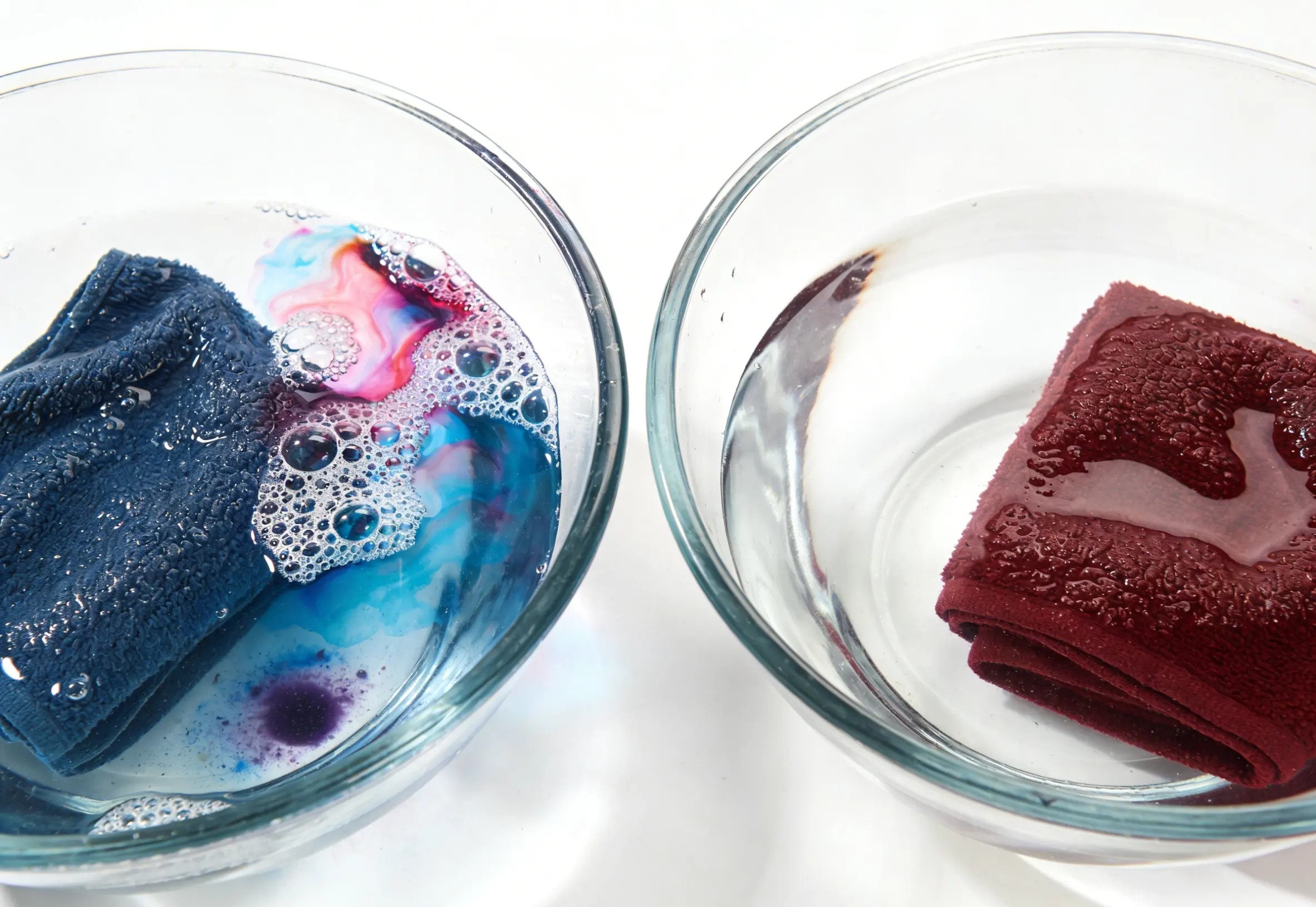
As a manufacturer, I see the difference every day. The quality of a microfiber towel starts with the raw materials and the production process. We ensure our products have a high density and a proper blend of polyester and polyamide. Most importantly, we use high-quality dyes and a process that ensures colorfastness. This means the color stays in the towel, not in your wash water. For our clients, who are often brand owners or large distributors, this is critical. Selling a product that bleeds color leads to angry customers and damages a brand’s reputation. Low-quality towels not only perform poorly but can also fail to meet safety standards like OEKO-TEX or REACH. This is a huge risk for any business importing products. Choosing a reliable supplier who controls the entire manufacturing chain is the best way to ensure you receive a stable, safe, and effective product that your own customers will trust.
| Feature | High-Quality Microfiber | Low-Quality Microfiber |
|---|---|---|
| Colorfastness | Dyes are stable, no bleeding | Dyes bleed easily in wash |
| Durability | Strong weave, lasts hundreds of washes | Thins out and falls apart quickly |
| Absorbency | High, due to dense, split fibers | Low, feels thin and ineffective |
| Supplier | Reliable, certified manufacturer | Unknown origin, no quality control |
Conclusion
Using a small amount of simple, bleach-free dish soap is a great way to clean your high-quality microfiber10 towels. This keeps them working well for a long time.
-
Explore this resource to learn how to extend the life and effectiveness of your microfiber towels. ↩
-
Learn about the harmful effects of bleach on microfiber and why it’s best to avoid it. ↩ ↩
-
Discover why dish soap is a safe and effective choice for cleaning microfiber cloths. ↩
-
Understanding surfactants can enhance your cleaning knowledge and improve your cleaning methods. ↩
-
Learn how absorbency impacts the cleaning power of microfiber towels. ↩
-
Find out the best water temperature for washing microfiber towels without damaging them. ↩
-
Find out why fabric softeners can ruin the effectiveness of microfiber towels. ↩
-
Gain insights into synthetic fibers and their role in the effectiveness of microfiber towels. ↩
-
Explore the significance of colorfast dyes in maintaining the quality of microfiber towels. ↩
-
Learn the key features that distinguish high-quality microfiber towels from low-quality ones. ↩