
Are you tired of dishcloths that get smelly and don’t clean well? It feels like you’re constantly replacing them, which wastes money and leaves your kitchen feeling unclean.
The best dishcloth is highly absorbent, quick-drying, and removes grease effectively without leaving lint behind. Microfiber dishcloths are a top choice for modern kitchens1 because their structure provides superior cleaning performance and durability, making them a smart option for wholesale and brand customization.
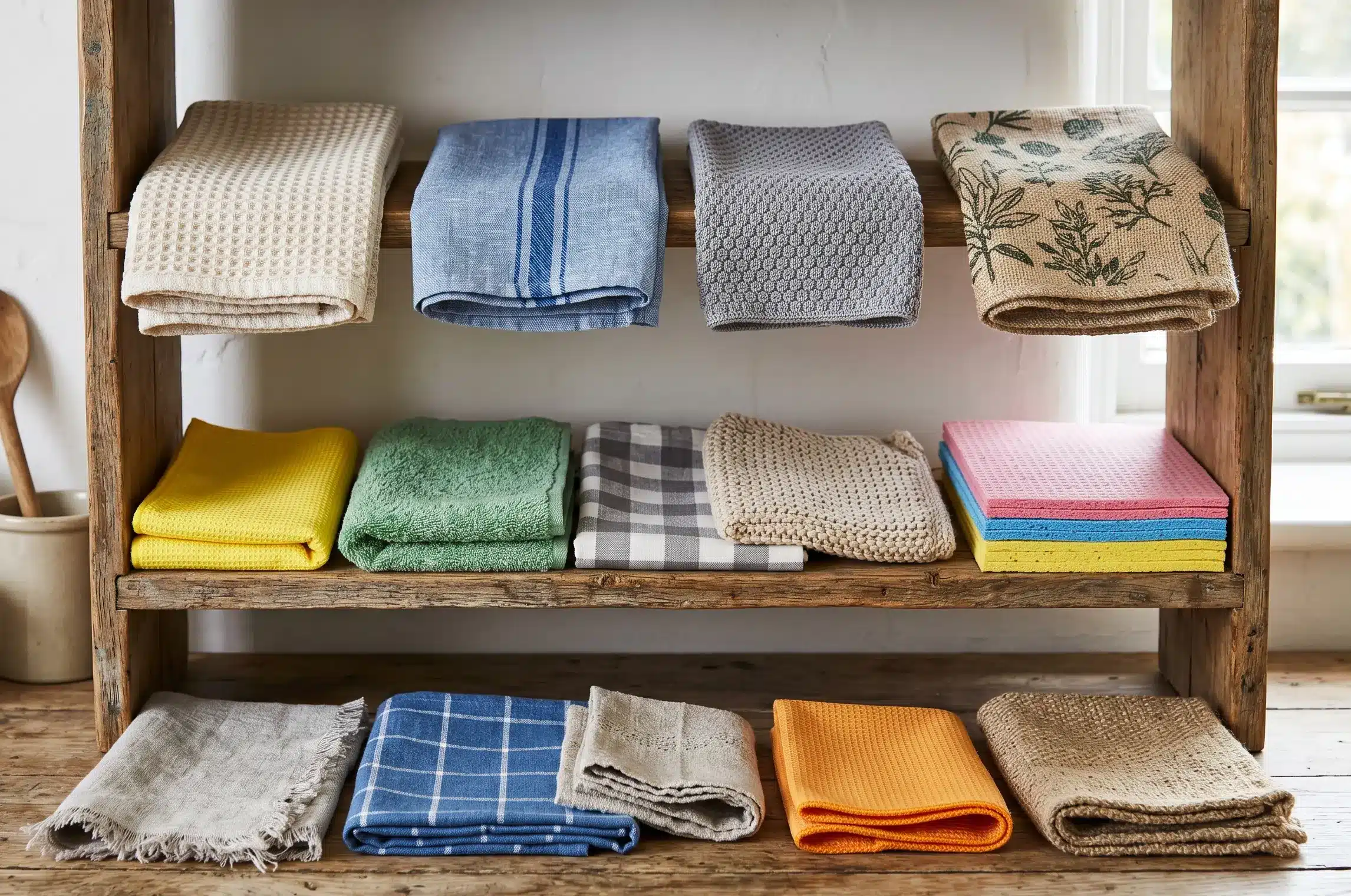
I’ve been in the business of manufacturing cleaning textiles for years. I’ve seen countless materials and designs. While microfiber is an excellent all-around choice, the "best" dishcloth really depends on the specific cleaning job you need to do. Different materials and weaves are designed for different tasks. Let’s break down some of the most effective options available today, so you can make the best choice for your customers or your brand.
Why are silver wire dishcloths so effective for tough grime?
Do you struggle with food that’s burnt onto your pots and pans? A regular cloth just smears the mess around, and using a harsh metal scrubber can leave permanent scratches.
Silver wire dishcloths have abrasive metallic threads woven directly into the fabric2. These threads physically scrape away tough, baked-on food residue without being harsh enough to damage most modern cookware surfaces. This provides powerful scrubbing action with minimal effort.
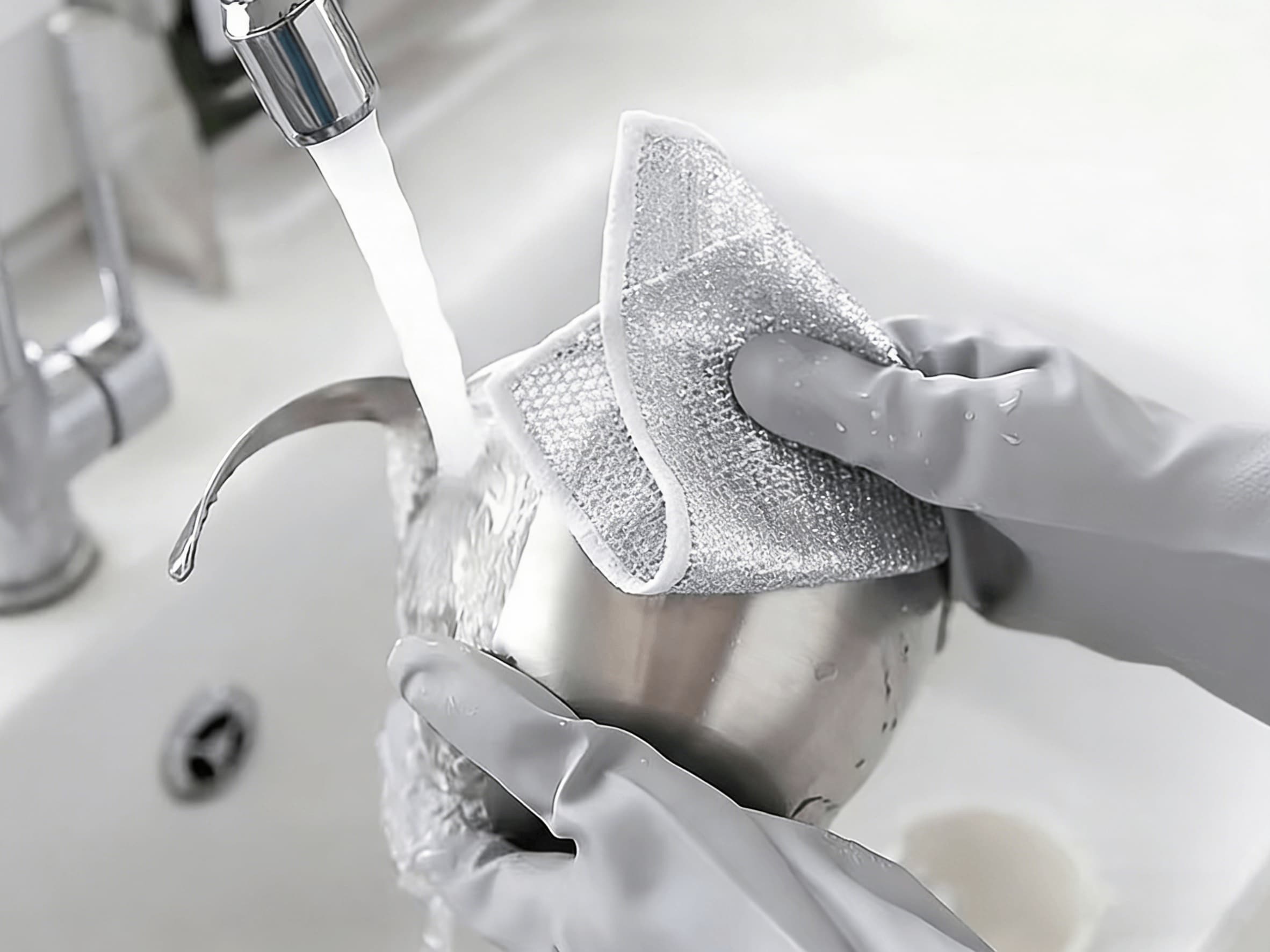
As a manufacturer, I find these cloths fascinating. The magic is in the combination of materials. The base cloth is usually a durable polyester, which provides the structure and some absorbency. Then, we weave in fine metallic threads, which we often call "silver wire" due to the color, though they are typically a specialized, non-rusting alloy. This design gives you the scrubbing power of a metal scourer but in a flexible, cloth-like format. For a business buyer, this product offers a clear benefit to the end-user. During production, we can customize the density of the metallic threads. More threads mean more scrubbing power. We can also create hybrid versions, like a cloth with silver wire on one side and soft microfiber on the other. This creates a 2-in-1 tool that is very appealing on the retail shelf.
| Feature | Silver Wire Side | Standard Microfiber Side |
|---|---|---|
| Primary Use | Scrubbing burnt food, grease | Wiping, drying, general cleaning |
| Abrasiveness | Medium to High | Very Low |
| Best For | Pots, pans, ovens | Countertops, dishes, glass |
| Customization | Thread density, size | GSM, color, size |
Are dual-sided cleaning cloths the most versatile option?
Your kitchen counter isn’t a single-problem surface. You have liquid spills that need absorbing, sticky jam spots that need scrubbing, and crumbs that need wiping away. Using multiple tools is inefficient.
Dual-sided cloths are incredibly versatile because they combine two different surfaces into one tool. Typically, one side is soft and absorbent for wiping, while the other is more abrasive for scrubbing. This makes them extremely efficient for handling various kitchen tasks with a single cloth.
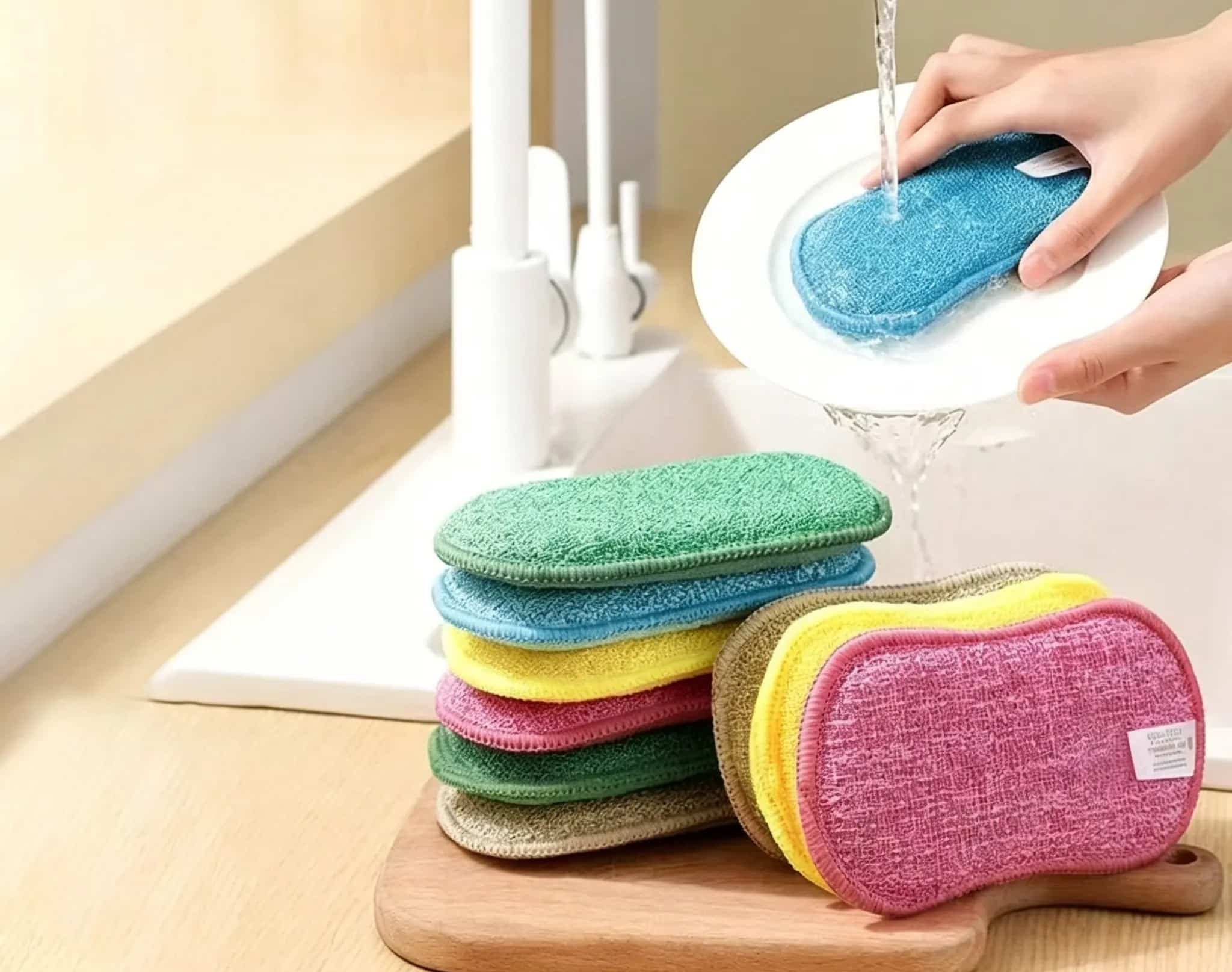
In my factory, we produce many types of dual-sided cloths. It’s a popular category for brands because it offers a "two-for-one" value proposition. The most common combination is a soft microfiber side laminated to a more abrasive scouring material. Another popular design is a foam sponge core wrapped in two different fabrics. For example, we can make a cloth with a silver wire side for scrubbing and a plush microfiber side for polishing. This allows a customer to tackle a greasy pan and then wipe down the countertop with the same tool. From a production standpoint, the key is the lamination process. We use a strong, water-resistant adhesive to ensure the two sides don’t separate after many washes. For brands looking to develop a product line, offering a versatile, multi-purpose cloth like this is a smart move. It solves multiple problems for the consumer and stands out from simpler, single-function cloths.
| Side Type | Material Example | Best For |
|---|---|---|
| Soft Side | Terry Microfiber | Wiping spills, drying dishes, dusting |
| Scrubby Side | Polypropylene Scourer | Removing stuck-on food, cleaning sinks |
| Polishing Side | Fishscale Microfiber | Polishing glass, stainless steel |
| Heavy Scrub Side | Silver Wire Fabric | Cleaning grills, oven racks, burnt pans |
Does the pattern on a microfiber dishcloth actually matter?
When you look at microfiber cloths, you see many different types. Some are fluffy and plain, while others have a distinct waffle or fishscale pattern. Is this just for looks, or is there a real functional difference?
Yes, the pattern, or weave, of a microfiber cloth significantly impacts its cleaning performance3. Textured weaves like waffle or fishscale create ridges and pockets that increase the cloth’s total surface area. This improves scrubbing ability and allows it to trap more dirt, grime, and liquid.
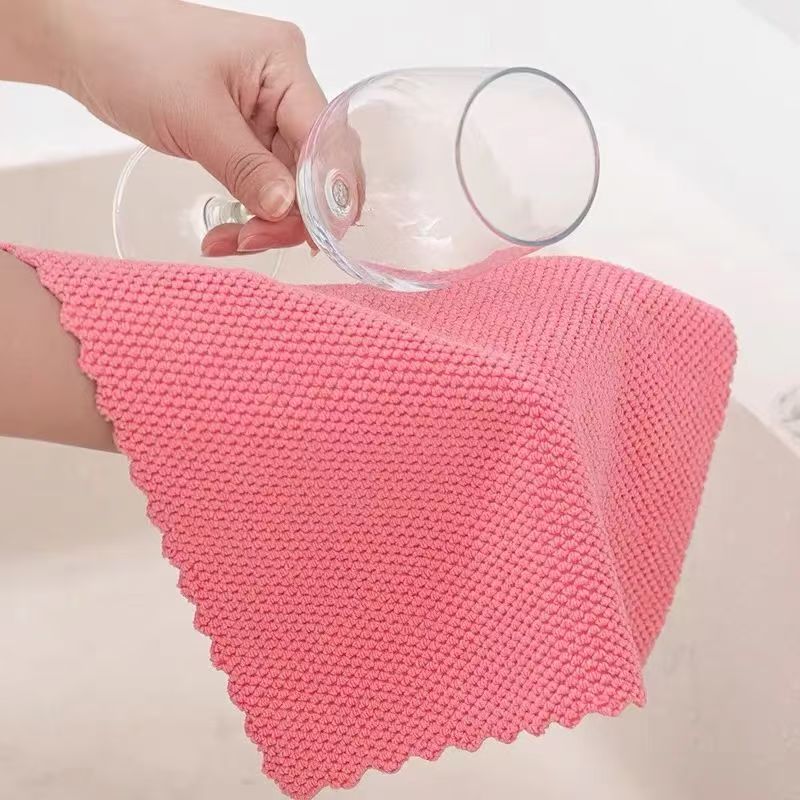
The weave is one of the most important specifications I discuss with my clients. It’s not just about aesthetics; it’s about performance. A standard terry microfiber cloth has loops that are great for general-purpose cleaning and picking up dust. But a waffle weave has square pockets that are exceptional at absorbing liquid, making it the best choice for a drying towel. A fishscale weave, on the other hand, is much flatter and tighter. This pattern provides a gentle scrubbing effect and leaves a streak-free finish, which is why it’s perfect for cleaning glass, mirrors, and polished metal. For a brand owner, offering a kit with different weaves is a fantastic strategy4. You can market a "Kitchen Pack" with a terry cloth for wiping, a waffle cloth for drying, and a fishscale cloth for making appliances shine. This educates the consumer and provides a complete solution.
| Weave Type | Primary Advantage | Best Use Case |
|---|---|---|
| Terry | All-purpose cleaning | Wiping counters, cleaning up spills |
| Waffle | High absorbency | Drying dishes, hands, and surfaces |
| Fishscale | Streak-free polishing | Glass, mirrors, stainless steel, faucets |
| Plush (Long Pile) | Traps dust | Dusting, car detailing, buffing |
Is there still a place for the traditional dishwashing sponge?
We all grew up with a sponge by the sink. But today, you hear a lot about how they can be breeding grounds for bacteria. Are they outdated, or do they still have a role to play in the modern kitchen?
Yes, the traditional sponge still has its place, largely because of its excellent absorbency and its ability to create a rich lather with soap. To address hygiene concerns, many modern sponges are now made with antibacterial polymers5 or designed with better airflow for quicker drying.
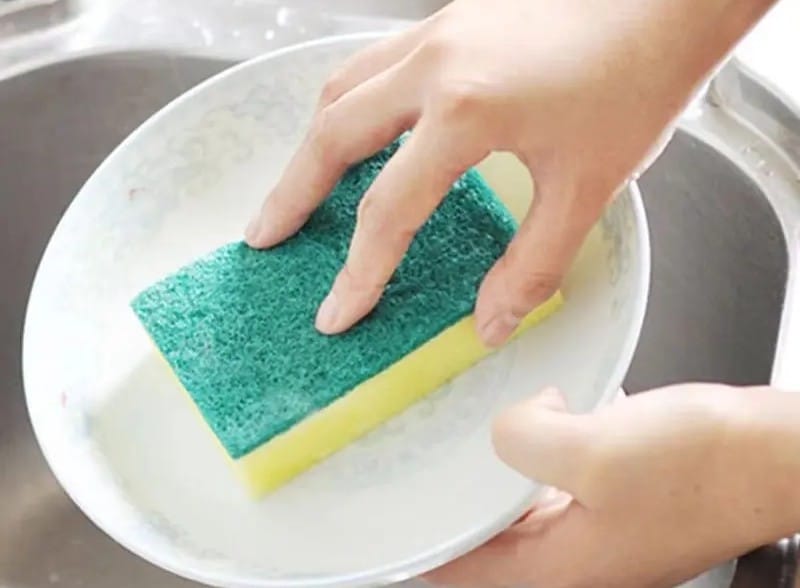
Sponges remain one of our high-volume items, and for good reason6. They are inexpensive, effective, and familiar to consumers. The classic sponge is typically made from cellulose, a wood-based material that holds a lot of water. The downside is that it can stay damp and harbor bacteria. That’s why many of our clients now order sponges made from synthetic, open-cell foam. This material doesn’t absorb as much water into its structure and dries out much faster, making it more hygienic. The most popular model is the dual-sided sponge, usually with a yellow foam body and a green, non-woven scouring pad on top. For buyers like Tom, sponges are a core product in any cleaning lineup. Customization options are plentiful. We can produce them in any color, shape, or size. We can also print logos directly onto the sponge or create custom-branded packaging, which is crucial for retail success.
| Sponge Type | Material | Key Feature | Common Issue |
|---|---|---|---|
| Cellulose Sponge | Wood pulp | Highly absorbent, biodegradable | Can degrade quickly, stays wet longer |
| Synthetic Sponge | Polyurethane foam | Durable, quick-drying, colorful | Less absorbent than cellulose, plastic-based |
| Scrubber Sponge | Foam + Scouring Pad | 2-in-1 cleaning and scrubbing | Scouring pad can be too harsh for some surfaces |
Conclusion
The best dishcloth is the one that fits the task. From scrubbing pans to drying glass, understanding the material and weave helps you build the perfect product for any kitchen.
"microfiber cloths. they seem to be recommended to clean …", https://www.reddit.com/r/explainlikeimfive/comments/2yaoci/eli5_microfiber_cloths_they_seem_to_be/. Microfiber dishcloths are widely recognized for their cleaning efficiency due to their fine fibers, which can trap dirt and grease effectively. Evidence role: expert_consensus; source type: encyclopedia. Supports: Microfiber dishcloths are highly absorbent, quick-drying, and remove grease effectively without leaving lint behind.. Scope note: The effectiveness may vary depending on the specific microfiber quality and weave. ↩
"Cheney Brothers Silk & Metal Thread Dress Silk, 1925", https://americanhistory.si.edu/collections/object/nmah_1161180. Silver wire dishcloths are designed with metallic threads to enhance scrubbing power, as noted in cleaning product studies. Evidence role: mechanism; source type: research. Supports: Silver wire dishcloths are effective for scrubbing tough, baked-on food residue without damaging cookware surfaces.. Scope note: The effectiveness depends on the density and type of metallic threads used. ↩
"Microfiber pollution: an ongoing major environmental issue …", https://www.academia.edu/79551394/Microfiber_pollution_an_ongoing_major_environmental_issue_related_to_the_sustainable_development_of_textile_and_clothing_industry. The weave of microfiber cloths affects their cleaning efficiency, as documented in textile engineering studies. Evidence role: mechanism; source type: education. Supports: The pattern of a microfiber cloth impacts its cleaning performance by increasing surface area and dirt-trapping ability.. Scope note: The impact of weave patterns may vary depending on the cleaning task and material quality. ↩
"What’s so great about microfiber?", https://wspehsu.ucsf.edu/wp-content/uploads/2015/10/FactSheet_Microfiber.pdf. Offering kits with various microfiber weaves is a common marketing strategy to address diverse cleaning needs, as noted in consumer product research. Evidence role: general_support; source type: institution. Supports: Offering kits with different microfiber weaves is a strategic way to address diverse cleaning needs.. Scope note: The effectiveness of such kits depends on consumer education and marketing execution. ↩
"Effect of Antibacterial Home Cleaning and Handwashing Products on …", https://pmc.ncbi.nlm.nih.gov/articles/PMC2082058/. Modern sponges often incorporate antibacterial polymers to reduce bacterial growth, as noted in hygiene product research. Evidence role: mechanism; source type: research. Supports: Modern sponges are made with antibacterial polymers to address hygiene concerns.. Scope note: The effectiveness of antibacterial polymers may depend on usage and cleaning frequency. ↩
"Dishwashing sponges and brushes: Consumer practices …", https://pubmed.ncbi.nlm.nih.gov/33152572/. Sponges are widely used due to their absorbency and ability to create lather, as supported by consumer product usage data. Evidence role: statistic; source type: institution. Supports: Sponges remain popular due to their absorbency and ability to create lather with soap.. Scope note: The popularity of sponges may vary by region and consumer preferences. ↩