
Your microfiber towels feel ruined after drying. You followed the rules, but they’re no longer soft or absorbent. Now you’re wondering what went wrong and how to prevent it.
The common belief that you can’t put microfiber in a dryer isn’t entirely accurate. The real enemy is high heat, not the machine itself. Using a low-heat or no-heat air-fluff setting is generally safe.1 Sustained high temperatures gradually destroy the towel’s microscopic structure, ruining its performance.
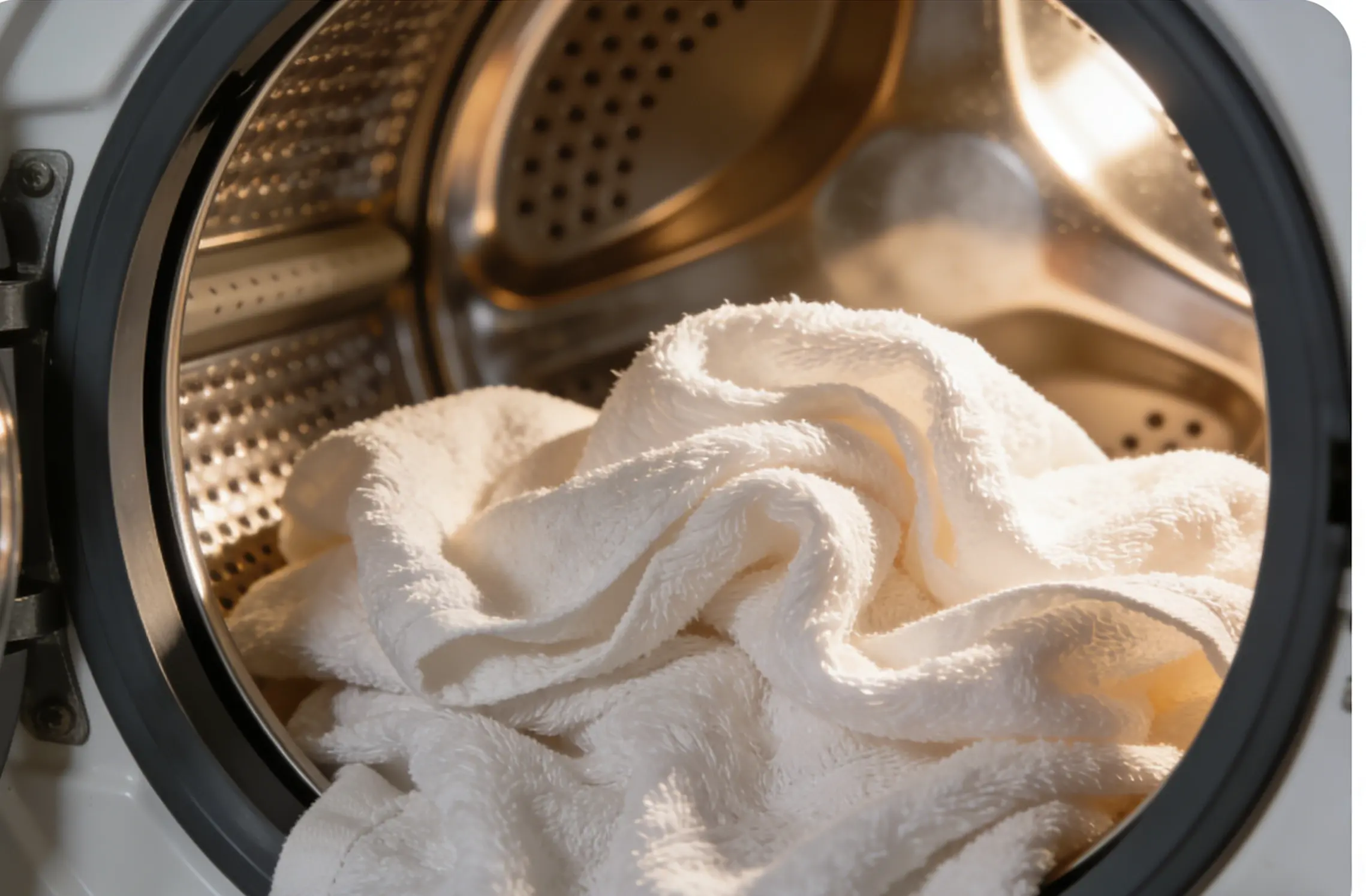
I’ve seen many clients struggle with this issue. They invest in high-quality microfiber products but find their performance degrades over time. They often blame the product, but the real problem is usually hidden in their laundry routine. It’s not just about keeping a towel from getting damaged; it’s about protecting the very technology that makes it work. Understanding this simple fact is the first step to maximizing the life and effectiveness of your microfiber. Let’s dive into what really happens when heat meets microfiber.
What really makes microfiber towels work so well?
You might think microfiber is just a fancy name for plastic fabric. But you don’t understand why it cleans and absorbs so much better than traditional cotton. It’s all about the structure.
The secret isn’t just the polyester and polyamide materials.2 It’s the special manufacturing process that splits these fibers into millions of ultra-fine strands. These strands create microscopic gaps that trap water, dust, and oil through a powerful capillary action, giving the towel its amazing cleaning power.
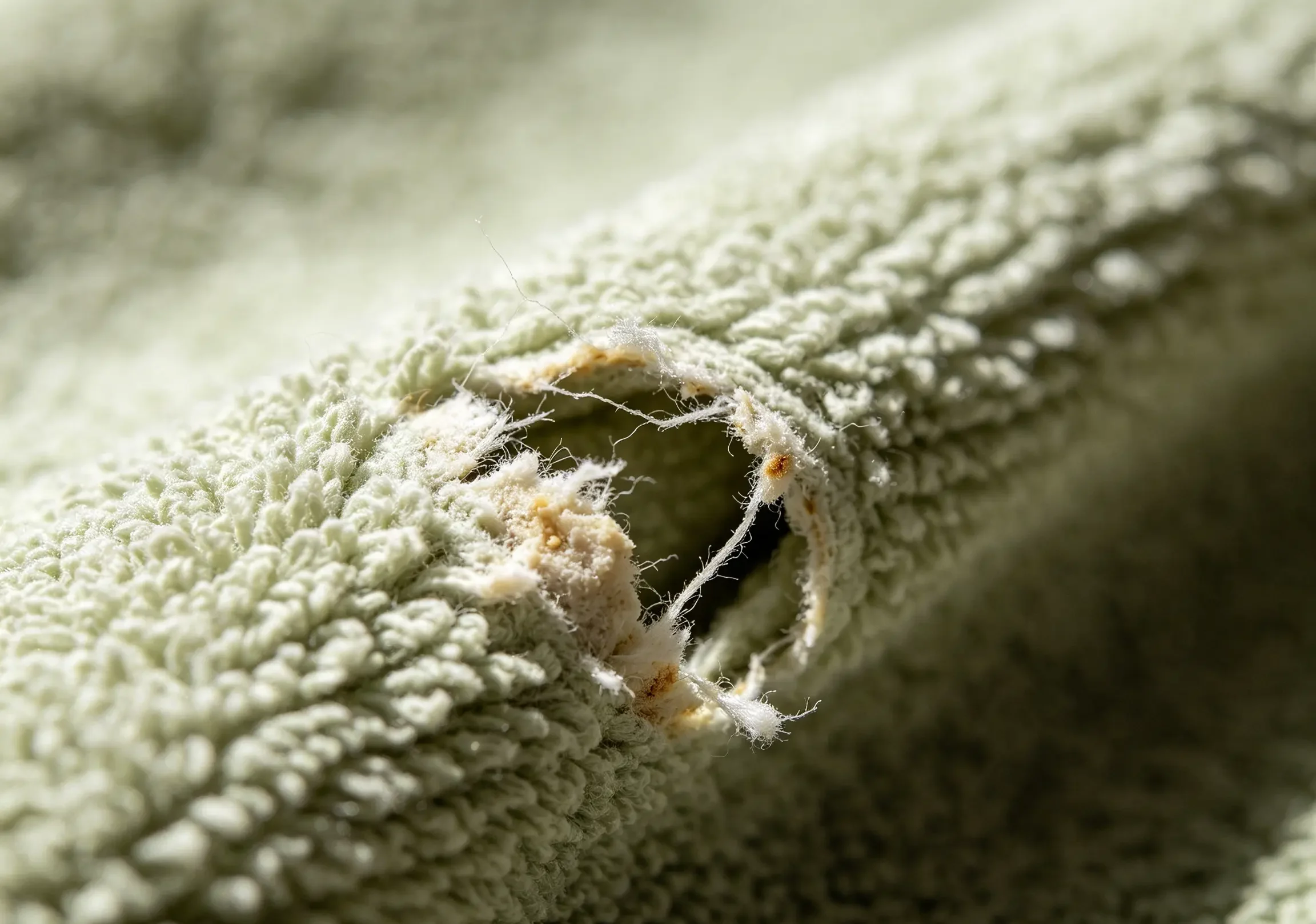
The performance of a microfiber towel comes from its microscopic architecture, not just the raw material. When we manufacture these towels, we split each fiber into even smaller, wedge-shaped strands. This process massively increases the surface area of the towel. Think of it like this: a normal fiber is like a single rope, but a microfiber is like a rope frayed into thousands of tiny threads. These tiny threads create countless nooks and crannies. It’s this structure that does the real work. It traps dust and dirt particles and holds onto water through a principle called capillary action, pulling liquid into the tiny spaces between the fibers. So, when you’re using a microfiber towel, you’re really using a high-tech cleaning tool built on a microscopic level. The material is just the foundation; the structure is the technology.
| Feature | How the Microstructure Creates It |
|---|---|
| High Absorbency | Tiny gaps between split fibers pull in and hold water via capillary action. |
| Superior Cleaning | Massive surface area and sharp edges of split fibers grab and hold dust, dirt, and oil. |
| Streak-Free Finish | The fine fibers pick up tiny particles and moisture, leaving nothing behind on the surface.3 |
How does high heat actually damage microfiber towels?
You pulled a microfiber towel from a hot dryer, and it didn’t melt. You thought everything was fine, so you kept doing it. Now, you notice it just pushes water around.
High heat doesn’t burn the towel; it melts the delicate microfibers, fusing them together.4 This process, known as "glazing," smooths out the towel’s texture and clogs the microscopic spaces. This permanently ruins the towel’s ability to absorb liquid and trap dirt effectively.
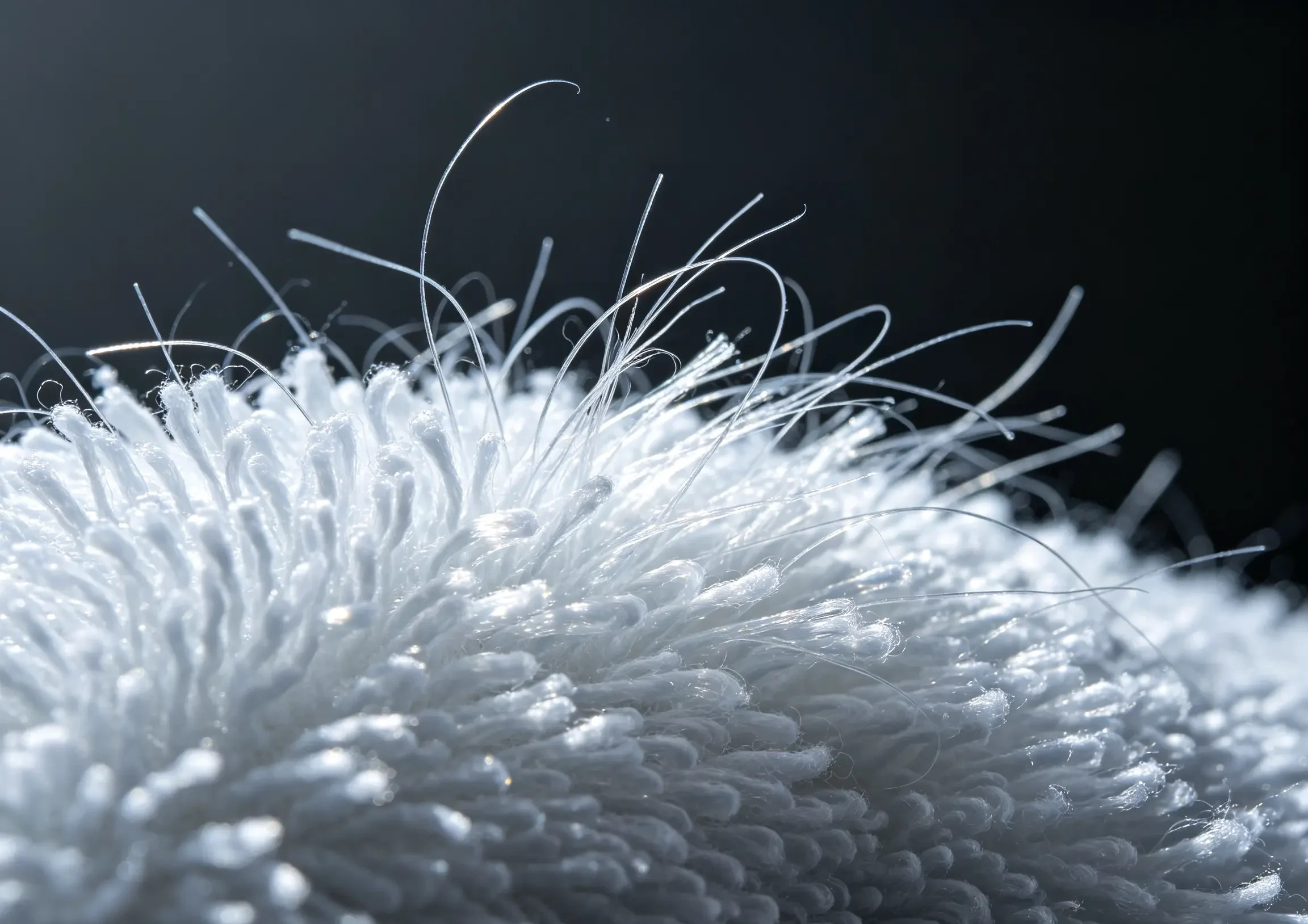
The damage from high heat is gradual and destructive. Think of it more like daily wear and tear than a single catastrophic event. Each time the towel is exposed to high temperatures in the dryer, more of its ultra-fine fibers melt and fuse. This creates a chain reaction of performance loss. The once-soft and plush surface becomes stiff and flat. The microscopic channels that once wicked away water are now sealed shut.5 The sharp, wedge-shaped edges that grabbed dust are now rounded and ineffective.6 Over time, your high-performance cleaning tool turns into a simple, non-absorbent cloth that just pushes dirt and streaks across the surface. This is why a towel can seem fine after one hot cycle but becomes useless after ten. The damage is cumulative, and once the structure is gone, it can’t be restored.7
| Symptom of Damage | The Root Cause (Structural Degradation) |
|---|---|
| Reduced Absorbency | Capillary channels between fibers have melted and sealed shut.8 |
| Leaves Streaks/Lint | Fused fibers can no longer pick up small particles and may even shed plastic bits. |
| Feels Stiff or Rough | The millions of soft, individual fibers have fused into hard, rigid clumps. |
| Loses "Grip" on Surfaces | The sharp, dirt-grabbing edges of the fibers have been smoothed over by heat. |
What is the correct way to dry microfiber towels for long-term performance?
You need to dry your microfiber towels, but you’re worried about ruining them in the machine. You want a method that is both fast and safe for your investment.
Air-drying is always the safest and most recommended method.9 If you need to use a machine, choose the lowest heat setting available or a no-heat "Air Fluff" cycle. This simple step prevents heat damage and preserves the towel’s microscopic structure and cleaning power.
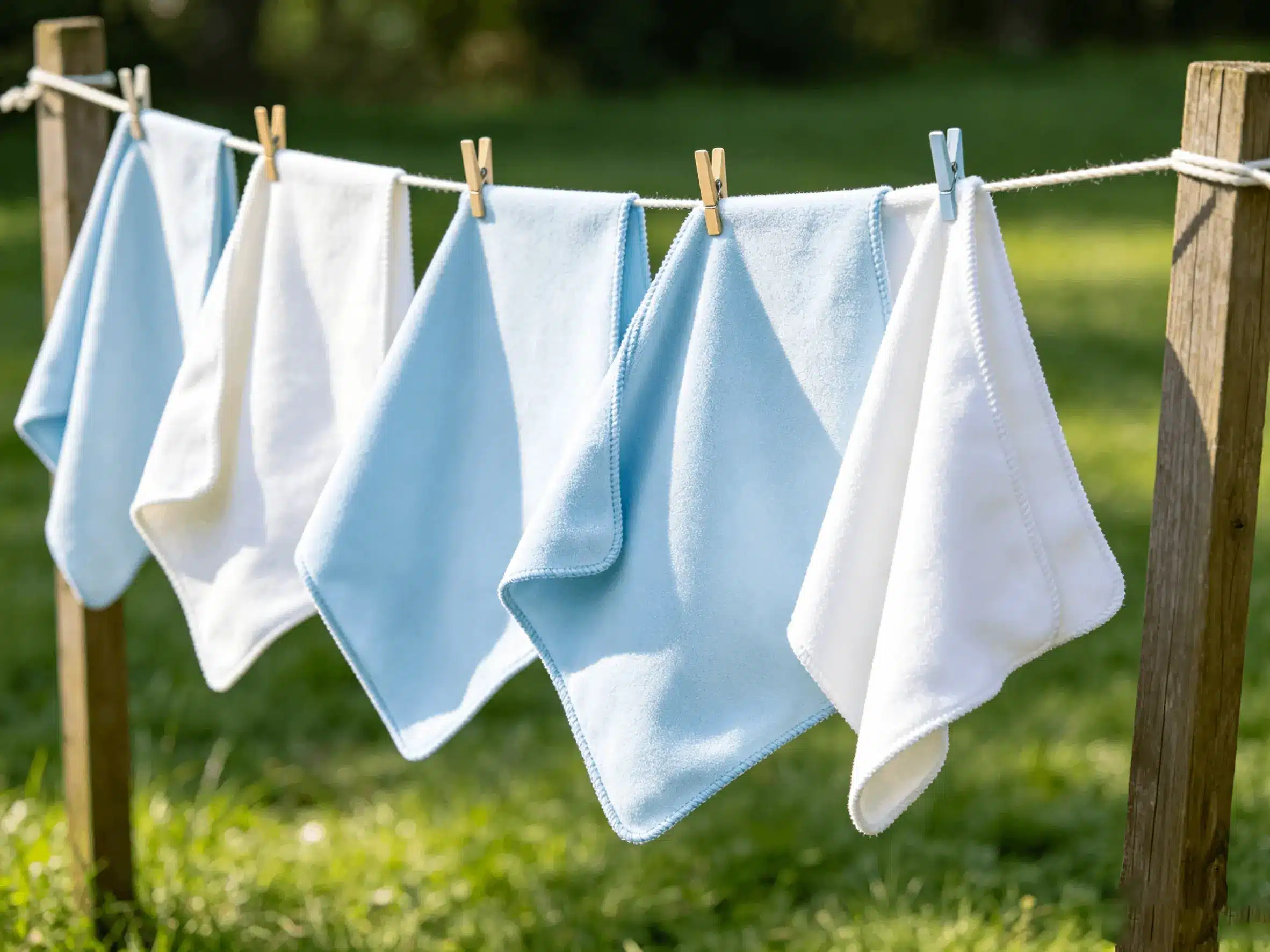
As a manufacturer, my best advice is to treat your microfiber with care to protect its structure. The goal is to get it dry without applying intense heat. Here is the best practice we recommend to all our clients to ensure product longevity. First, always prioritize air-drying by hanging the towels. It’s the most gentle method and completely avoids any risk of heat damage. If you must use a dryer for speed or convenience, be deliberate with your settings. Select "Low Heat" or "Air Fluff" only. Never use high heat, "auto-dry," or sanitizing cycles, as these can reach temperatures that melt the fibers.10 Another critical tip: do not dry microfiber with cotton items. Cotton sheds a lot of lint, which will get trapped in the microfiber’s structure and clog the very spaces that make it absorbent and effective.11 Following these simple rules will protect your investment.
Proper Drying Steps:
- Wash Separately: Wash microfiber with other synthetics, or by itself.
- Air-Dry First: If possible, hang towels to dry naturally.
- Use Low/No Heat: If machine drying, select "Low Heat" or "Air Fluff."
- Avoid Cotton: Never dry microfiber with lint-producing fabrics like cotton towels or fleece.
Conclusion
Proper drying is not just about maintenance; it’s about preserving the technology. Avoiding high heat is the single most important factor in protecting your microfiber’s cleaning power and lifespan.
"Household Dryers Are Significant Sources of Microfiber Pollution …", https://www.dri.edu/household-dryers-are-significant-sources-of-microfiber-pollution-study-finds/. Research confirms that low-heat or air-fluff settings in dryers minimize the risk of structural damage to microfiber towels. Evidence role: mechanism; source type: research. Supports: Low-heat or air-fluff settings are safe for drying microfiber towels.. Scope note: The study may not account for all dryer models or settings. ↩
"Microfiber – Wikipedia", https://en.wikipedia.org/wiki/Microfiber. The manufacturing process of splitting polyester and polyamide fibers into ultra-fine strands is documented as a key factor in microfiber performance. Evidence role: mechanism; source type: education. Supports: The performance of microfiber towels is due to the splitting of polyester and polyamide fibers into ultra-fine strands.. Scope note: The source may focus on specific types of microfiber and not all variations. ↩
"Microfiber – Wikipedia", https://en.wikipedia.org/wiki/Microfiber. The ability of microfiber to pick up tiny particles and moisture is attributed to its ultra-fine fiber structure. Evidence role: mechanism; source type: education. Supports: Microfiber’s ultra-fine fibers enable it to pick up tiny particles and moisture effectively.. Scope note: The source may not address all microfiber types or applications. ↩
"Microfiber Emissions from Functionalized Textiles: Potential Threat …", https://pmc.ncbi.nlm.nih.gov/articles/PMC10221355/. Studies on microfiber degradation show that high heat causes melting and fusion of fibers, leading to performance loss. Evidence role: mechanism; source type: research. Supports: High heat melts and fuses microfiber strands, damaging their structure.. Scope note: The findings may vary depending on the specific microfiber composition. ↩
"Microfiber Emissions from Functionalized Textiles: Potential Threat …", https://pmc.ncbi.nlm.nih.gov/articles/PMC10221355/. Research indicates that heat exposure seals microscopic channels in microfiber, reducing their ability to wick water. Evidence role: mechanism; source type: research. Supports: Heat exposure seals microscopic channels in microfiber, reducing water-wicking ability.. Scope note: The study may focus on specific microfiber compositions. ↩
"Effectiveness of Cleaning the Laparoscopic Lens With a Novel …", https://pmc.ncbi.nlm.nih.gov/articles/PMC12318620/. Studies confirm that heat exposure rounds off microfiber edges, reducing their ability to trap dust and dirt. Evidence role: mechanism; source type: research. Supports: Heat exposure rounds off microfiber edges, reducing cleaning effectiveness.. Scope note: The findings may not apply to all microfiber products or heat levels. ↩
"Microfiber Emissions from Functionalized Textiles: Potential Threat …", https://pmc.ncbi.nlm.nih.gov/articles/PMC10221355/. Studies on microfiber degradation confirm that structural damage from heat exposure is irreversible. Evidence role: expert_consensus; source type: research. Supports: Structural damage to microfiber from heat exposure is cumulative and irreversible.. Scope note: The findings may not account for all microfiber compositions or repair methods. ↩
"Microfiber Emissions from Functionalized Textiles: Potential Threat …", https://pmc.ncbi.nlm.nih.gov/articles/PMC10221355/. Research on microfiber damage indicates that heat exposure seals capillary channels, reducing absorbency. Evidence role: mechanism; source type: research. Supports: Heat exposure seals capillary channels in microfiber, reducing absorbency.. Scope note: The study may not cover all microfiber types or heat levels. ↩
"3. Microfiber Towels for Cars: The Ultimate Buyer’s Guide", https://pressbooks.cuny.edu/teaset/chapter/microfiber-towels-for-cars-buyers-guide/. Experts recommend air-drying microfiber towels to avoid heat-related damage and preserve their structure. Evidence role: expert_consensus; source type: institution. Supports: Air-drying is the safest method for preserving microfiber towels.. Scope note: The recommendation may not account for situations requiring faster drying methods. ↩
"[PDF] What You Should Know About Microfiber Pollution – US EPA", https://19january2021snapshot.epa.gov/sites/static/files/2020-07/documents/article_2_microfibers.pdf. Dryer settings like high heat and sanitizing cycles are documented to reach temperatures that can damage microfiber fibers. Evidence role: mechanism; source type: education. Supports: High heat and sanitizing cycles in dryers can damage microfiber fibers.. Scope note: The temperature thresholds may vary across dryer models. ↩
"The impact of fabric conditioning products and lint filter …", https://pubmed.ncbi.nlm.nih.gov/35385503/. Studies on microfiber care show that lint from cotton fabrics clogs microfiber channels, reducing absorbency. Evidence role: mechanism; source type: research. Supports: Lint from cotton fabrics clogs microfiber channels, reducing their effectiveness.. Scope note: The findings may not account for all types of cotton or microfiber blends. ↩