
Are you tired of towels that stay damp forever? You want a simple bath towel, but the wrong choice can be frustrating and even a bit gross.
The best towel depends on your needs. For quick-drying, lightweight performance, microfiber is the winner. If you prefer a natural, plush, hotel-like feel and don’t mind longer drying times, cotton is your best bet.

It’s a simple question, but many of us get it wrong. We often think a towel is just a towel. But the truth is, the material makes a huge difference in your daily routine. In this article, I’ll break down the key differences to help you finally decide which towel is right for your lifestyle.
Which Towel Absorbs Water Faster?
You step out of the shower, ready to dry off quickly. But your towel just seems to push water around, leaving you feeling damp and chilly.
Microfiber towels absorb water much faster than cotton ones.1 While a thick cotton towel feels like it holds a lot of water, a high-quality microfiber towel is designed to wick moisture away from your skin almost instantly.

Many people I’ve talked to believe cotton is more absorbent. And in a way, they’re not wrong. A big, fluffy cotton towel can hold a huge amount of water. But the key difference is the speed of absorption. Cotton fibers soak up water, but it takes them a moment. Modern microfiber towels are made from ultra-fine, split fibers. This creates a massive surface area that acts like a magnet for water, pulling it from your skin immediately. Think of it like this: a cotton towel is like a sponge that slowly soaks up a spill, while a microfiber towel is like a high-tech squeegee that clears the water in one pass. This is why you often pat yourself dry with microfiber, rather than rubbing.
| Feature | Cotton Towel | Microfiber Towel |
|---|---|---|
| Absorption Speed | Slower, absorbs into the fibers | Faster, wicks water away instantly |
| Feeling | Feels wet as it absorbs | Dries skin on contact |
| Best For | A slow, luxurious drying experience | A quick and efficient dry-off |
Why Does My Towel Always Smell Musty?
You notice a damp, funky smell in your bathroom. You soon realize it’s coming from your bath towel, even though you just washed it a few days ago.
Your towel likely smells because it stays wet too long, which lets mildew and bacteria grow. Cotton holds onto moisture for hours, while microfiber’s synthetic fibers dry incredibly fast, preventing odor-causing germs from taking hold.2
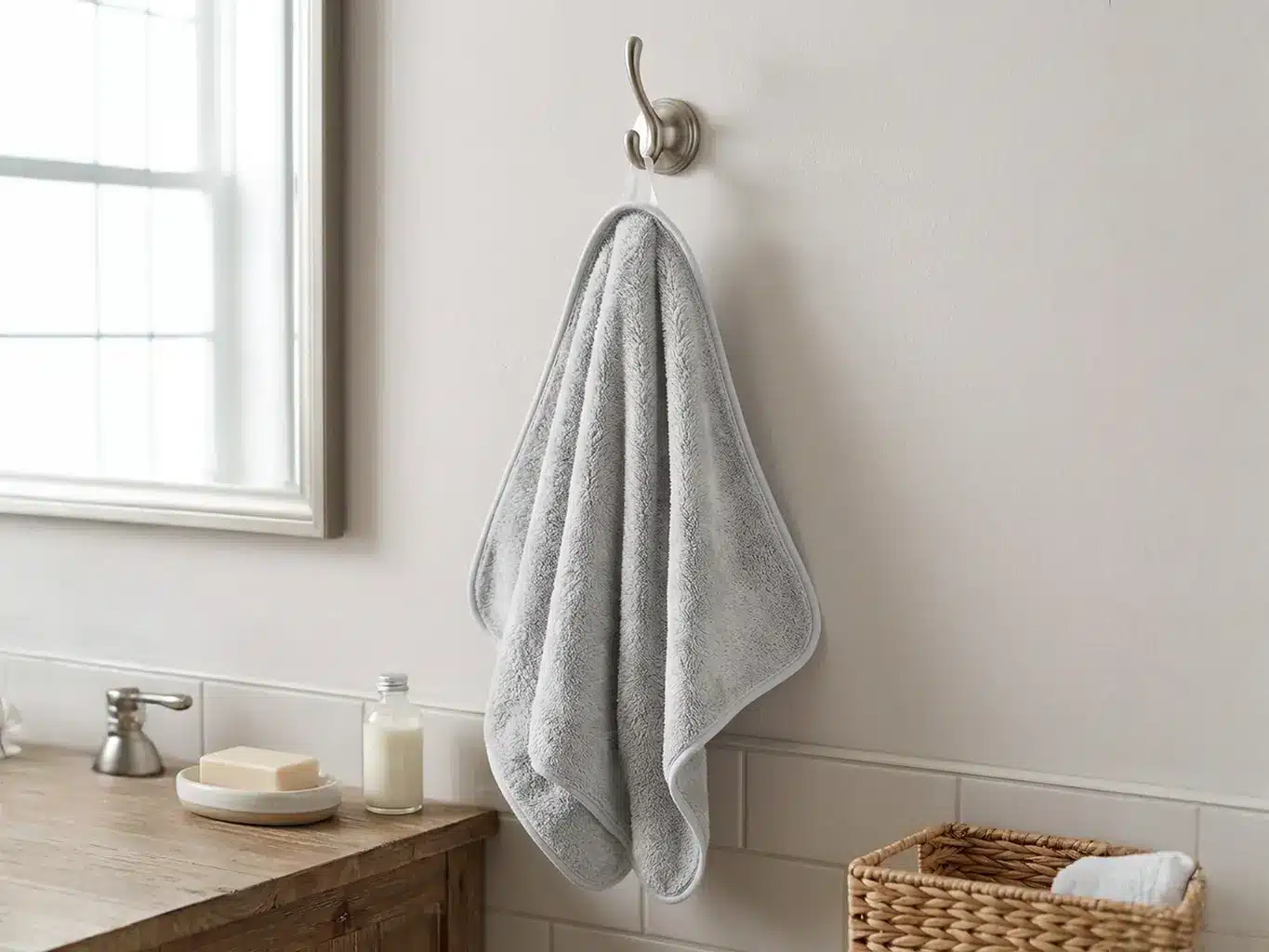
This is probably the biggest and most practical difference between the two materials. I remember living in a small apartment with a poorly ventilated bathroom. My thick cotton towels were always damp and developed that classic musty smell. It was a constant battle. Cotton towels, because of their natural fibers and thick weave, can take a very long time to air dry completely. This creates the perfect breeding ground for mildew.
Microfiber towels completely solve this problem.3 They release moisture into the air very efficiently. After I use my microfiber towel, I hang it up, and it’s often bone dry in just a couple of hours, not half a day. This makes them perfect for a wide range of situations beyond just the home bathroom. They are ideal for:
- The gym bag
- Swimming and beach trips
- Travel and camping
- Small homes or humid climates
A dry towel is a cleaner towel, and it will keep your bathroom smelling fresh.4
Does a Heavier Towel Mean Better Quality?
You’re packing for a weekend trip, and your bath towel takes up a third of your suitcase. It’s bulky and adds noticeable weight before you’ve even used it.
No, a heavier towel doesn’t automatically mean it’s better.5 Traditional cotton towels are heavy and get incredibly heavy when wet. Microfiber towels are significantly lighter and more compact, making them the clear winner for travel.
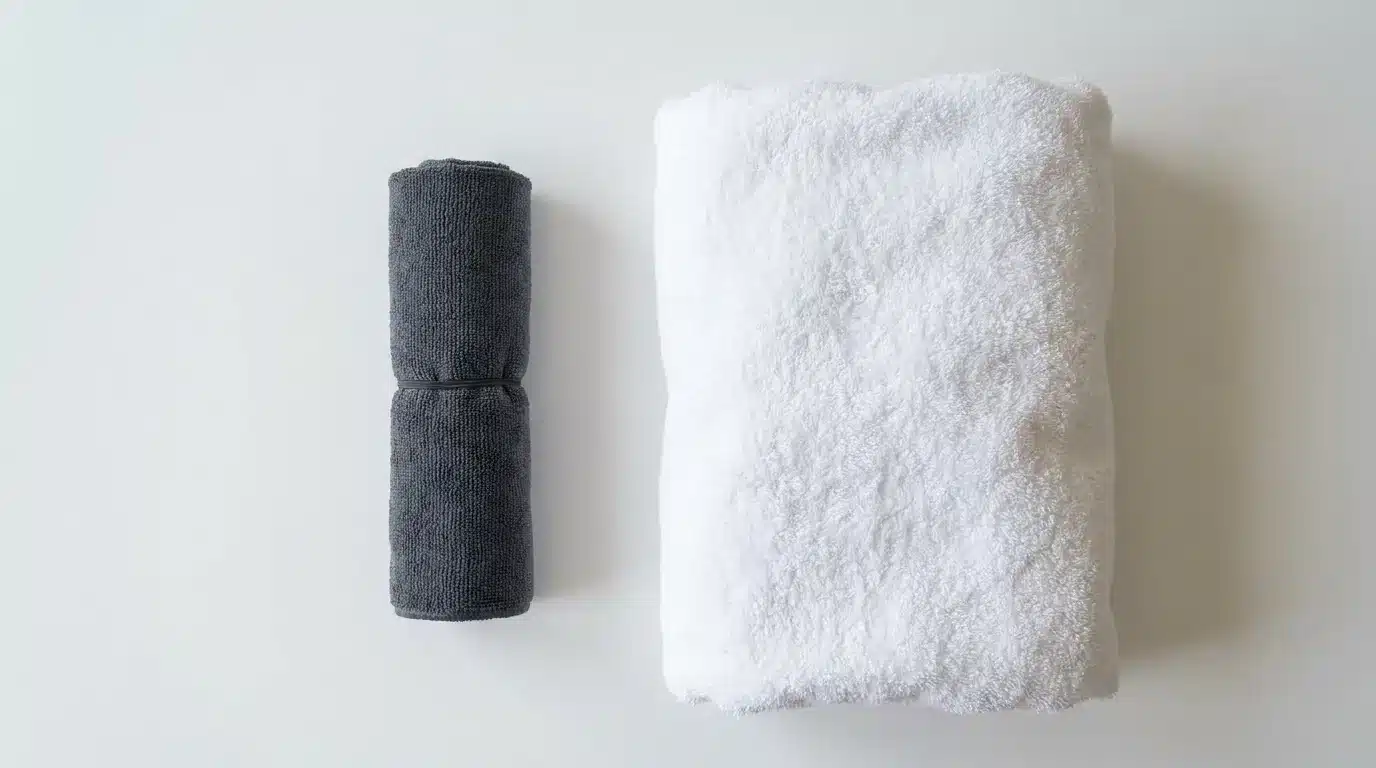
There’s a certain feeling of luxury associated with a heavy, plush cotton hotel towel. At home, that weight can feel comforting. But anywhere else, it’s a burden. The real test comes when the towel is wet. A soaked cotton towel feels like a lead blanket. It’s heavy to carry, hard to wring out, and takes forever to dry.
This is where I became a true microfiber convert. For a trip I took a few years ago, I swapped my usual cotton towel for a microfiber travel towel. The difference was amazing. It folded down to the size of a small book and weighed almost nothing. After a swim, I could wring it out until it was just damp, and it was light enough to clip to the outside of my backpack to dry as I walked. For anyone who travels, goes to the gym, or camps, this is a non-negotiable advantage. The space and weight you save is a huge benefit.
Isn’t Microfiber Rough Compared to Cotton?
You’ve heard that microfiber can feel a bit strange or even scratchy. You worry that switching means giving up that soft, comforting feeling you get from a good towel.
While early versions could feel stiff, modern high-quality microfiber is exceptionally soft and smooth. The softness of any towel, whether cotton or microfiber, ultimately depends on its quality and grade, not just the material itself.6
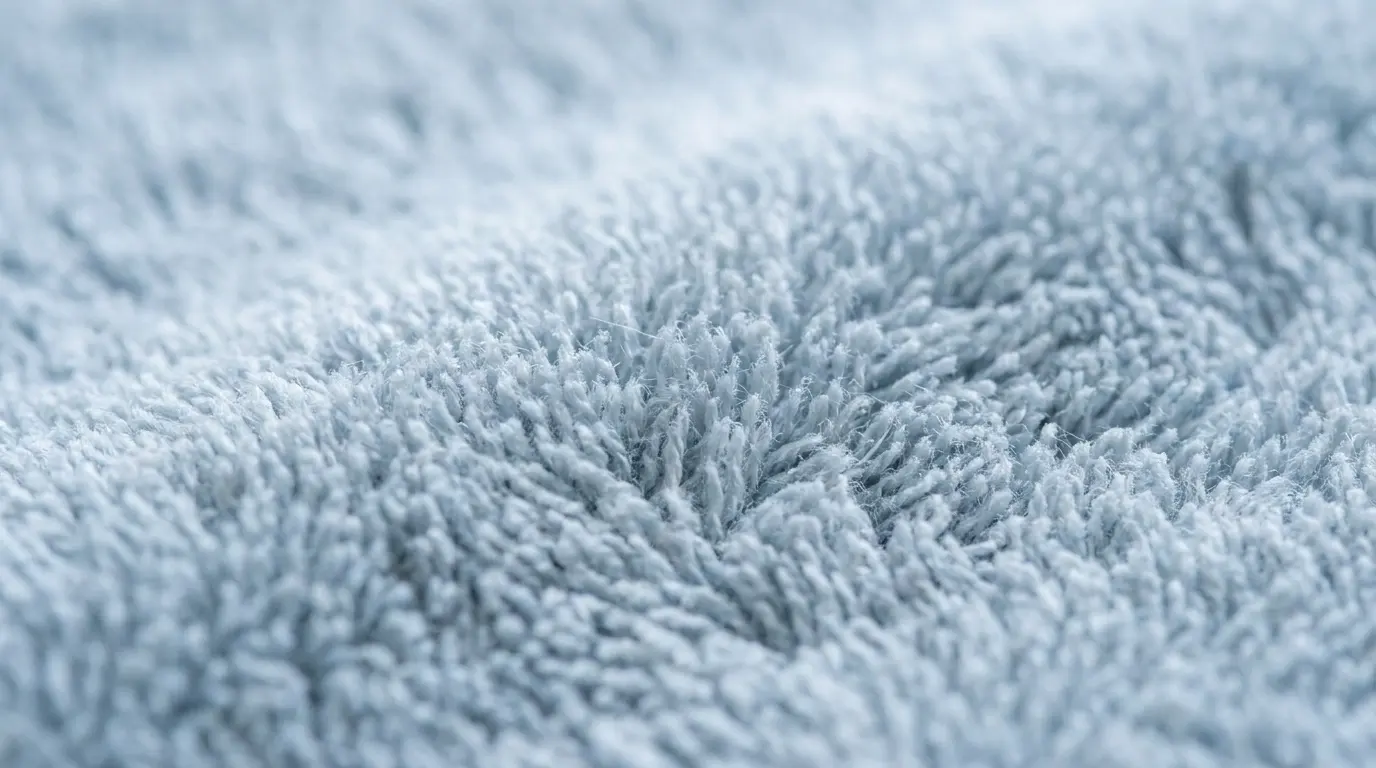
I have to be honest, the first microfiber towel I ever tried years ago felt weird. It seemed to cling to my skin. But the technology has improved dramatically since then. Today’s premium microfiber towels are made with much finer threads and better weaving techniques, resulting in a feel that is plush, gentle, and glides over the skin.
Of course, nothing can quite replicate the specific fluffy luxury of a high-end, long-staple cotton towel, like Pima or Egyptian cotton. That is the gold standard for pure, spa-like indulgence. However, the most important lesson I’ve learned is this: product quality matters more than material type. A cheap, low-grade cotton towel will feel rough and scratchy. A premium, high-density microfiber towel can feel softer and more pleasant to use than a mid-range cotton one.7 Don’t let old reputations fool you; judge the individual towel, not just the material label.
Which Towel Lasts Longer and Is Easier to Care For?
Your favorite towels are starting to look thin and frayed. They don’t seem to absorb like they used to, and replacing them feels wasteful and expensive.
With proper care, high-quality microfiber towels often outlast cotton.8 They can handle more wash cycles while maintaining their structure and performance. They are also easier to manage due to their fast drying time.
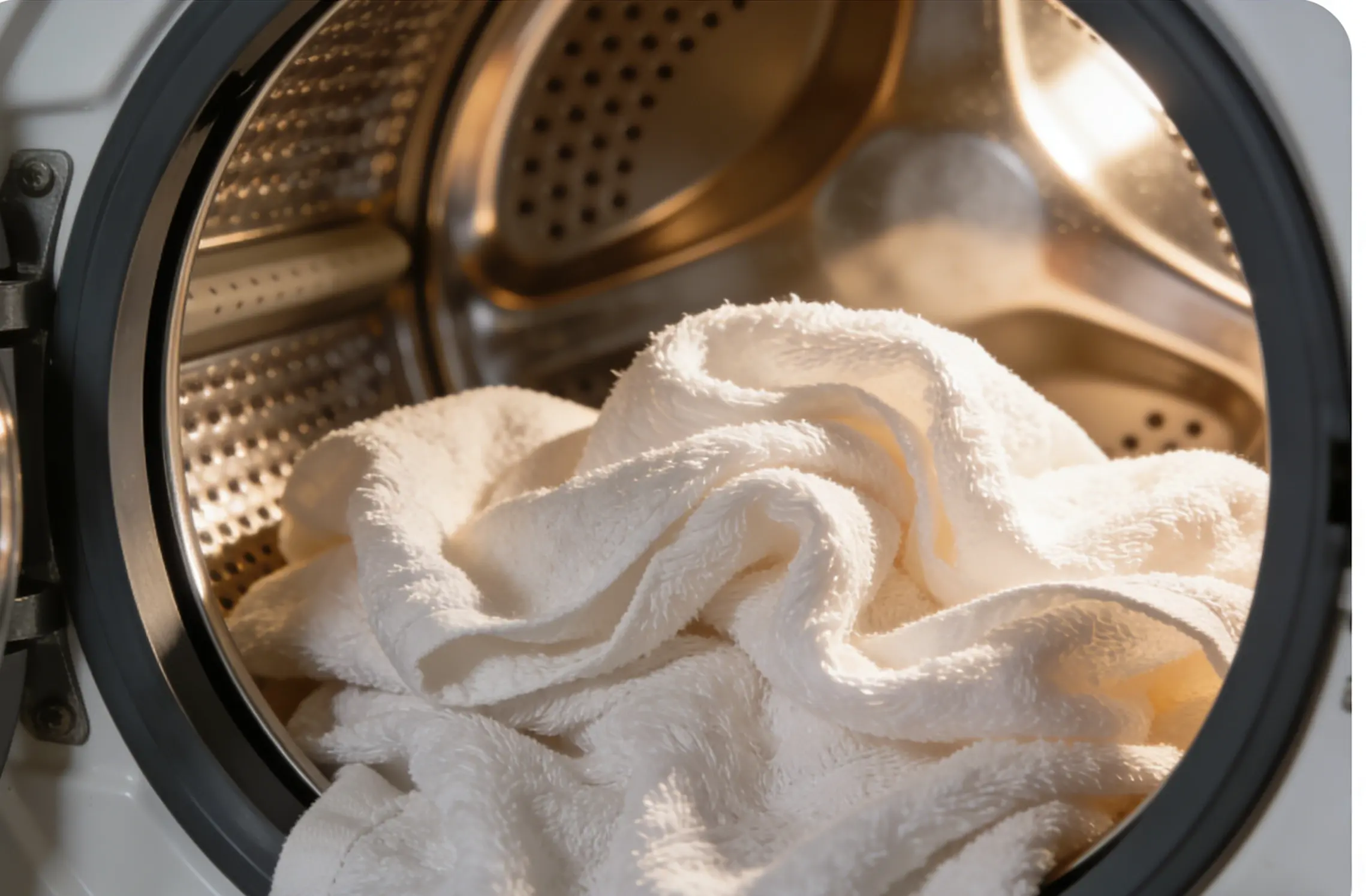
Cotton is a natural fiber, and over hundreds of wash cycles, those fibers start to break down. The loops can get pulled, the fabric gets thinner, and it loses its absorbency. Synthetic fibers, like those in microfiber, are engineered for resilience and can often withstand more wear and tear.9
However, proper care is key, especially for microfiber. The rules are simple but important. The main one is: never use fabric softener. Fabric softener clogs the tiny gaps in the microfiber weave, which ruins its absorbency and makes it feel slick instead of grippy.10 You should also wash them with other synthetic materials to avoid collecting lint from cottons. But the upside is huge. They are lightweight in the wash and dry in a fraction of the time, saving energy.
| Care Instruction | Cotton Towel | Microfiber Towel |
|---|---|---|
| Fabric Softener | Okay to use | Never use! It clogs the fibers. |
| Drying Time | Long (hours) | Very short (often under an hour) |
| Odor Risk | High if left damp | Very low due to quick drying |
| Durability | Fibers wear down over time | Highly durable with correct washing |
Conclusion
The best towel is the one that fits your life. Choose cotton for plush, natural comfort at home.11 Pick microfiber for fast-drying, lightweight performance on the go.
"Microfiber Emissions from Functionalized Textiles: Potential Threat …", https://pmc.ncbi.nlm.nih.gov/articles/PMC10221355/. Microfiber towels are designed with ultra-fine fibers that increase surface area, enabling faster water absorption compared to cotton towels. Evidence role: mechanism; source type: research. Supports: Microfiber towels absorb water faster than cotton towels.. Scope note: The absorption speed may vary depending on the specific weave and quality of the microfiber towel. ↩
"Analysis of biofilm and bacterial communities in the towel … – PMC", https://pmc.ncbi.nlm.nih.gov/articles/PMC10172380/. Microfiber towels dry faster than cotton towels due to their synthetic fibers, which release moisture more efficiently, reducing the risk of mildew and odor. Evidence role: mechanism; source type: research. Supports: Microfiber towels dry faster than cotton towels, preventing odor-causing germs.. Scope note: Drying speed can depend on environmental factors like humidity and airflow. ↩
"Musty smelling towels : r/CleaningTips – Reddit", https://www.reddit.com/r/CleaningTips/comments/1d89prz/musty_smelling_towels/. Microfiber towels dry quickly, reducing the risk of mildew and odor compared to cotton towels. Evidence role: general_support; source type: research. Supports: Microfiber towels dry quickly, reducing mildew and odor risks.. Scope note: Effectiveness may vary in extremely humid environments. ↩
"Analysis of biofilm and bacterial communities in the towel … – PMC", https://pmc.ncbi.nlm.nih.gov/articles/PMC10172380/. Dry towels are less likely to harbor bacteria and mildew, contributing to a fresher-smelling bathroom environment. Evidence role: mechanism; source type: research. Supports: Dry towels are less likely to harbor bacteria and mildew, keeping bathrooms smelling fresh.. Scope note: Freshness also depends on ventilation and overall bathroom hygiene. ↩
"Understanding GSM in Towels: Your Guide to Buying the Best Bath …", https://flandb.com/blogs/by-flandb/understanding-gsm-in-towels-your-guide-to-buying-the-best-bath-towel?srsltid=AfmBOopFgfKZc2gQM18vtGNVjZ0IacOM17s0grTDCg5Om9GfTnPj5XXj. The weight of a towel does not necessarily correlate with its quality; factors like material type and weave play a more significant role. Evidence role: expert_consensus; source type: education. Supports: A heavier towel does not automatically mean better quality.. Scope note: The perception of quality may vary based on individual preferences for weight and texture. ↩
"The Secret to Fluffy Towels: What Makes Them So Soft?", https://allurebathfashions.co.uk/blogs/allure-blog/the-secret-to-fluffy-towels-what-makes-them-so-soft. The softness of towels is influenced by factors like fiber quality, weave, and manufacturing techniques, rather than solely the material type. Evidence role: expert_consensus; source type: education. Supports: Towel softness depends on quality and grade, not just material type.. Scope note: Softness perception can vary among users based on individual preferences. ↩
"Evaluation of performance properties in woven Terry towel by multi …", https://pmc.ncbi.nlm.nih.gov/articles/PMC12464120/. High-density microfiber towels are designed for enhanced softness, which can surpass the feel of mid-range cotton towels. Evidence role: mechanism; source type: research. Supports: High-density microfiber towels can feel softer than mid-range cotton towels.. Scope note: Softness comparisons may vary based on individual preferences and specific towel brands. ↩
"Microfiber Pollution: A Systematic Literature Review to Overcome …", https://pmc.ncbi.nlm.nih.gov/articles/PMC10919082/. Microfiber towels are engineered for durability and can withstand more wash cycles than cotton towels when properly cared for. Evidence role: mechanism; source type: research. Supports: High-quality microfiber towels often outlast cotton towels with proper care.. Scope note: Durability depends on adherence to care instructions, such as avoiding fabric softener. ↩
"Effects of Technical Textiles and Synthetic Nanofibers on … – PMC", https://pmc.ncbi.nlm.nih.gov/articles/PMC7794755/. Synthetic fibers in microfiber towels are designed for durability, allowing them to endure more wear and tear compared to natural fibers like cotton. Evidence role: mechanism; source type: research. Supports: Synthetic fibers in microfiber towels are engineered for resilience and durability.. Scope note: Durability may vary based on the specific type of synthetic fiber used. ↩
"Respiratory toxicity of fabric softener emissions – PubMed", https://pubmed.ncbi.nlm.nih.gov/10872633/. Fabric softener can clog the fine fibers of microfiber towels, reducing their absorbency and altering their texture. Evidence role: mechanism; source type: research. Supports: Fabric softener negatively affects the absorbency and texture of microfiber towels.. Scope note: The impact of fabric softener may vary depending on the specific formulation and frequency of use. ↩
"Towel – Wikipedia", https://en.wikipedia.org/wiki/Towel. Cotton towels are known for their plush texture and natural fibers, making them ideal for home use. Evidence role: general_support; source type: encyclopedia. Supports: Cotton towels provide plush, natural comfort for home use.. Scope note: The plushness of cotton towels depends on the specific type of cotton and weave used. ↩