
Are your microfiber cloths losing their cleaning power? They start leaving behind streaks and lint, failing to pick up dust like they used to.1 The problem is almost always the washing method.
To wash a microfiber cloth, clean it separately in warm or cold water (under 40°C) with a mild, neutral detergent. Use a gentle machine cycle and avoid fabric softeners, bleach, and high heat. Air drying is best, but you can also tumble dry on a low setting.
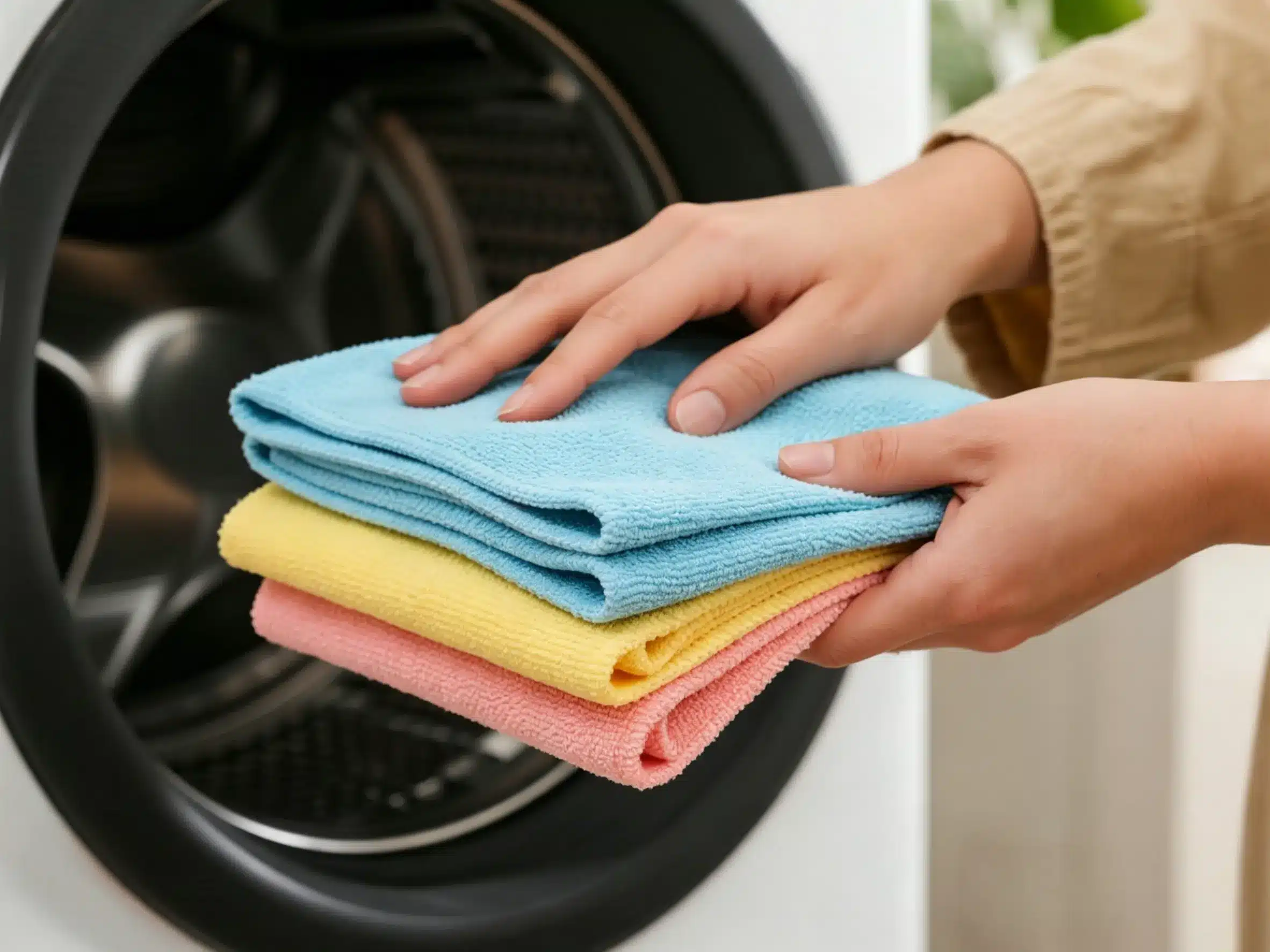
After years of manufacturing microfiber for global brands, I’ve seen it all. Many clients, especially those new to high-quality microfiber, are surprised when their cloths underperform. In almost every case, a few simple changes to their laundry routine brought the cloths back to life. I want to share the exact steps we recommend to all our partners to ensure their products last and perform perfectly. Let’s dive into the details that make all the difference.
What cleaning products should I use or avoid for microfiber?
Are you just throwing any old detergent in with your microfiber? Using the wrong products, especially fabric softener, will clog the tiny fibers and make your cloths completely useless for cleaning.2
You should use a mild, neutral liquid detergent. You must avoid fabric softeners, bleach, and scented dryer sheets. These products clog the microscopic fibers, destroying their ability to attract and trap dust and moisture. Stick to simple detergents for the best results.
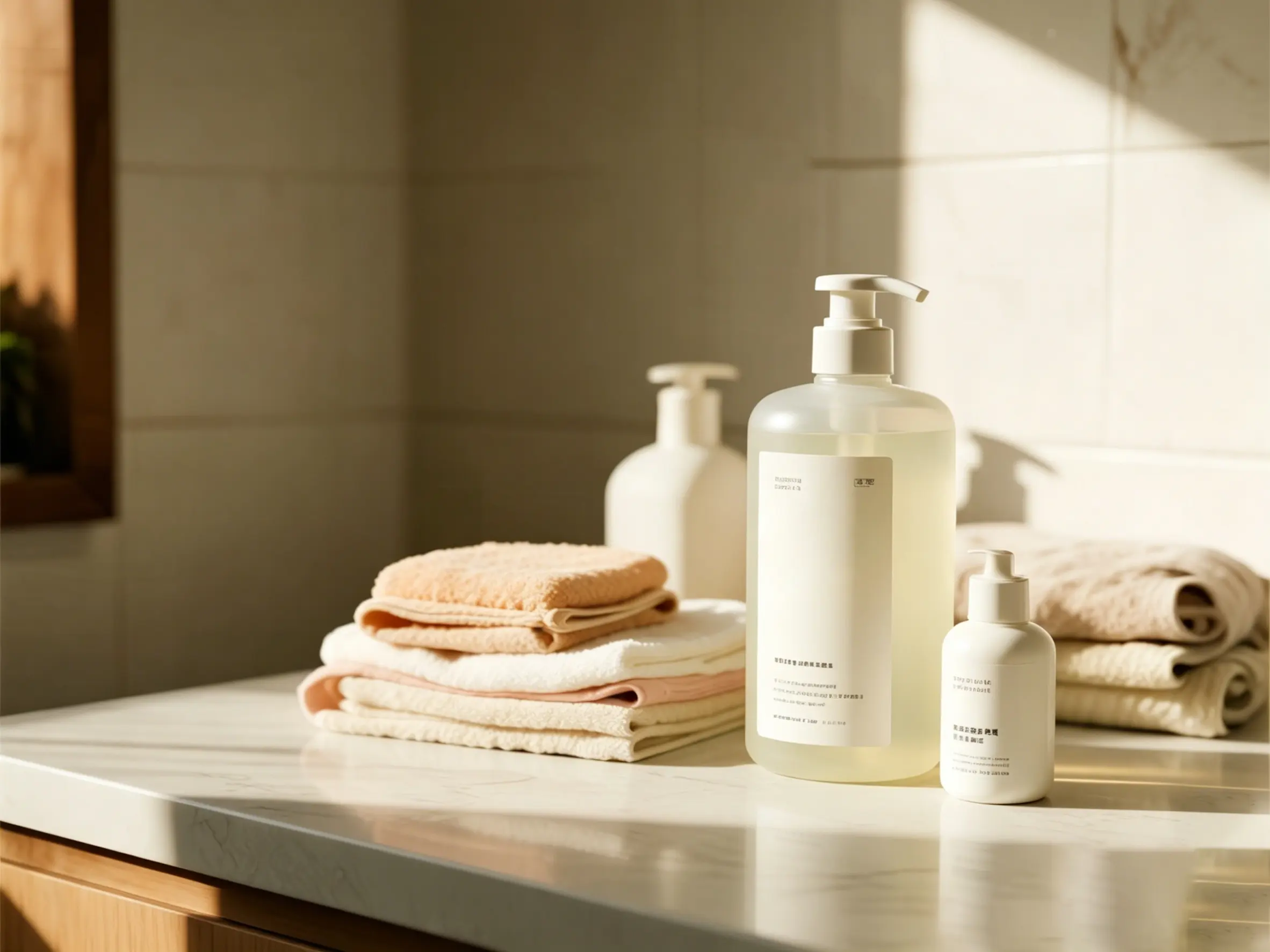
In my factory, we run tests on cloths all the time. One of the first things we teach new clients is that microfiber is a specialized textile. Its cleaning power comes from millions of tiny, split fibers that create a massive surface area to grab dirt.3 When you use fabric softener or waxy detergents, you are essentially filling in all those microscopic gaps. The cloth feels soft, but it can no longer absorb water or pick up dust. It will just push dirt around. Bleach is also a major problem.4 Its harsh chemicals break down the delicate polyester and polyamide fibers, making the cloth brittle and useless over time. The best choice is always the simplest one: a small amount of a clear, dye-free, and perfume-free liquid detergent.5 This cleans the cloth without leaving any residue behind.
| Product Type | Use or Avoid? | Why? |
|---|---|---|
| Mild Liquid Soap | Use | Cleans effectively without leaving residue. |
| Fabric Softener | Avoid | Clogs fibers and eliminates absorbency and static charge. |
| Bleach | Avoid | Damages and weakens the delicate fibers. |
| Dryer Sheets | Avoid | Coats fibers with a waxy film, just like fabric softener. |
| Powder Detergent | Use with Care | Can leave residue if it doesn’t dissolve fully. Liquid is better. |
What’s the best temperature and machine setting for washing microfiber?
Do you wash your microfiber cloths on a hot cycle with your regular laundry? High heat can literally melt the synthetic fibers, leaving your cloths stiff, scratchy, and unable to clean properly.6
Wash microfiber cloths in warm or cold water, always below 40°C (104°F). Use the gentle or delicates cycle on your washing machine and a low spin speed. It’s also critical to wash them separately from cotton items to prevent lint contamination.
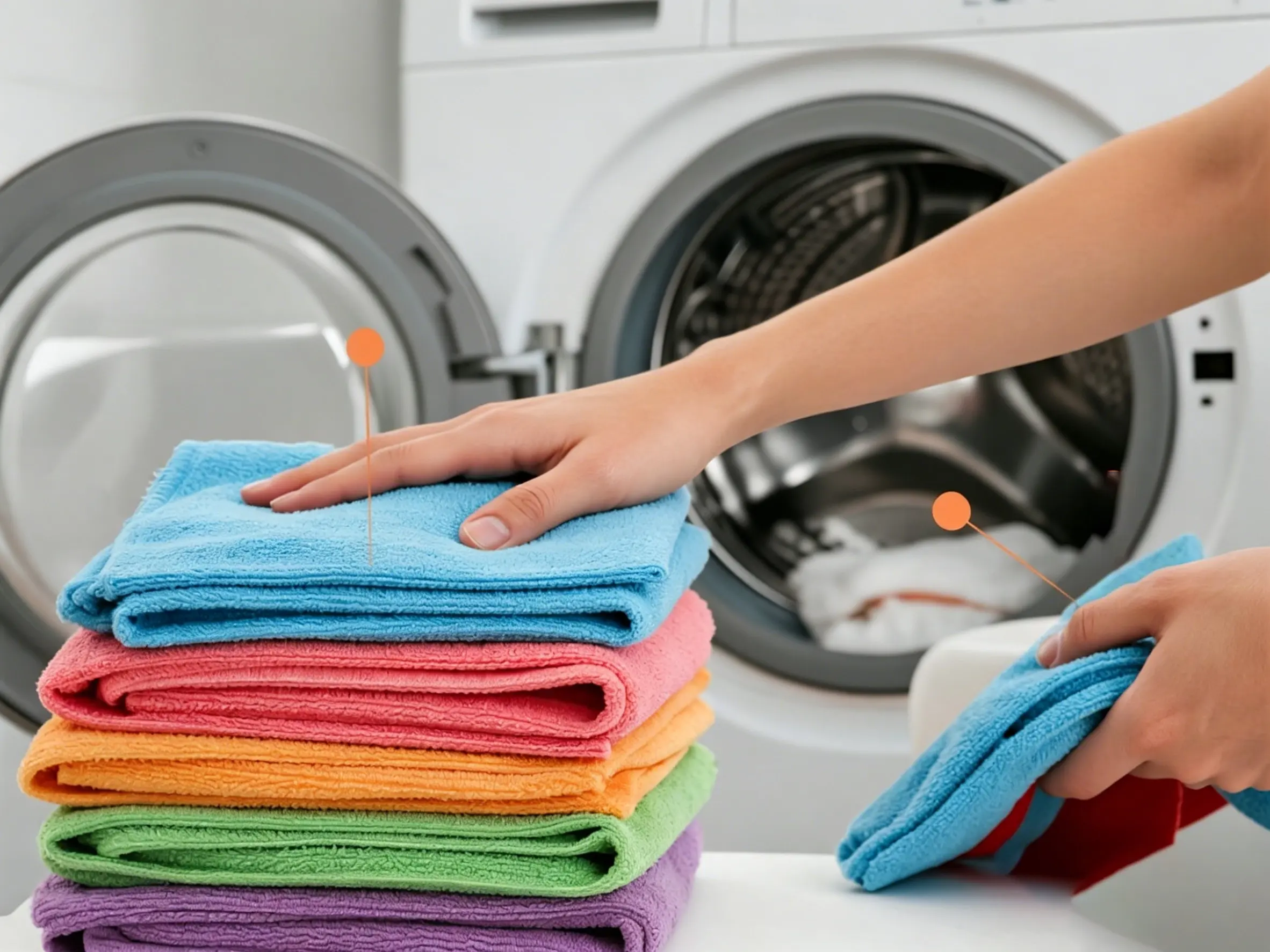
Microfiber is made from plastic—typically polyester and polyamide. Just like any plastic, it can melt. Exposing the cloths to high temperatures in the wash causes the fine fibers to fuse together. This permanently destroys their structure and soft texture. I once had a client in the car detailing business who complained that a new batch of towels was scratching paint. After a quick chat, we discovered his team was washing them on a hot, heavy-duty cycle. The heat had hardened the fibers. We sent a replacement batch with clear washing instructions, and the problem vanished. Always choose a gentle cycle to minimize friction. Also, never wash microfiber with cotton towels or fuzzy clothing. The microfiber will act like a magnet for lint, which gets trapped in the fibers and is nearly impossible to remove. This lint will then get left behind on surfaces when you try to clean.
| Setting | Recommendation | Reason |
|---|---|---|
| Water Temp | Cold or Warm (Below 40°C / 104°F) | Prevents fibers from melting and fusing. |
| Wash Cycle | Gentle / Delicates | Reduces friction and protects the fiber structure. |
| Spin Speed | Low | Avoids stretching and damaging the fabric. |
| Load | Microfiber Only | Prevents lint from cotton and other fabrics from sticking. |
How do I dry microfiber cloths properly?
Do you toss your freshly washed microfiber cloths straight into a hot dryer? This common mistake can ruin them just as quickly as a hot wash, causing the fibers to melt and clump together.
The best way to dry microfiber is to let it air dry in a well-ventilated area. If you must use a machine, select the lowest heat setting or an air-fluff cycle. Never iron microfiber, as the direct heat will melt the fabric instantly.
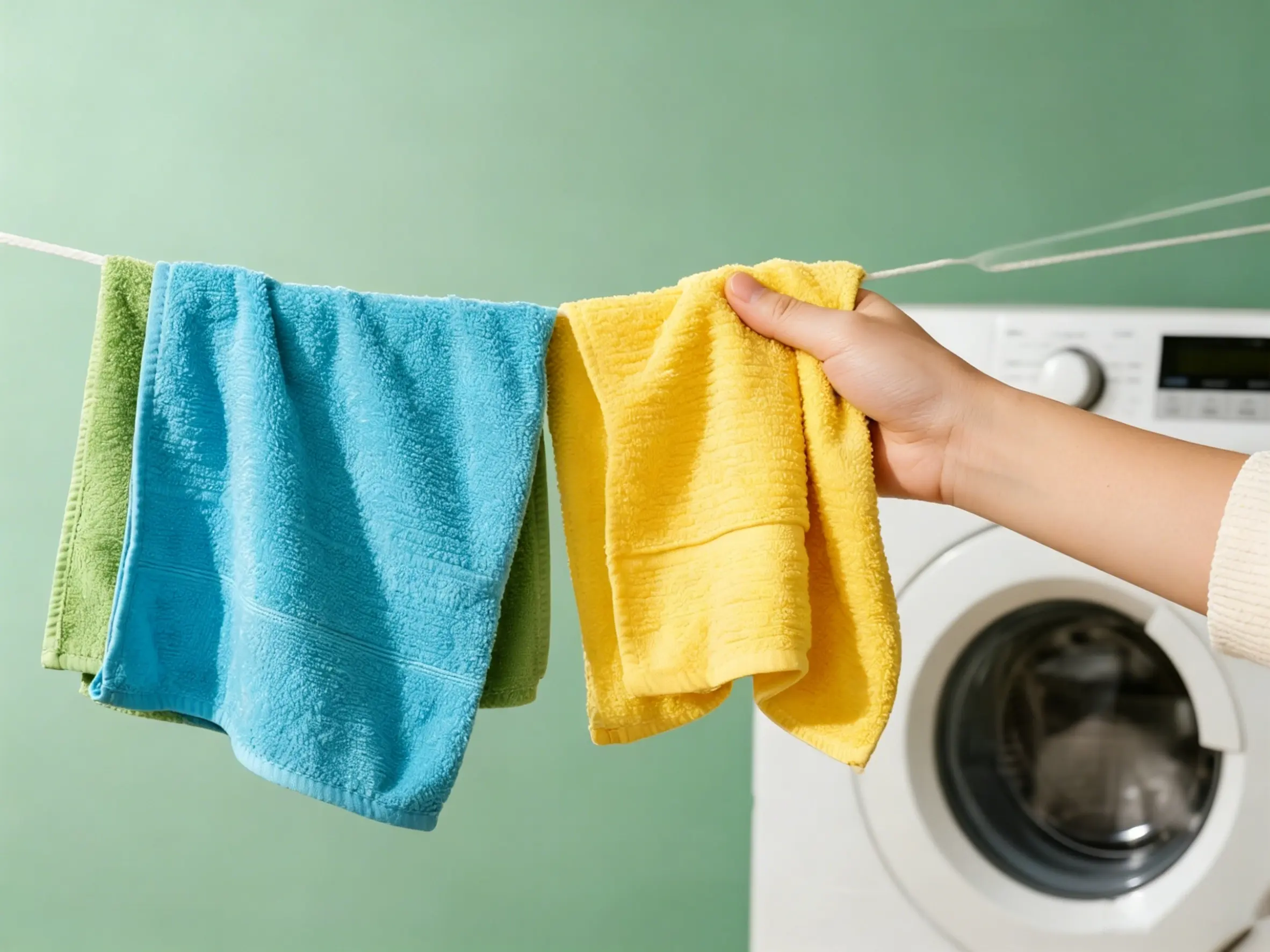
Air drying is my number one recommendation for all the microfiber products we manufacture.7 It’s gentle, costs nothing, and completely avoids the risk of heat damage. Simply hang the cloths on a line or a drying rack. They dry surprisingly fast due to their material composition. If you need them dry quickly, a tumble dryer can be used, but with extreme caution. You must use the ‘no heat’ or ‘low heat’ setting. High heat will cause the same melting damage as hot water. And it’s important to make sure you never use dryer sheets. They coat the fibers with a waxy residue that blocks their cleaning ability, just like fabric softener. Also, never think about ironing a microfiber cloth. I’ve seen people try it, and the result is always a melted, useless piece of plastic stuck to their iron. Treat them gently, and they will continue to perform for hundreds of uses.
How can I deal with heavily soiled or greasy microfiber cloths?
Is your microfiber cloth caked with grease, wax, or heavy grime? Just throwing it in a standard wash cycle won’t be enough and might just spread the mess to other items in the load.
For heavily soiled cloths, pre-soak them for 10-15 minutes in a bucket of warm water mixed with a small amount of neutral detergent. After soaking, gently agitate the cloth by hand, then wash it as you normally would on a gentle cycle.
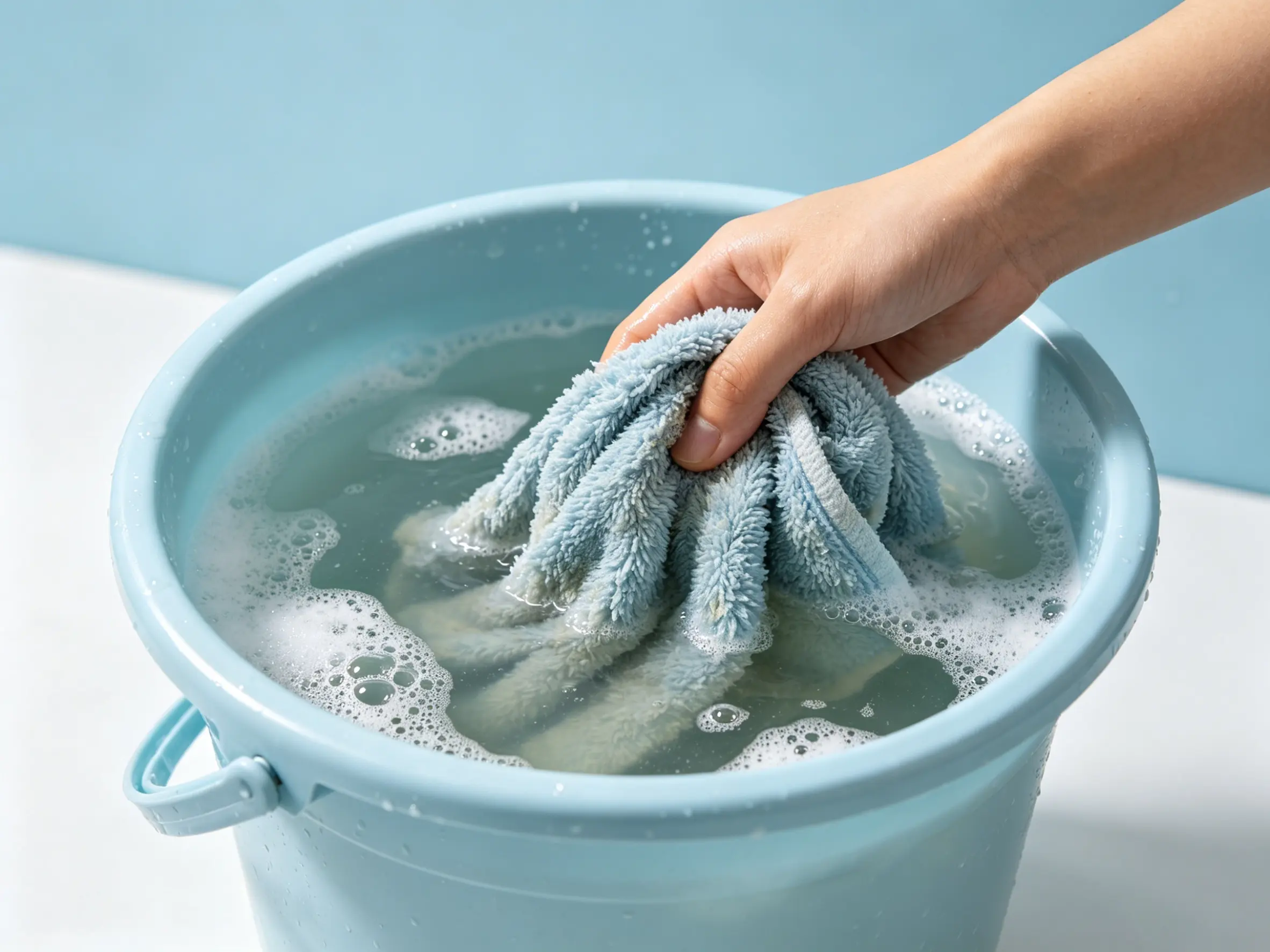
This pre-soak step is a game-changer, especially for our clients in the automotive or industrial cleaning sectors. When a cloth is saturated with oil, polish, or wax, the fibers are completely clogged. The pre-soak gives the detergent time to break down and lift the heavy soil before the main wash begins.8 One important tip: never use a stiff brush to scrub the cloth. This seems like a good idea, but it will physically tear and break the microscopic split fibers that are responsible for the cloth’s amazing cleaning power. A damaged fiber can’t hold dirt. Instead, just gently rub the cloth against itself in the soapy water to work the grime loose. After soaking, you can wash it by hand or put it in the machine with other microfiber items. Washing the cloths promptly after heavy use is also key, as it prevents grease and stains from setting in permanently.9
Conclusion
Properly washing your microfiber cloths is simple. By using the right detergent, cool water, and gentle cycles, you will protect the fibers and keep them working effectively for a long time.
"Microfiber cloth leaves residue on glass : r/AutoDetailing", https://www.reddit.com/r/AutoDetailing/comments/79bj1w/microfiber_cloth_leaves_residue_on_glass/. This source explains how improper washing methods can degrade microfiber cloths, leading to reduced cleaning performance. Evidence role: mechanism; source type: education. Supports: Improper washing methods can cause microfiber cloths to leave streaks and lint, reducing their cleaning effectiveness.. ↩
"[PDF] What’s so great about microfiber? – UCSF", https://wspehsu.ucsf.edu/wp-content/uploads/2015/10/FactSheet_Microfiber.pdf. This source discusses how fabric softeners and other products can clog microfiber fibers, reducing their cleaning efficiency. Evidence role: mechanism; source type: education. Supports: Fabric softeners and certain detergents can clog microfiber fibers, rendering them ineffective for cleaning.. ↩
"[PDF] What’s so great about microfiber? – UCSF", https://wspehsu.ucsf.edu/wp-content/uploads/2015/10/FactSheet_Microfiber.pdf. This source explains how the structure of split fibers in microfiber cloths enhances their cleaning power by increasing surface area. Evidence role: mechanism; source type: education. Supports: The cleaning power of microfiber cloths comes from their split fibers, which create a large surface area to grab dirt.. ↩
"How do you disinfect/sanitize your sponges or microfiber cloths that …", https://www.reddit.com/r/CleaningTips/comments/1ackru4/how_do_you_disinfectsanitize_your_sponges_or/. This source discusses how bleach can damage the delicate fibers in microfiber cloths, reducing their durability and cleaning performance. Evidence role: mechanism; source type: education. Supports: Bleach can damage the delicate fibers in microfiber cloths, reducing their durability and cleaning performance.. ↩
"What is the Best microfiber detergent? : r/AutoDetailing – Reddit", https://www.reddit.com/r/AutoDetailing/comments/18lm5po/what_is_the_best_microfiber_detergent/. This source supports the recommendation to use clear, dye-free, and perfume-free liquid detergents for cleaning microfiber cloths effectively. Evidence role: expert_consensus; source type: education. Supports: Clear, dye-free, and perfume-free liquid detergents are the best choice for cleaning microfiber cloths effectively.. ↩
"Microfiber Emissions from Functionalized Textiles: Potential Threat …", https://pmc.ncbi.nlm.nih.gov/articles/PMC10221355/. This source explains how high temperatures can damage synthetic fibers like those in microfiber cloths, reducing their cleaning ability. Evidence role: mechanism; source type: education. Supports: High heat can damage microfiber cloths by melting their synthetic fibers, making them less effective for cleaning.. ↩
"Microfiber Drying Towels for Cars vs. Regular Towels: The Ultimate …", https://pressbooks.cuny.edu/teaset/chapter/microfiber-drying-towels-for-cars-vs-regular-towels/. This source supports the recommendation to air dry microfiber cloths to avoid heat damage and maintain their cleaning performance. Evidence role: expert_consensus; source type: education. Supports: Air drying microfiber cloths is the best method to avoid heat damage and maintain their cleaning performance.. ↩
"how does a pre-soak, or extra rinse, improve the cleaning process?", https://www.reddit.com/r/laundry/comments/hiode4/how_does_a_presoak_or_extra_rinse_improve_the/. This source describes how pre-soaking allows detergents to break down heavy soils on microfiber cloths before washing. Evidence role: mechanism; source type: education. Supports: Pre-soaking allows detergents to break down heavy soils on microfiber cloths before washing.. ↩
"[PDF] What’s so great about microfiber? – UCSF", https://wspehsu.ucsf.edu/wp-content/uploads/2015/10/FactSheet_Microfiber.pdf. This source supports the recommendation to wash microfiber cloths promptly after heavy use to prevent permanent grease and stain setting. Evidence role: mechanism; source type: education. Supports: Washing microfiber cloths promptly after heavy use prevents grease and stains from setting in permanently.. ↩