
Are you worried that machine washing will ruin your microfiber cloths? You’ve invested in quality cleaning tools, but now they’re dirty, and incorrect washing could destroy their effectiveness.
Yes, you can absolutely machine wash microfiber cloths. For best results, use a gentle cycle with warm water and a small amount of mild detergent. Importantly, never use bleach or fabric softener1, as these will damage the fibers and reduce their cleaning power.
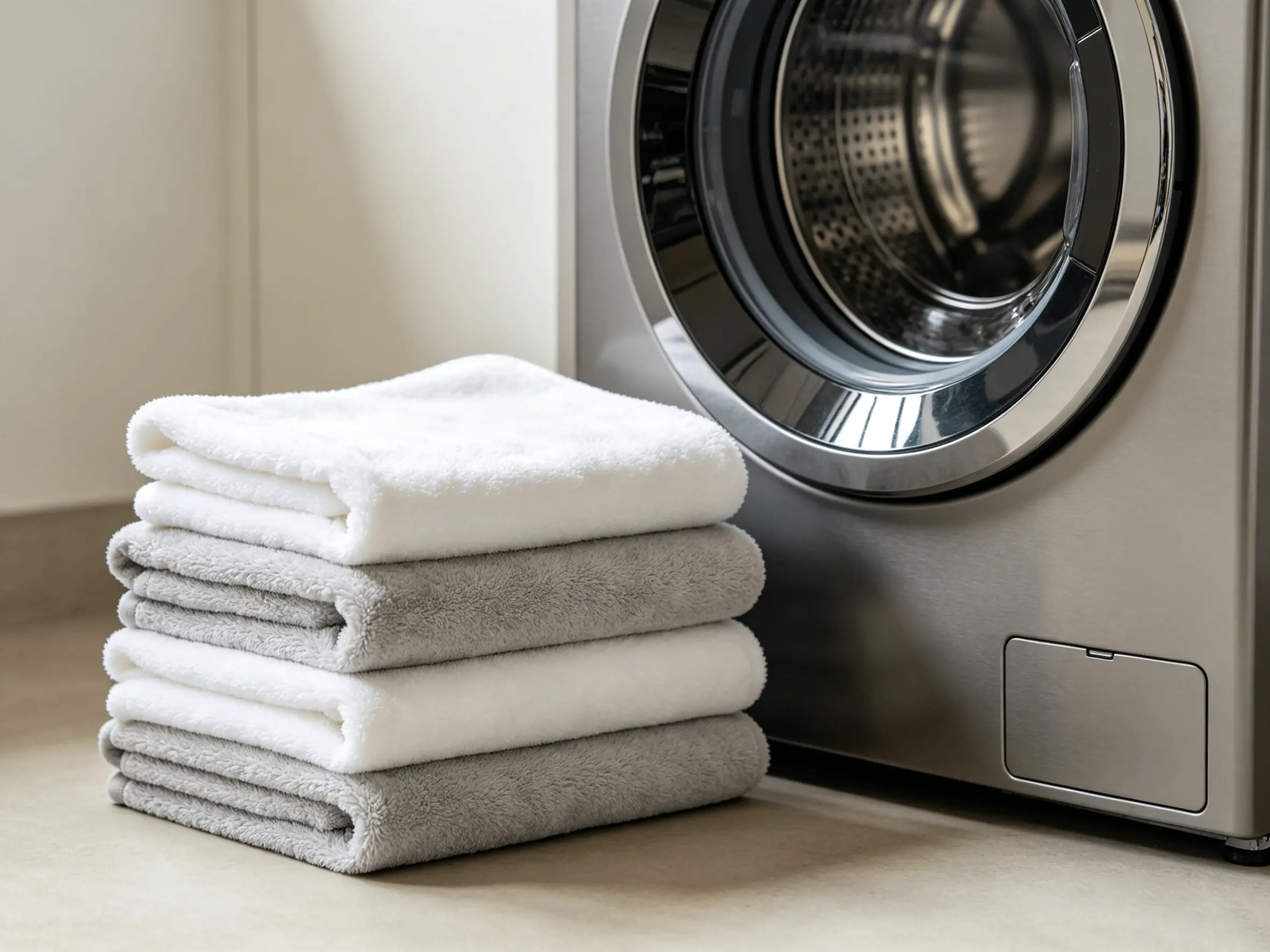
That’s the short answer, but if you’re a brand owner or a large-scale distributor, ensuring product longevity is key to customer satisfaction and your bottom line. How you communicate washing instructions can make or break the user experience. The details matter, from the wash cycle to the drying method. Let’s dive deeper into the best practices we’ve perfected over years of manufacturing.
What is the best way to machine wash microfiber cloths?
You know they can be machine washed, but what are the exact settings? Choosing the wrong cycle or temperature could degrade the fibers, leading to unhappy customers and damaged brand reputation.
The best way to machine wash microfiber is on a gentle or delicate cycle using warm water, ideally below 60°C (140°F).2 Use only a small amount of a mild liquid detergent. Also, wash them separately from cotton items to avoid lint contamination.
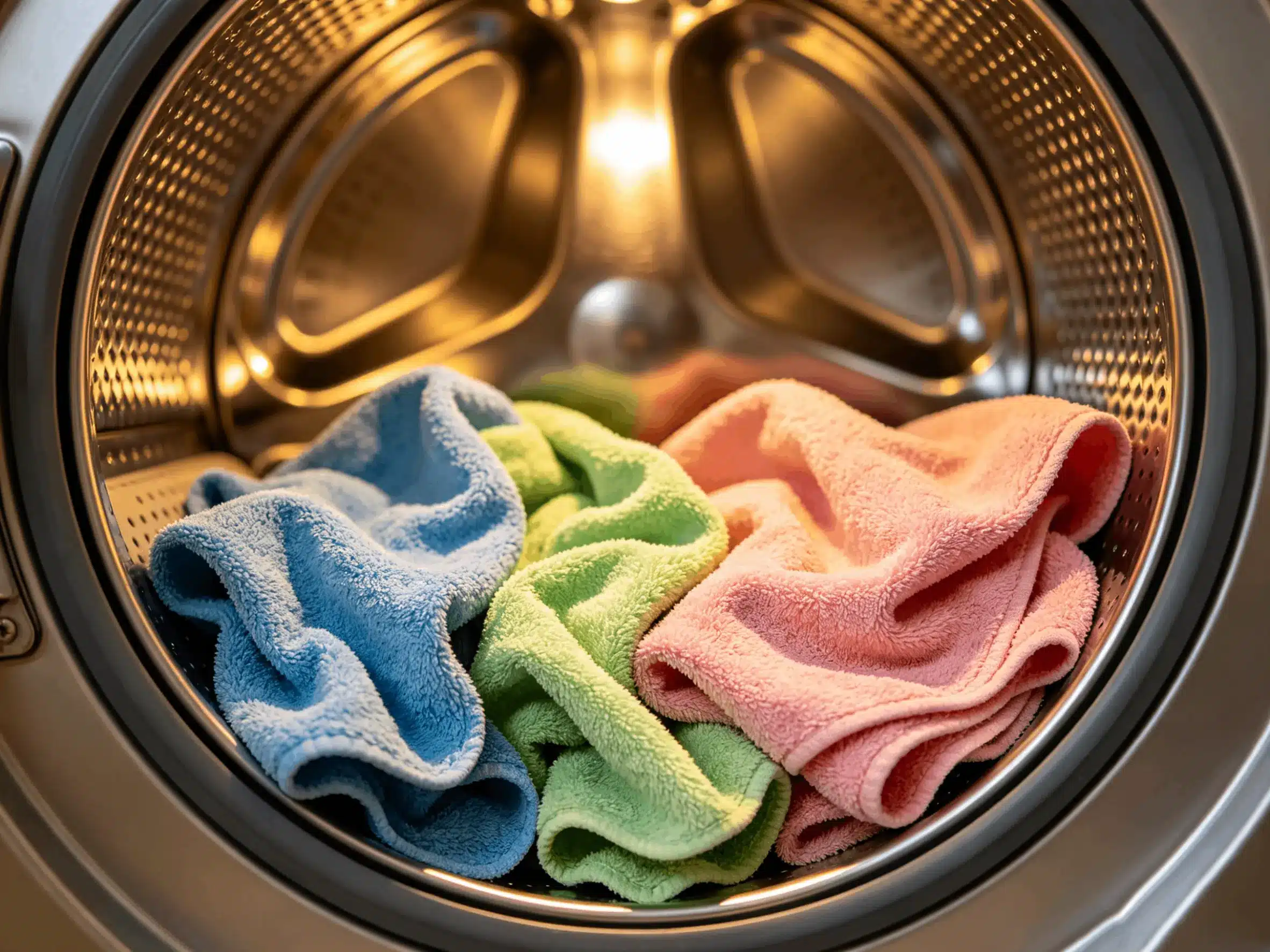
As a manufacturer, we’ve seen firsthand what happens to microfiber when it’s not cared for properly. The magic of microfiber lies in its split fibers, which create a massive surface area for trapping dirt and absorbing liquids.3 Harsh washing methods can ruin this structure.4
Setting Up the Perfect Wash Cycle
To preserve the cloth’s integrity, you need to control three main factors: water temperature, mechanical action, and detergent. A high temperature can cause the synthetic fibers to deform. A strong wash cycle with a heavy spin creates too much friction, which can wear down the delicate fibers prematurely. Finally, the wrong detergent can leave a residue that clogs the fibers. I remember a client who was getting complaints about their cloths losing absorbency. We discovered their care instructions recommended a standard hot wash, which was the root cause. We helped them revise it, and the complaints stopped.
Here is a simple guide we provide to our B2B partners:
| Setting | Recommendation | Why it Matters |
|---|---|---|
| Water Temperature | Warm (40-60°C / 100-140°F) | Hot water can damage the fibers. Cold water may not effectively remove oils and grime. |
| Wash Cycle | Gentle / Delicate | Reduces friction and stress, extending the cloth’s life. |
| Detergent | Mild, liquid, small amount | Powder detergents can leave residue. Less is more to prevent clogging. |
| Wash Load | With other synthetics only | Prevents lint from cotton and other natural fibers from sticking to the microfiber. |
What washing mistakes will ruin your microfiber cloths?
You want to avoid simple mistakes that could cost you money. Adding common laundry products to your microfiber wash seems harmless, but it could be destroying the very properties that make them effective.
The biggest mistakes are using fabric softener and bleach. Fabric softener clogs the spaces in the fibers, destroying their absorbency.5 Bleach is a harsh chemical that breaks down the polyester and polyamide fibers, making the cloth fall apart much faster.
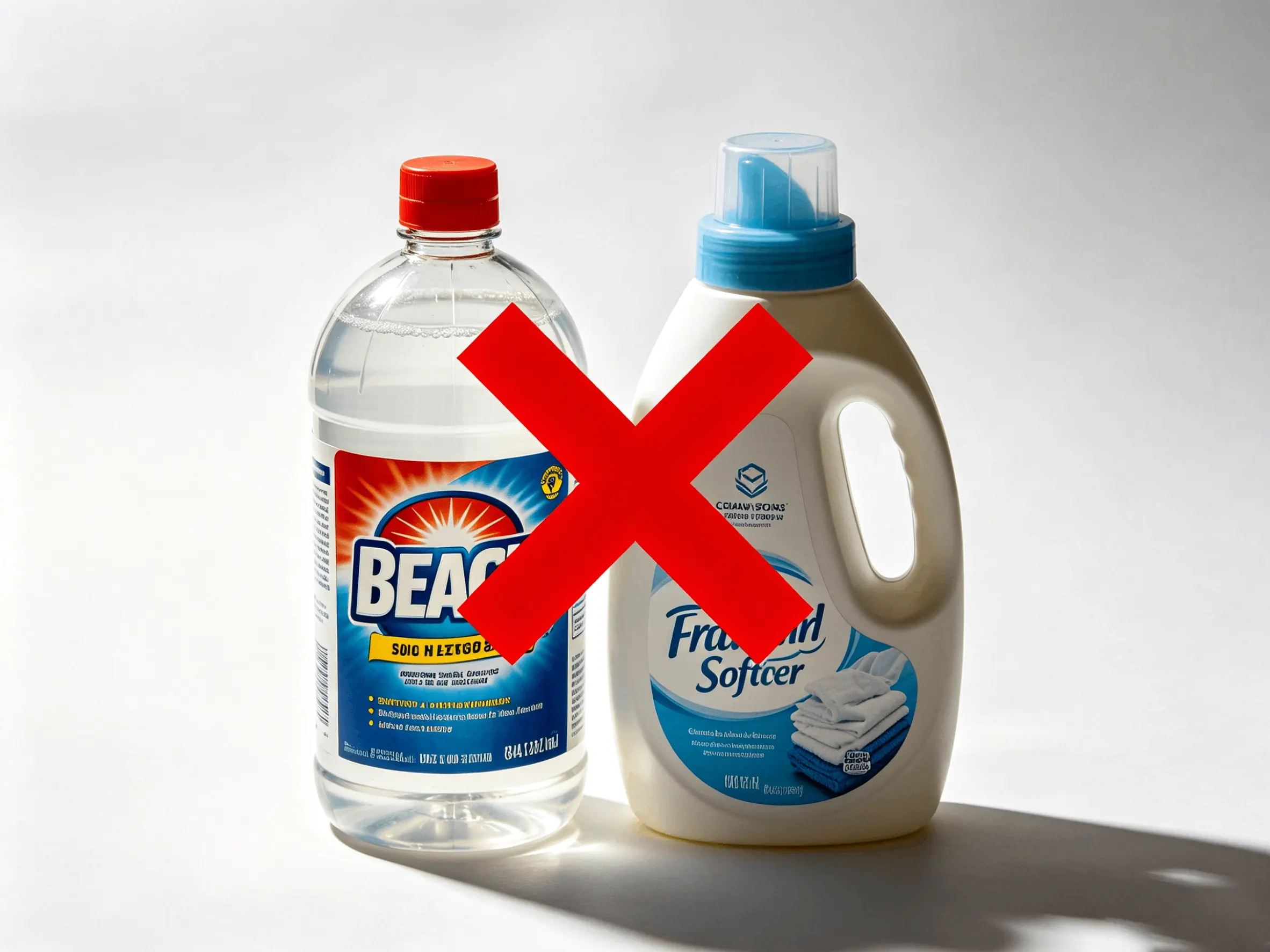
Think of a microfiber cloth as a collection of tiny hooks and loops. These microscopic structures are what grab onto dust and soak up spills. When you pour fabric softener into the wash, you’re essentially coating those hooks and loops with a waxy film. The cloth might feel soft, but it will no longer be able to clean effectively. Instead of absorbing water, it will just push it around. It’s the number one reason why high-performance cloths suddenly stop working.
The Damage Done by Common Additives
Bleach is even more direct in its damage. The chlorine in bleach chemically attacks the synthetic polymers that make up the microfiber.6 The fibers become brittle and weak. After a few washes with bleach, you’ll notice the cloth starting to thin out and even tear. It dramatically shortens the lifespan of the product. With proper care, a quality microfiber cloth can last for over 300 washes.7 With bleach, you’d be lucky to get a few dozen.
Here’s a clear comparison for your end-users:
| Action | The Wrong Way (Damaging) | The Right Way (Preserving) |
|---|---|---|
| Cleaning Agent | Using bleach to "disinfect". | Using a small amount of mild detergent. |
| Softening | Adding fabric softener for a soft feel. | Skipping additives completely. The cloth stays effective. |
| Washing With | Tossing them in with cotton towels and jeans. | Washing in a separate load or with other non-linting synthetics. |
| Stain Removal | Applying harsh, undiluted chemical cleaners. | Pre-soaking the cloth in warm water and a drop of detergent. |
How should you dry microfiber cloths after washing?
Now that your cloths are clean, how do you dry them without causing damage? Using high heat in a dryer seems like the fastest way, but it could be melting the very fibers you just carefully washed.
The safest method is to air-dry your microfiber cloths.8 If you must use a machine, tumble dry on the lowest heat setting or a no-heat air-fluff cycle. High heat will melt the fibers, permanently ruining the cloth’s texture and cleaning ability.9
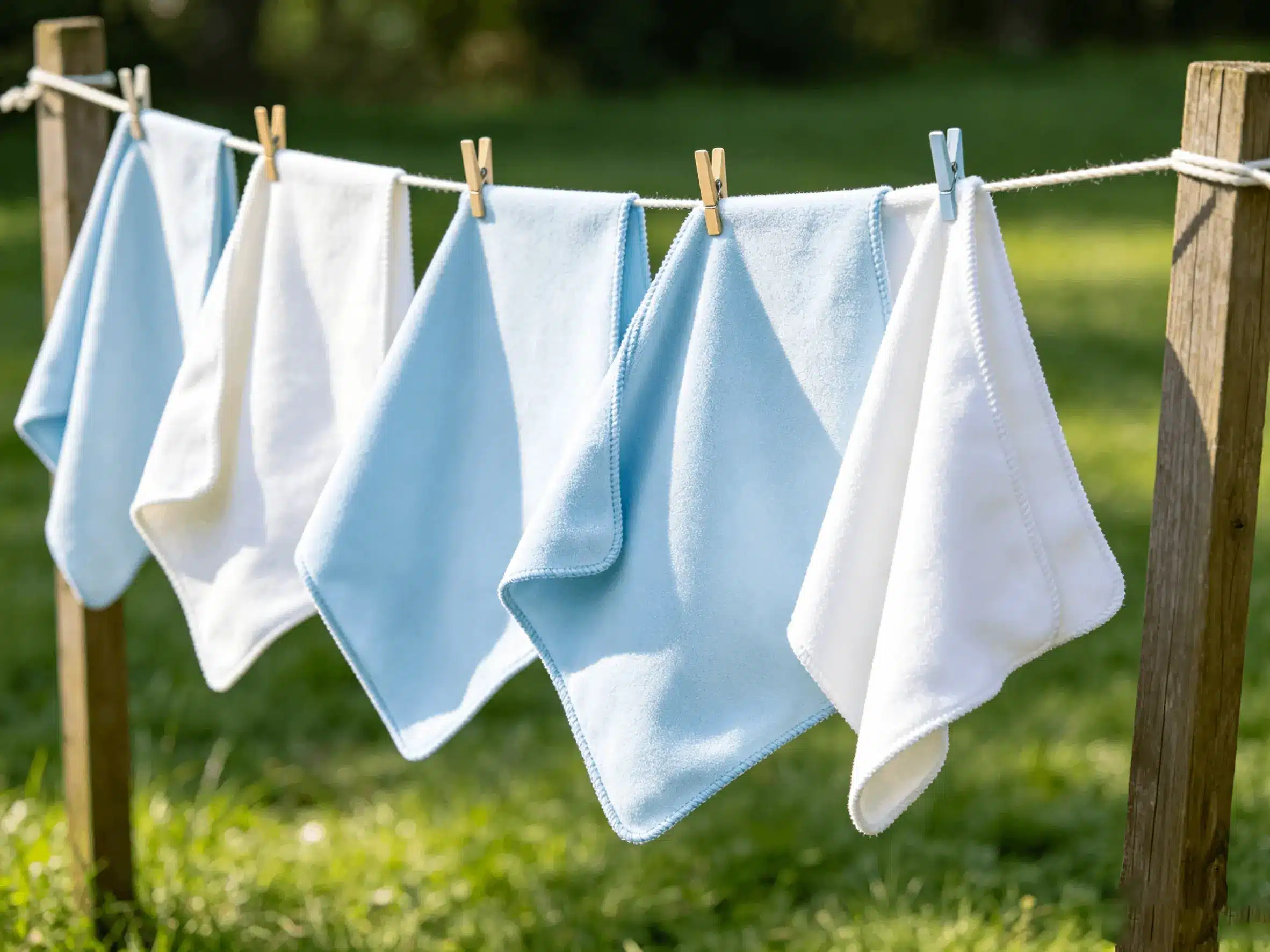
We always emphasize the drying process to our clients because it’s just as critical as washing. Microfiber is essentially a type of plastic (polyester and polyamide).10 What happens when you expose plastic to high heat? It melts. The same principle applies here. Even a standard medium-heat setting on a dryer can be too hot for the ultra-fine fibers. The tips of the fibers will fuse together, turning the soft, plush towel into a matted, scratchy cloth.11 Once this happens, the damage is irreversible. The cloth will lose its softness and, more importantly, its ability to trap dirt.
Air Drying vs. Machine Drying
For maximum longevity, we always recommend air drying. Simply hang the cloths on a line or a drying rack. They dry relatively quickly due to their material composition.12 However, we understand that for commercial operations or for customers who need a quick turnaround, machine drying is necessary. The key is low heat. It might take a little longer, but it ensures the product remains in perfect condition. We tell our clients to imagine they are drying a delicate silk shirt—gentle is always better. This simple instruction helps customers preserve the quality of the products you sell them, ensuring they perform as promised for hundreds of uses.
Conclusion
Properly washing microfiber is simple: use a gentle cycle with mild detergent, avoid fabric softeners and bleach, and dry on low heat or air-dry for the best results.
"3. Microfiber Towels for Cars: The Ultimate Buyer’s Guide", https://pressbooks.cuny.edu/teaset/chapter/microfiber-towels-for-cars-buyers-guide/. This source explains how bleach and fabric softeners can damage microfiber cloths by breaking down their fibers and reducing their cleaning efficiency. Evidence role: mechanism; source type: education. Supports: Bleach and fabric softeners damage microfiber cloths and reduce their cleaning power.. ↩
"How to Wash Microfiber Towels for Cars (And Why You’re Probably …", https://pressbooks.cuny.edu/teaset/chapter/how-to-wash-microfiber-towels-for-cars/. This source provides guidelines for washing microfiber cloths, including recommended water temperature and cycle settings to preserve their fibers. Evidence role: general_support; source type: education. Supports: Microfiber cloths should be washed on a gentle cycle with warm water below 60°C to avoid damaging the fibers.. ↩
"[PDF] Microfiber – DEOHS – University of Washington", https://deohs.washington.edu/sites/default/files/images/microfiber_fact_sheet_11-21-11.pdf. This source explains the structure of microfiber cloths and how their split fibers enhance cleaning and absorption capabilities. Evidence role: mechanism; source type: encyclopedia. Supports: Microfiber’s effectiveness comes from its split fibers, which create a large surface area for trapping dirt and absorbing liquids.. ↩
"Microfiber release from real soiled consumer laundry and the impact …", https://pmc.ncbi.nlm.nih.gov/articles/PMC7274375/. This source discusses how improper washing techniques can degrade the split fibers in microfiber cloths, reducing their effectiveness. Evidence role: mechanism; source type: research. Supports: Harsh washing methods can ruin the structure of microfiber cloths, reducing their cleaning effectiveness.. ↩
"Can You Use Fabric Softener on Microfiber Towels?", https://jimbosdetailing.com/blogs/microfiber-care/fabric-softener-microfiber?srsltid=AfmBOopnIUipSDyA3zKZrWi3-NBy8b0_CKOOXSVfQKxw3Fm0GcmVpoVp. This source details how fabric softeners coat microfiber fibers, reducing their ability to absorb liquids effectively. Evidence role: mechanism; source type: education. Supports: Fabric softener clogs the spaces in microfiber fibers, reducing their absorbency.. ↩
"[PDF] What’s so great about microfiber? – UCSF", https://wspehsu.ucsf.edu/wp-content/uploads/2015/10/FactSheet_Microfiber.pdf. This source explains how chlorine in bleach degrades synthetic polymers, leading to weakened microfiber fibers. Evidence role: mechanism; source type: research. Supports: Chlorine in bleach chemically attacks the synthetic polymers in microfiber, weakening the fibers.. ↩
"[PDF] What’s so great about microfiber? – UCSF", https://wspehsu.ucsf.edu/wp-content/uploads/2015/10/FactSheet_Microfiber.pdf. This source provides data on the durability of microfiber cloths when properly cared for, including their lifespan over multiple washes. Evidence role: statistic; source type: research. Supports: Properly cared-for microfiber cloths can last for over 300 washes.. Scope note: The lifespan may vary depending on the quality of the microfiber and specific care practices. ↩
"[Advice] Air Drying Microfiber towels : r/AutoDetailing – Reddit", https://www.reddit.com/r/AutoDetailing/comments/4iei0c/advice_air_drying_microfiber_towels/. This source recommends air-drying as the safest method to preserve microfiber cloths, preventing heat damage. Evidence role: general_support; source type: education. Supports: Air-drying is the safest method to preserve microfiber cloths.. Scope note: The recommendation may not account for all commercial drying needs. ↩
"Microfiber Emissions from Functionalized Textiles – PMC – NIH", https://pmc.ncbi.nlm.nih.gov/articles/PMC10221355/. This source explains how high heat can deform microfiber fibers, reducing their cleaning effectiveness and altering their texture. Evidence role: mechanism; source type: education. Supports: High heat can melt microfiber fibers, ruining their texture and cleaning ability.. ↩
"Microfiber – Wikipedia", https://en.wikipedia.org/wiki/Microfiber. This source defines microfiber as a synthetic material made from polyester and polyamide, commonly used in cleaning products. Evidence role: definition; source type: encyclopedia. Supports: Microfiber is made from synthetic materials like polyester and polyamide.. ↩
"Microfiber Emissions from Functionalized Textiles: Potential Threat …", https://pmc.ncbi.nlm.nih.gov/articles/PMC10221355/. This source describes how heat exposure causes microfiber fibers to fuse, altering their texture and reducing effectiveness. Evidence role: mechanism; source type: research. Supports: Heat exposure causes microfiber fibers to fuse, making the cloth matted and scratchy.. ↩
"Microfiber – Wikipedia", https://en.wikipedia.org/wiki/Microfiber. This source explains how the synthetic composition of microfiber allows it to dry faster than natural fibers. Evidence role: mechanism; source type: education. Supports: Microfiber dries quickly due to its synthetic material composition.. Scope note: Drying time may vary depending on environmental conditions. ↩