
Are you trying to decide between microfiber and cotton for your product line? This choice can be confusing. Let me help you understand the real differences between these two materials.
Microfiber generally cleans better because its synthetic fibers are designed to trap dirt and absorb liquid effectively. Cotton is a natural fiber that is prized for its softness and is best for skin-contact products, but it is less effective for deep cleaning.
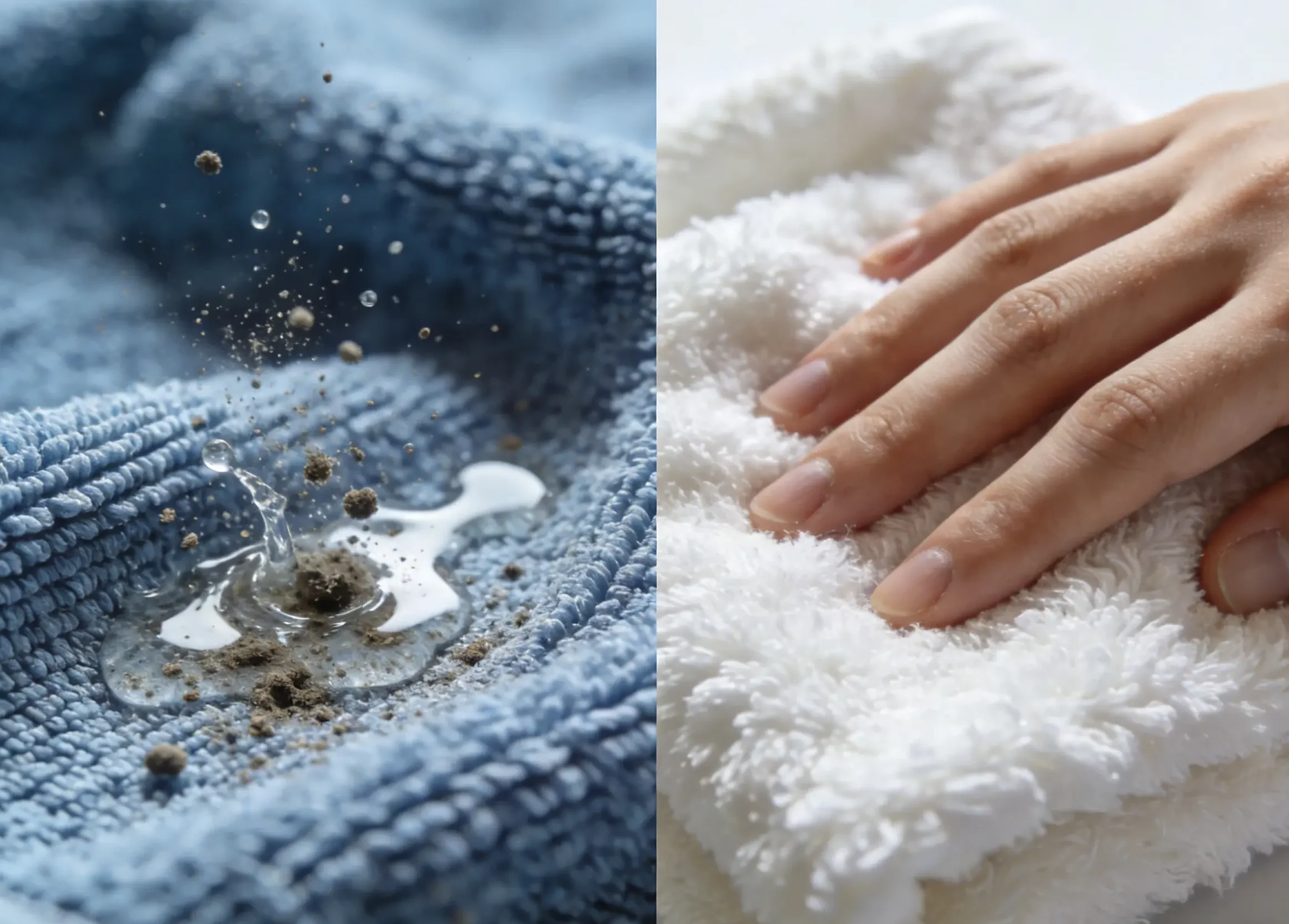
This is a question I get all the time from business owners like you. You want to know which material will perform best for your customers and best represent your brand. The truth is, there isn’t one simple answer that fits every situation. To make the right choice, you need to understand the unique strengths of each fabric. Let’s dig into the details to see which one is right for your specific needs.
Is cotton the best choice for cleaning cloths?
You want to offer a natural, premium product for your customers. But you worry that choosing cotton might mean sacrificing real cleaning power and leaving your customers disappointed with the results.
Cotton is not the best material for heavy-duty cleaning1 tasks. Its natural fibers2 are less effective at trapping dirt and absorbing spills compared to microfiber. Cotton’s main strengths are its softness and skin-friendliness, making it better for personal care3 than for scrubbing floors.
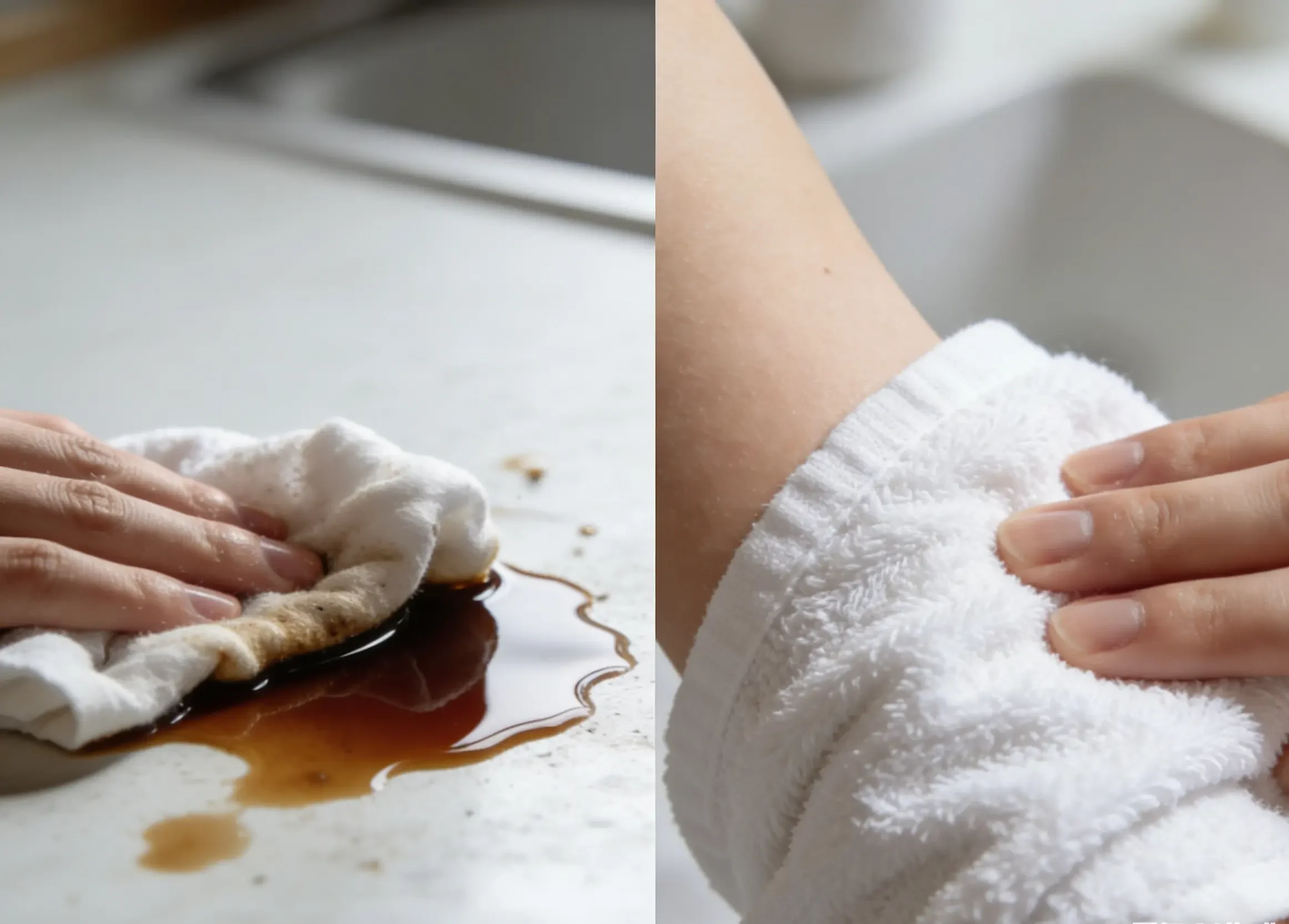
When I first started in this business, many of my clients were focused only on cotton. It has a great reputation, and for good reason. As a manufacturer, I can tell you that its biggest advantages are not in cleaning.
The Appeal of Natural Fibers
Cotton is a plant-based fiber. This makes it naturally soft, breathable, and biodegradable4. For brands that want to project a classic, high-end, or eco-friendly image5, cotton is a fantastic choice. It looks and feels luxurious. This is why high-end hotels and spas almost always use cotton for their face towels and bath towels. The product feels substantial and premium in the customer’s hands. However, that premium feel comes with a higher price tag, both for you and the end consumer.
Where Cotton Falls Short in Cleaning
For actual cleaning tasks, cotton’s properties become weaknesses. The round, thick fibers tend to push dirt and water around rather than lifting them up. Because it absorbs water slowly and holds onto it, a cotton cloth becomes saturated and heavy very quickly. It also takes a long time to dry, which can create a breeding ground for bacteria and mildew if not laundered properly.
I once worked with a hotel chain that insisted on using 100% cotton cloths for their housekeeping staff. They loved the premium image, but the cleaning team was frustrated. The cloths left streaks on mirrors and got soaked after cleaning just one bathroom sink. It showed me firsthand that cotton’s best use is for gentle applications, not tough messes.
| Feature | Cotton Cleaning Cloths |
|---|---|
| Pros | Natural, biodegradable, soft, premium appearance. |
| Cons | Poor absorption, pushes dirt, dries slowly, expensive. |
| Best For | Gentle drying, skin contact6, luxury personal care items. |
Why is microfiber so effective for cleaning?
Are your customers tired of cloths that just seem to spread messes around? You need to provide a solution that actually lifts and traps grime, making cleaning faster and more effective.
Microfiber’s cleaning power comes from its millions of ultra-fine, split synthetic fibers. These tiny fibers create a static charge7 that attracts dust and have sharp edges that scrape up and hold onto dirt, grime, and liquid instead of just pushing them around.
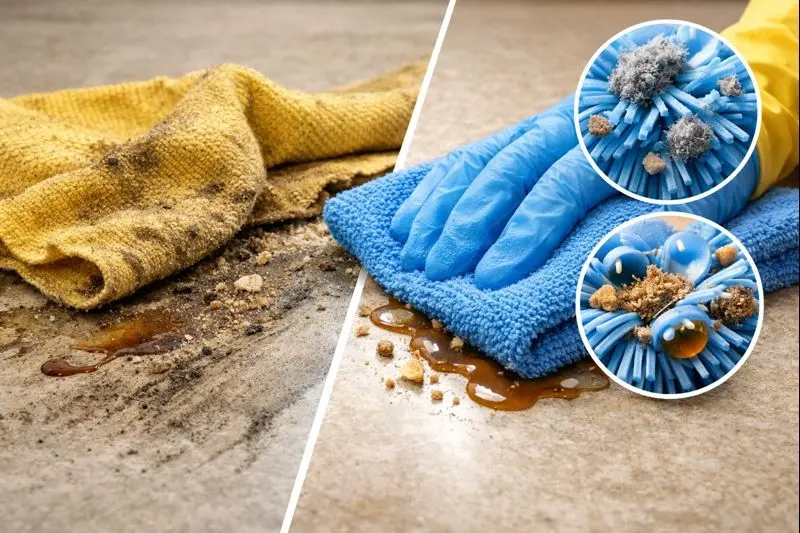
The real magic of microfiber is in its structure. It’s not just a piece of cloth; it’s an engineered cleaning tool. As a manufacturer, we have precise control over this process, which allows us to create materials for very specific jobs.
The Science Behind the Fiber
Microfiber is typically made from a blend of polyester and polyamide. During manufacturing, the fibers are split, creating a star-like cross-section with millions of tiny hooks and a massive increase in surface area. The polyester part is great for scrubbing and trapping grime, while the polyamide part is excellent for absorbing water. This combination is what makes it so powerful. When used dry, the fibers generate a static charge that acts like a magnet for dust particles. When used damp, it lifts and traps dirt and grease with ease.
Durability and Environmental Impact
One of the biggest selling points for your customers is microfiber’s durability8. A good quality microfiber cloth can be washed and reused hundreds of times—I’ve seen our cloths last for over 300 washes in lab tests. This makes them incredibly cost-effective9 in the long run. While the material itself is a synthetic plastic and not biodegradable, its long life significantly reduces waste. By using one cloth hundreds of times, a consumer avoids throwing away hundreds of paper towels or less durable cotton cloths. This is a powerful point to make to environmentally conscious buyers.
| Feature | Microfiber Cleaning Cloths |
|---|---|
| Pros | Excellent cleaning, highly absorbent, traps dirt, durable, cost-effective. |
| Cons | Synthetic material, not biodegradable. |
| Best For | All-purpose cleaning, dusting, drying, polishing, automotive care. |
Can microfiber be used for more than just cleaning?
You probably associate microfiber with cleaning cloths for kitchens and cars. But are you missing out on a huge and growing market in personal care by limiting your view of this material?
Yes, absolutely. Modern microfiber, especially weaves like coral fleece10, is now engineered to be incredibly soft and highly absorbent. This makes it perfect for high-performance bath towels, face cloths, sports towels, and hair wraps that are gentle on the skin and dry incredibly fast.
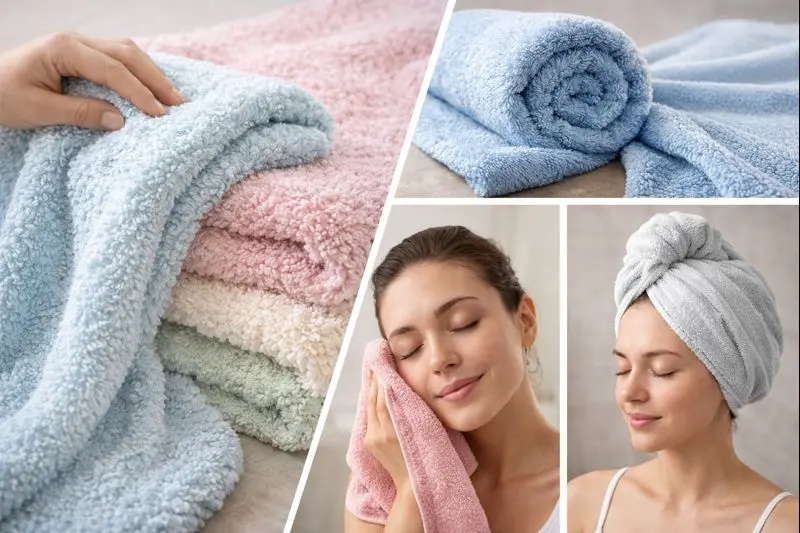
For years, the main hesitation about using microfiber for personal care was the perception that it wasn’t natural. But technology has changed, and so have customer preferences. As a factory, we can now produce microfiber that meets the highest safety standards for products that touch the skin.
From Kitchens to Bathrooms
The key change has been our ability to produce microfiber that meets strict European and international standards, like OEKO-TEX. We can manufacture products that achieve a Class A or Class B rating, certifying them as safe even for direct contact with a baby’s skin. This has opened up the entire personal care market. Customers are now discovering that microfiber towels are not only safe but also offer superior performance. They are much more absorbent than cotton and dry in a fraction of the time, which also helps prevent musty smells.
The Rise of Coral Fleece
One of the most exciting developments has been in specific types of microfiber, like coral fleece. This material has a thicker, plusher pile that is unbelievably soft to the touch. It perfectly balances that luxurious, gentle feel with the high absorbency that microfiber is known for. Coral fleece towels offer a spa-like experience but are often more affordable than high-end cotton.
I had a client from Europe, a buyer just like you, who was very skeptical about microfiber towels. He told me, "To me, microfiber is for cleaning my car." I understood his perspective, so I sent him a sample of our best coral fleece bath towel. A week later, he called me, completely surprised. He said it was softer than his cotton towels and dried him off faster than anything he had ever used. That company is now one of our biggest buyers of personal care towels.
| Feature | Cotton Towel | Coral Fleece Microfiber Towel |
|---|---|---|
| Absorbency | Good | Excellent |
| Drying Time | Slow | Very Fast |
| Feel | Soft, heavy | Very soft, plush, lightweight |
| Durability | Good | Excellent |
| Cost | Can be expensive | Very affordable |
So which material should I choose for my brand?
You are at a crossroads, trying to decide between cotton and microfiber. You worry about making the wrong investment in a product that doesn’t sell or doesn’t fit your brand’s identity.
The best choice depends entirely on your target market and the product’s specific purpose. For high-performance cleaning11, microfiber is the clear winner. For a traditional, luxury bath product12, cotton is a safe bet. For a modern, affordable, high-performance towel, microfiber is an excellent choice.
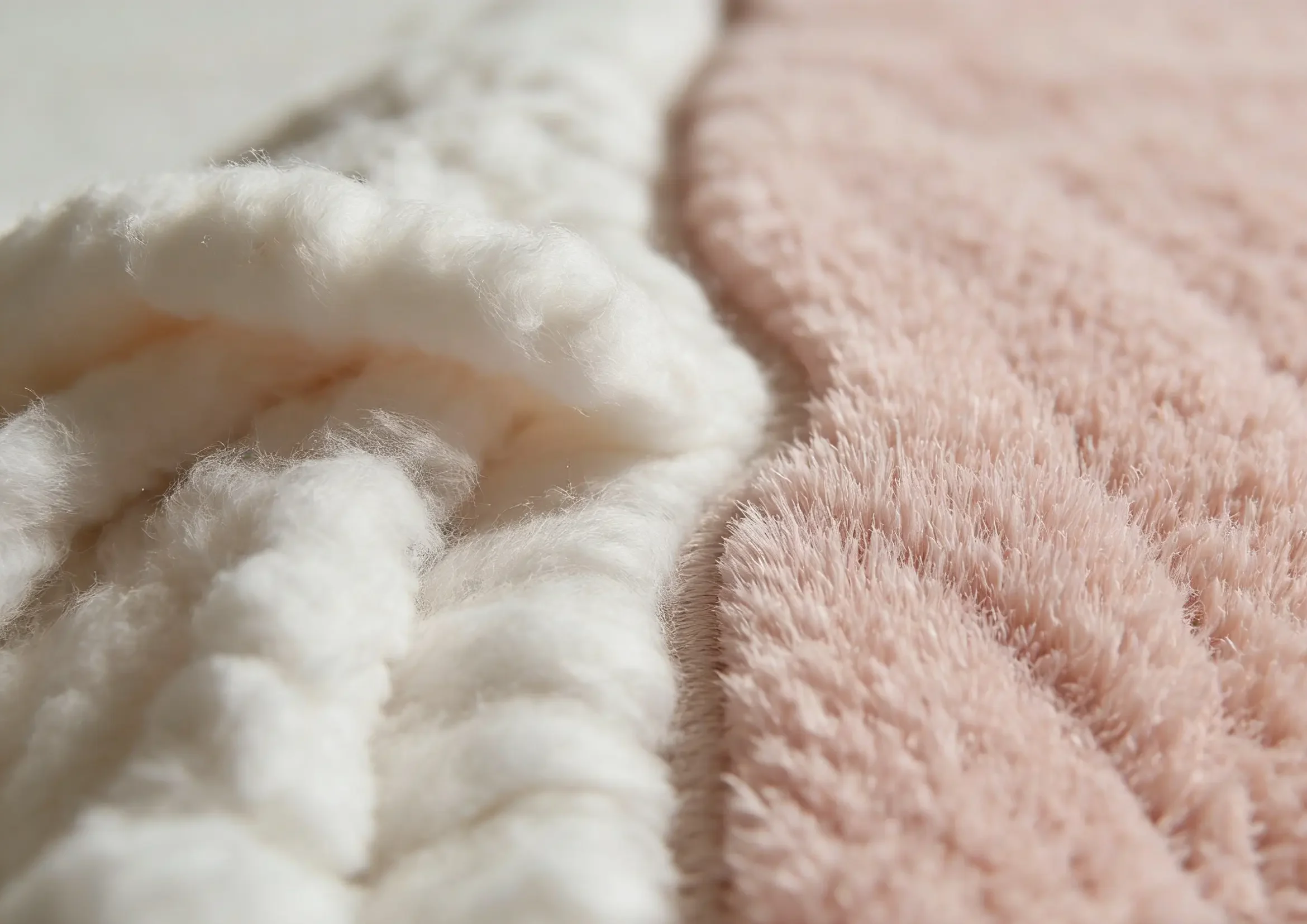
The most successful brands I work with don’t limit themselves to just one material. They build a complete product portfolio13 that gives their customers options. It is not about one material being better than the other; it is about using the right tool for the right job.
Aligning Material with Application
Think about your customer. What problem are you trying to solve for them?
- If they need to clean greasy stovetops or dusty shelves, they need the gripping power of microfiber.
- If they are buying a gift set for a spa-themed bathroom, they might prefer the classic, heavy feel of a premium cotton towel.
- If they are an athlete looking for a towel to throw in a gym bag, they need a lightweight, quick-drying microfiber sports towel.
A Complementary Strategy
You do not have to choose. A smart strategy is to offer both. You can have a line of powerful microfiber cleaning cloths for the kitchen and garage, and right next to them, a line of plush coral fleece bath towels or classic cotton face cloths. This strategy allows you to capture a wider audience and meet different customer needs14 under one brand umbrella. I always advise my clients: don’t think of it as a competition. Think of it as building a complete toolkit for your customers.
| Application | Primary Recommendation | Secondary Option |
|---|---|---|
| Heavy-Duty Cleaning | Microfiber | – |
| Glass & Polishing | Waffle Weave Microfiber | – |
| Luxury Bath Towel | Premium Cotton | High-Pile Coral Fleece |
| Performance/Gym Towel | Microfiber | – |
| Kitchen Dish Cloth | Microfiber | Cotton |
| Face Towel | Cotton | Ultrasoft Microfiber |
Conclusion
Ultimately, both microfiber and cotton are excellent materials with their own unique strengths. The best one is simply the one that fits your product’s purpose and your customer’s needs.
Explore the best materials for heavy-duty cleaning and their effectiveness. ↩
Understand the appeal of natural fibers like cotton and their environmental benefits. ↩
Discover the best materials for personal care items and how they affect customer satisfaction. ↩
Find out about the biodegradability of cotton and its impact on the environment. ↩
Learn strategies for brands to enhance their eco-friendly image using materials like cotton. ↩
Learn about materials that are safe for direct skin contact, especially in personal care. ↩
Discover how static charge in microfiber helps attract and trap dust and dirt. ↩
Explore the durability of microfiber and how it can save costs in the long run. ↩
Find out how microfiber’s longevity makes it a cost-effective choice for consumers. ↩
Explore the benefits of coral fleece, a soft and absorbent material for towels. ↩
Understand the concept of high-performance cleaning and the materials that support it. ↩
Learn what characteristics make a bath product luxurious and appealing to consumers. ↩
Learn how to create a diverse product portfolio that meets various customer needs. ↩
Explore strategies for brands to understand and meet their customers’ needs effectively. ↩