
You want to source microfiber towels but worry about their downsides. These concerns could affect your brand’s reputation. Understanding the issues helps you make a smart, responsible choice.
Microfiber’s two main disadvantages are its environmental impact1 and potential safety risks. The material is not biodegradable2, and low-quality production can introduce harmful chemicals3. These problems are solved by promoting reuse and choosing suppliers with international safety certifications like REACH4.
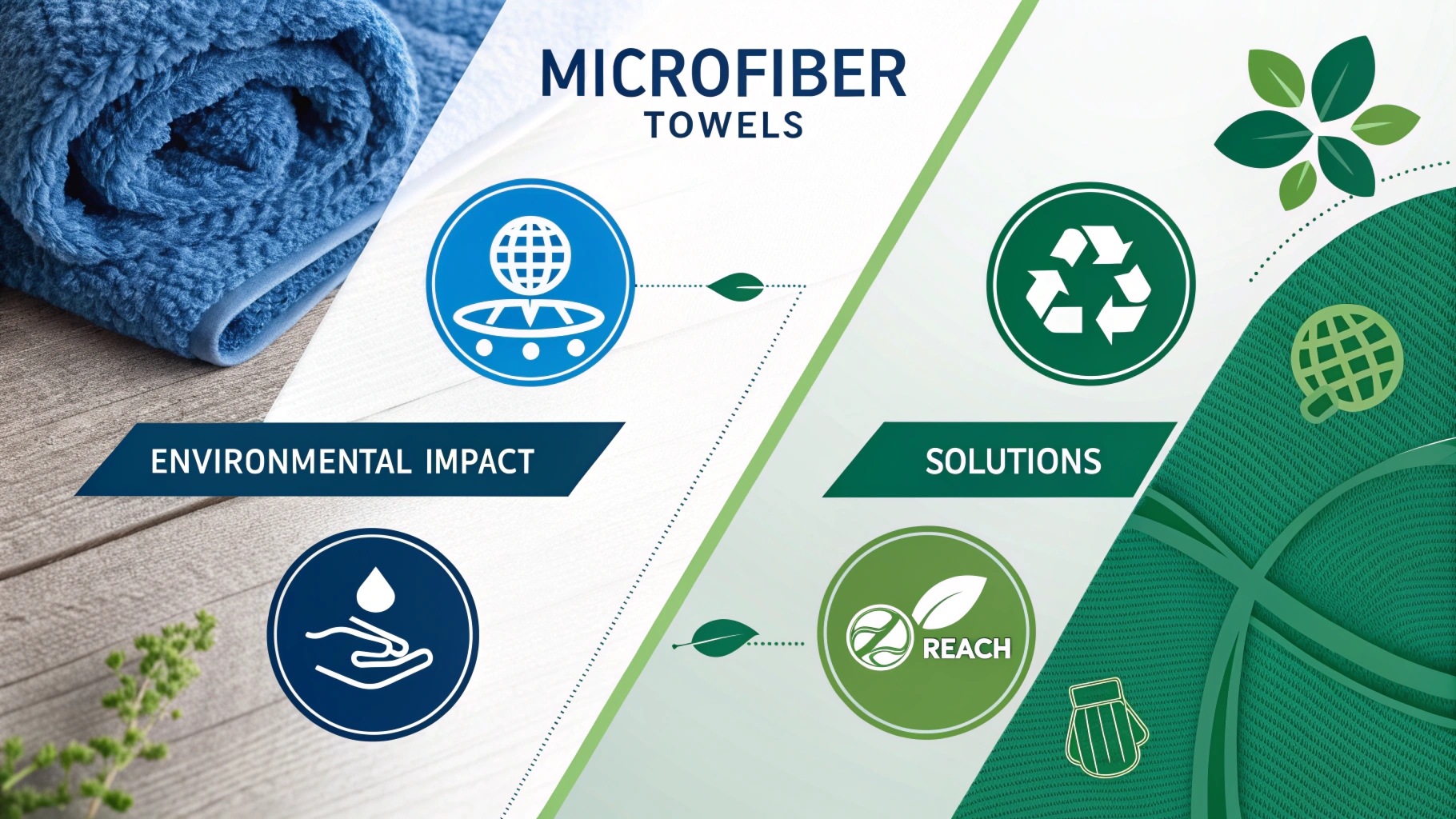
While these drawbacks are real, they are not the full story. As a manufacturer, I believe that understanding these challenges is the first step toward overcoming them. It allows you to source products responsibly and educate your customers. Let’s look at these issues more closely.
Is microfiber bad for the environment?
You hear that microfiber is a plastic and worry about pollution. This is a valid concern for any brand today. But there are practical ways to manage this impact effectively.
Microfiber’s biggest environmental issue5 is that it does not biodegrade easily. As a synthetic product, it can take decades or even centuries to break down in a landfill. The most effective way to counter this is by maximizing its lifespan through repeated use.
As a manufacturer, I am honest about this. Microfiber is made from polyester and polyamide, which are plastics. They do not break down like cotton or other natural fibers. Some people talk about recycling, but this process is very expensive and not widely available yet. The best solution we have right now is to make high-quality, durable products6. A well-made microfiber towel can be washed and reused hundreds of times. This reduces the need for single-use paper towels or lower-quality cloths that wear out quickly. By focusing on durability, we extend the product’s life and significantly reduce its overall environmental footprint. The goal is to use one good cloth for a long time instead of many disposable ones.
| Feature | High-Quality Reusable Microfiber | Single-Use Paper Towels |
|---|---|---|
| Lifespan | Hundreds of uses | One use |
| Waste Generation | Minimal over time | High |
| Long-Term Cost | Low | High |
| Environmental Focus | Reduce and Reuse | Disposable |
Are microfiber towels safe for my customers?
You are responsible for the products you sell. The fear of harmful chemicals3 in your inventory is a major risk. Ensuring product safety protects your customers and your business’s reputation.
The safety of microfiber towels depends on the supplier. If a factory uses low-quality raw materials or dyes, the final product can contain harmful substances. Sourcing from suppliers with international certifications, like REACH, guarantees the product is safe for use.
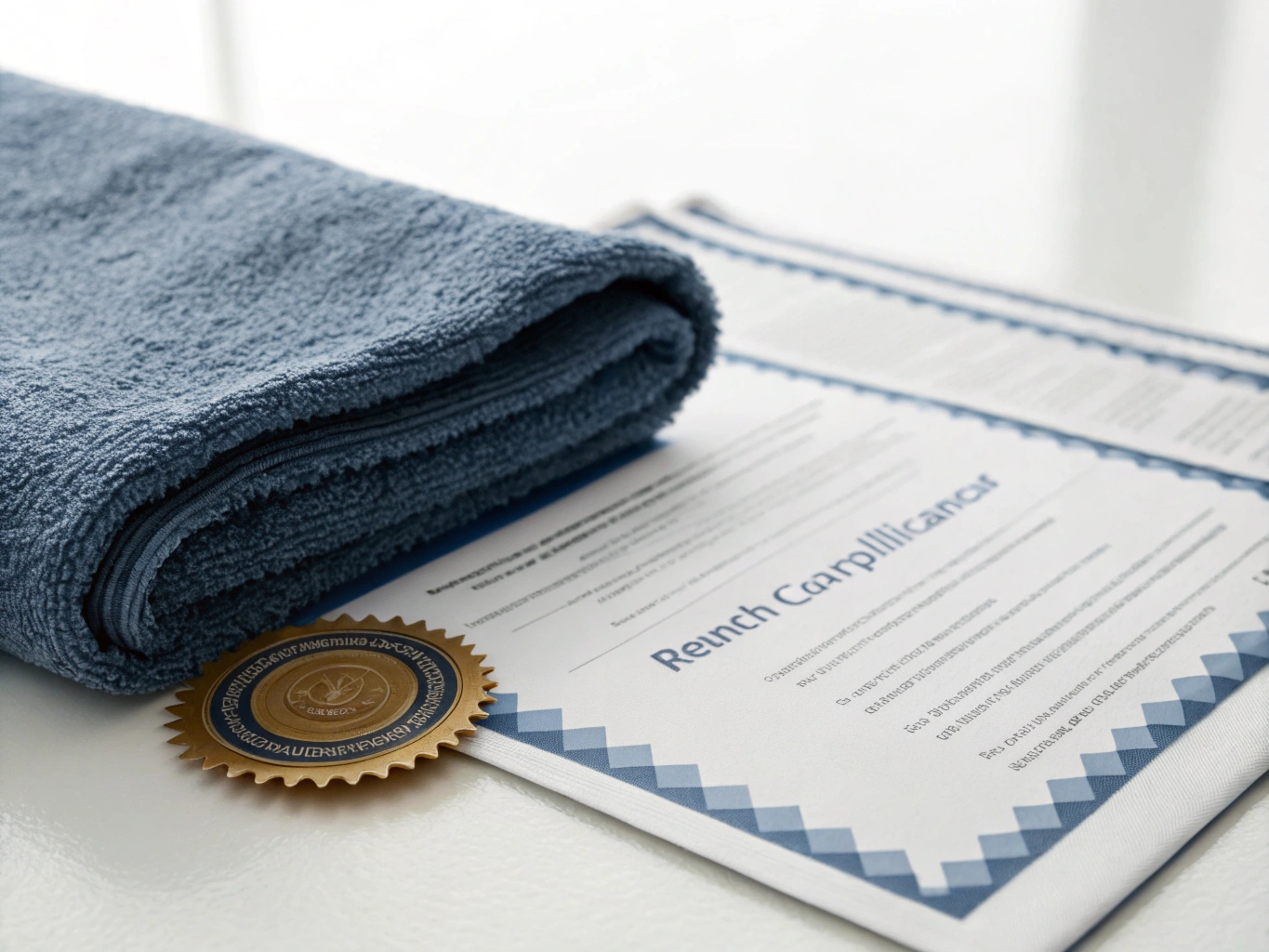
I’ve seen firsthand how production choices affect safety. The problem often comes from the dyes and chemicals used in the manufacturing process. Cheap dyes might contain heavy metals or other restricted substances. To avoid this, we send our products to international labs for testing. A certification like REACH is crucial, especially for the European market. It confirms that the product is free from a long list of harmful chemicals. This process allows us to classify our products. For example, products that meet Class B standards are safe for direct skin contact. Products that meet the even stricter Class A standard are safe enough for babies and infants. When you work with a supplier, always ask for these test reports. It is the only way to be sure you are providing a safe product to your customers.
| Certification Level | Safety Standard | Common Use Cases |
|---|---|---|
| No Certification | Unknown | High-risk for skin contact |
| REACH Certified (Class B)7 | Safe for direct skin contact | Household cleaning, car care, bath towels |
| REACH Certified (Class A) | Safe for babies and infants | Baby towels, sensitive skin products |
Conclusion
Microfiber has real drawbacks, but they can be managed. By choosing durable, certified products and encouraging reuse, you offer a safe and responsible solution to your customers.
Understanding the environmental impact of microfiber towels helps you make informed decisions about sustainable practices and product choices. ↩
Learn why microfiber towels don’t biodegrade and explore alternatives or solutions to minimize their environmental footprint. ↩
Learn how to avoid harmful chemicals in microfiber towels by choosing the right suppliers and ensuring product safety. ↩ ↩
Discover how certifications like REACH ensure the safety and quality of microfiber towels, protecting both consumers and the environment. ↩
Explore the main environmental challenges posed by microfiber and how to address them effectively in your business practices. ↩
Find out the benefits of investing in high-quality, durable microfiber products for long-term use and reduced environmental impact. ↩
Understand the significance of REACH Class B certification for ensuring the safety of microfiber towels for direct skin contact. ↩